Month: January 2025

  • U.S. Eyes Caucasus, Central Asia, and Ukraine for Critical Minerals

    U.S. Eyes Caucasus, Central Asia, and Ukraine for Critical Minerals

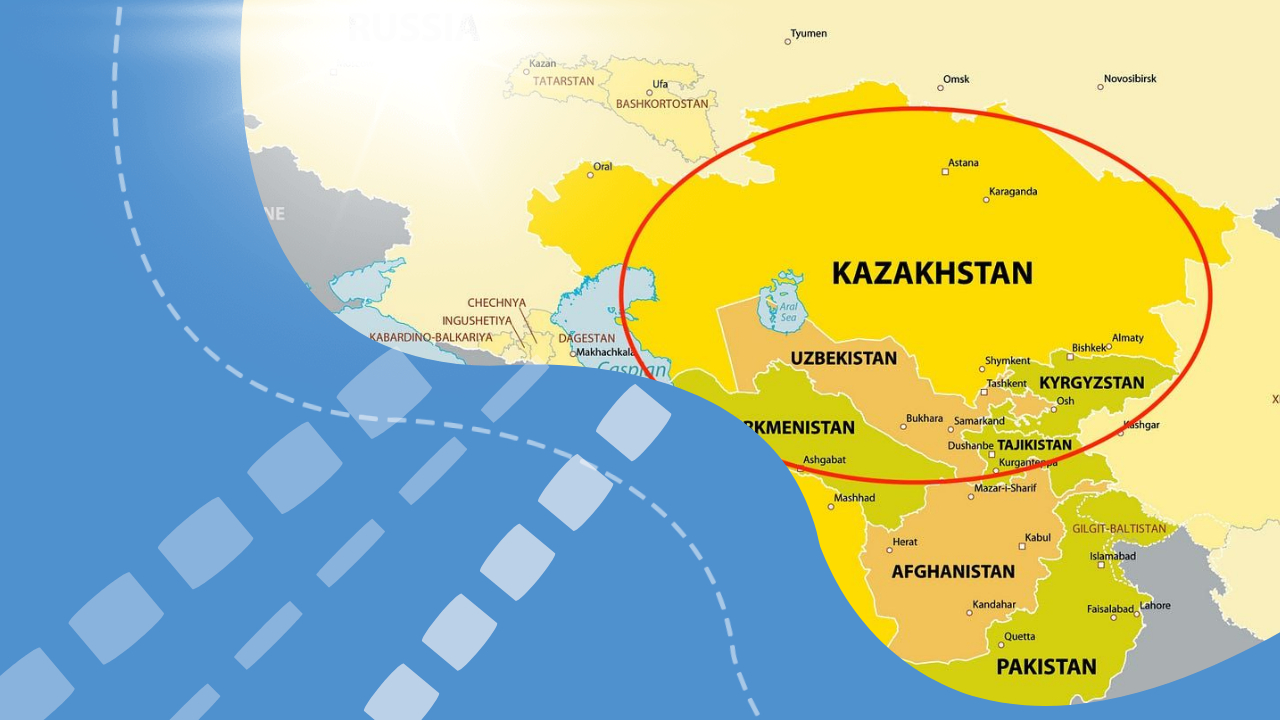
    As the global race for critical minerals heats up, the United States is seeking to shift away from its heavy reliance on China for the resources essential to defense, technology, and energy sectors. China’s dominance in the refining and processing of these minerals—vital for everything from high-tech electronics to renewable energy—has made the U.S. vulnerable to geopolitical risks and supply chain disruptions. But new opportunities are emerging in unexpected regions that could help break the U.S. free from this dependence: the Caucasus, Central Asia, and Ukraine.

    The Trump administration, aware of China’s strategic chokehold over critical minerals, prioritized diversifying the U.S. supply chain—a stance that is likely to continue under the new administration. These regions, rich in untapped reserves of rare earths and other vital minerals, offer not only a wealth of resources but also a unique geopolitical advantage. With countries like Kazakhstan, Ukraine, and Tajikistan actively courting foreign investment and pursuing economic reforms, the door is open for the U.S. to forge new, mutually beneficial partnerships.

    China’s stranglehold over the global mineral market is a critical concern. By controlling 90% of the world’s rare earths and 100% of graphite, Beijing can exert enormous influence on global supply chains, even leveraging these resources as political weapons. The U.S. already imports more than half of its critical mineral needs, and recent export controls imposed by China on key materials like germanium and gallium underscore the dangers of such a concentrated supply chain. Washington’s efforts to reshore mining capabilities and diversify suppliers must now include these promising regions, which offer not only raw materials but also logistical advantages for getting those materials to market.

    Why the Caucasus, Central Asia, and Ukraine? These regions are sitting on vast, largely unexplored reserves of rare earths and other minerals crucial for industries like defense, aerospace, and green energy. Kazakhstan, for instance, is already the world’s largest producer of uranium and has rich deposits of titanium, zinc, and gold. Ukraine boasts one of Europe’s largest titanium reserves, essential for defense and aerospace manufacturing. Countries like Kyrgyzstan and Tajikistan are also rich in resources like antimony, with U.S. companies already involved in extraction projects.

    Geopolitically, these regions hold a unique position at the crossroads of Europe, Asia, and the Middle East, making them ideal transit points for minerals destined for global markets. The rise of the Middle Corridor, a new trade route that bypasses Russia and China, has further solidified the Caucasus and Central Asia as key players in the global mineral supply chain.

    But to capitaliыe on this opportunity, the U.S. must support infrastructure development, technology transfer, and logistical cooperation to make these regions more competitive and sustainable. American firms have the expertise and resources to help modernize outdated mining practices, improve environmental standards, and boost efficiency, while the U.S. government can facilitate partnerships through funding and diplomatic support.

    These partnerships could offer a major strategic advantage, reducing U.S. reliance on Chinese mineral processing and strengthening regional stability through investment. In a world where mineral access is increasingly weaponized, this diversification effort could secure vital resources for the U.S. economy and defense sector, ensuring greater global resilience in the face of geopolitical tension.

    As tensions with China escalate, the U.S. has no choice but to look beyond traditional suppliers. By investing in these resource-rich regions, the U.S. not only reduces its dependency on Beijing but also helps foster stability and economic growth in countries eager to diversify their own economies. The next chapter of the critical minerals race may well be written in the mountains and plains of Central Asia, the Caucasus, and Ukraine—regions once overlooked but now poised to play a key role in the global supply chain.


  • Central Asia: Addressing the US Dependency on China’s Rare Earths

    Central Asia: Addressing the US Dependency on China’s Rare Earths

    The US’s reliance on China for critical minerals, notably rare earths, is a growing concern for national security and economic stability. As President Trump enters his second term, a renewed emphasis on diversifying the supply chain for these vital resources is expected.

    Pini Althaus, CEO of Cove Capital LLC and former presidential advisor, believes the Trump administration recognises the urgency of this issue.

    Quotes from the article paint a clear picture:

    • Althaus: *“In my meetings with President Trump and his administration during his first term, I observed a strong sense of awareness and urgency to resolve these issues.” *
    • Althaus: “Addressing this dependence will certainly be a top priority” during the second term.

    The focus is shifting towards building partnerships with countries like Kazakhstan, Tajikistan, and Uzbekistan, which boast significant reserves of critical minerals. Althaus highlights Kazakhstan’s ongoing pro-foreign investment reforms as a positive development.

    Interestingly, American investors are already showing increased interest in these Central Asian nations, signifying a proactive approach to securing alternative supply chains. Althaus argues that projects in Central Asia could help the US produce critical minerals on a larger scale, minimizing dependence on China and overcoming domestic industrial constraints.

    Ryan Castilloux from Adamas Intelligence offers additional insights in the article, providing a deeper understanding of the current state of the rare earths market and potential solutions for diversification.  This article suggests a proactive agenda for the Trump administration, prioritizing US self-sufficiency in critical minerals. The involvement of American investors and partnerships with key countries in Central Asia indicate a concrete strategy for reducing reliance on China.

  • AVANTIS Unveils Breakthroughs in Converting Europe’s V-Ti Deposits into Operational Mines

    AVANTIS Unveils Breakthroughs in Converting Europe’s V-Ti Deposits into Operational Mines

    Groundbreaking developments are being presented on the promising potential to convert Europe’s vast, untapped vanadium-titanium (V-Ti) deposits into active mining operations. The focus is on low-grade, unexploited V-bearing titanomagnetite resources located across Finland, Sweden, Greenland, Norway, Poland, and Ukraine. While these deposits have long been considered uneconomical due to their complex “spiderweb-like” mineral assemblage, a new innovative approach may soon turn them into valuable sources of critical minerals.

    At the forefront of this initiative is AVANTIS, a consortium dedicated to making these deposits economically viable. The challenge lies in the difficulty of extracting the valuable minerals, particularly titanium (Ti) and vanadium (V), from a matrix of titanomagnetite with high levels of complexity. Traditional methods have struggled to differentiate the titanium-rich ilmenite grains from the vanadium-bearing magnetite, making mining operations inefficient.

    However, AVANTIS has developed a novel solution. By employing a bespoke #geometallurgy strategy, the consortium is pioneering a selective blasting technique that maximizes mineral liberation during excavation. This groundbreaking approach not only enhances mineral separation but also reduces energy demands during subsequent crushing and grinding stages. AVANTIS is also designing innovative pre-concentration technologies that are water-free or water-lean, enabling the production of two distinct pre-concentrates: a titanium-rich ilmenite concentrate and a vanadium-rich magnetite concentrate.

    The AVANTIS consortium brings together top academic and industry experts from a range of leading institutions, including SIM2 KU Leuven, Geological Survey of Finland (GTK), University of Oulu, AGH University of Krakow, Universidad Politécnica de Madrid, Norwegian University of Science and Technology (NTNU), Technical University of Crete, KRONOS Worldwide, Inc., Proxis, IMA Engineering, Otanmäki Mine, and Strategic Resources International Inc.

    Key figures in the project include Tegist Chernet, José Angel Sanchidrián, Saija Luukkanen, Kostas Komnitsas, Anna Kritikaki, and Rabab Nasser leading the work packages, with Peter Tom Jones and Olivier Namur serving as coordinators. Together, they aim to revolutionize the extraction of vanadium and titanium in Europe and ensure these critical minerals are utilized for strategic and sustainable economic development.

    With the world’s demand for critical materials rising, this project holds tremendous potential to unlock a new supply chain for two of the most crucial minerals for modern industry. Stay tuned for more updates on this exciting journey toward transforming Europe’s mineral resources into a thriving and sustainable industry.

  • Adriatic Metals Secures $25 Million Prepayment Agreement with Trafigura

    Adriatic Metals Secures $25 Million Prepayment Agreement with Trafigura

    Adriatic Metals PLC has finalized a $25 million prepayment deal with global commodities trading firm Trafigura, reinforcing its cash position as it ramps up production of base and precious metal concentrates. Initially announced in December 2024, the agreement has now been completed, with all funds drawn down.

    The prepayment provides Adriatic Metals with significant financial flexibility, ensuring funds are available for operational expenses and further mining development. CEO Laura Tyler highlighted the favorable terms, which reflect strong market conditions for concentrates and offer competitive offtake provisions.

    The partnership between Adriatic Metals and Trafigura represents a strategic move common in the commodities industry, allowing miners to secure immediate capital while guaranteeing future supply to trading firms. Such agreements are integral for supporting production and growth in the mining sector.

    The details of the transaction align with Adriatic’s December disclosure, with no further material conditions reported. The announcement adheres to UK market abuse regulations, underscoring transparency and compliance with financial disclosure standards.

    This financial development comes at a pivotal time for Adriatic Metals, as the company continues to strengthen its operations and capitalize on opportunities within the global commodities market.

  • Environmental Concerns Over Armenia’s Rivers Highlighted by Experts

    Environmental Concerns Over Armenia’s Rivers Highlighted by Experts

    Armenia’s rivers face severe ecological challenges due to the impacts of mining and small hydropower plants, experts revealed on International River Day. Bardukh Gabrielyan, director of the Zoology and Hydroecology Research Center, criticized the industry for polluting rivers and damaging ecosystems, even when standards are met.

    Victoria Buniazyan, editor of EcoLur, highlighted findings from a study of 130 hydroelectric power stations, pointing out declining fish stocks and river imbalances caused by these plants. Additionally, 15 rivers were found heavily polluted by mining waste in a 2017 assessment.

    Long-term forecasts suggest further decline in river watercourses, with expected reductions of 11.9% by 2030 and 34% by 2050. These alarming trends underscore the urgent need for stricter environmental policies and sustainable management practices to protect Armenia’s aquatic ecosystems.

  • Kazakhstan and China Strengthen Strategic Partnership Through High-Level Discussions

    Kazakhstan and China Strengthen Strategic Partnership Through High-Level Discussions

    Kazakhstan’s Deputy Prime Minister and Minister of Foreign Affairs, Murat Nurtleu, recently hosted Han Chunlin, the newly appointed Ambassador of China to Kazakhstan, to discuss strengthening bilateral relations. Their discussions centered on political, trade-economic, and cultural-humanitarian collaboration, with an emphasis on upcoming high-level visits and shared initiatives within multilateral frameworks. Both parties reaffirmed their commitment to advancing mutual cooperation, leveraging their roles in regional organizations like the Shanghai Cooperation Organisation (SCO) to address shared goals in security, economic development, and combating transnational challenges like terrorism and drug trafficking.

    Kazakhstan’s relationship with China has significantly evolved since its independence in 1991. The two nations have successfully navigated border agreements, expanded economic partnerships, and established a robust strategic alliance. This cooperation reflects Kazakhstan’s strategic intent to balance geopolitical dynamics in the region while diversifying its international partnerships. The meeting also highlighted plans for enhanced cultural exchange and investment projects, further solidifying the ties between the countries.

    The Foreign Minister expressed his optimism for future collaborations and wished Ambassador Han success in his role. This meeting follows an earlier dialogue between Han Chunlin and Kazakh President Kassym-Jomart Tokayev, focusing on strengthening trade, cultural exchanges, and investment opportunities as key pillars of bilateral relations.

  • Methane Ignition Injures 16 in Polish Coal Mine

    Methane Ignition Injures 16 in Polish Coal Mine

    A methane ignition in the Knurow-Szczyglowice coal mine in southern Poland left 16 miners injured on Wednesday, with 14 transported to local hospitals for treatment. The incident occurred at a depth of more than 850 meters, where 44 miners were present during the gas ignition. Emergency medical teams responded swiftly, providing assistance at the scene, while one miner, still underground, was awaiting helicopter transport to a hospital.

    Aleksander Chowaniec, deputy head of the State Mining Authority, confirmed that the affected miners had sustained burns. The operator of the mine, JSW, reported the accident, while its shares fell by 2.3% shortly after the news broke.

    The Knurow-Szczyglowice mine, known for its extensive underground operations, has faced challenges related to methane management, which is a common hazard in deep mining. Investigations are underway to determine the cause of the gas ignition, and rescue efforts for the remaining miner are ongoing. The incident has reignited discussions about safety protocols and the risks miners face in such hazardous environments.

  • Kyrgyzstan’s Gold Exports Increase in 2024

    Kyrgyzstan’s Gold Exports Increase in 2024

    From January to November 2024, Kyrgyzstan exported 16.1 tons of gold valued at $1.26 billion, reflecting a 4% rise in weight and a 30% increase in value compared to the same period in 2023, when exports amounted to 15.4 tons worth $972 million. The United Kingdom emerged as the leading buyer, accounting for 82% of exports with 13.3 tons valued at over $1 billion. Early in 2024, exports to China were prominent, but later shifted entirely to the UK, halting sales to China, the UAE, and Switzerland.

  • Chinese-European Partnership to Build Lithium-Ion Battery Plant in Spain

    Chinese-European Partnership to Build Lithium-Ion Battery Plant in Spain

    Shenzhen Dynanonic Co. Ltd., a leading Chinese battery materials producer, has entered into a joint venture with ICL, a global specialty minerals company, to establish a lithium-ion battery plant in northeast Spain. The project, with an initial investment of €285 million, will be located in Sallent, Catalonia, on the site of a former potash production plant. Shenzhen Dynanonic will hold a 20% stake, while ICL will control 80%, with potential adjustments for future investments.

    The facility, spanning 100,000 square meters, will be the first in the region to produce lithium iron phosphate for electric battery cathodes—a critical component for electric vehicles. The strategic location near the Port of Barcelona and rail connections to France will facilitate efficient distribution across Europe, meeting the growing demand for lithium-ion batteries fueled by the expansion of the EV market.

    Ren Wangbao, vice president of Shenzhen Dynanonic, highlighted the venture’s alignment with the company’s mission to lead in new energy material solutions. The plant will not only strengthen Shenzhen Dynanonic’s European presence but also enhance its ability to supply core battery materials for electric vehicles and energy storage systems.

    Phil Brown, president of ICL’s Phosphate Solutions Division, emphasized the importance of lithium iron phosphate in Europe’s energy transition, describing it as a “critical solution for the future.” The Catalan regional government welcomed the initiative, with Miquel Samper, the region’s business minister, praising its potential to create quality jobs and accelerate the green transition.

  • Kazakhstan Prepares for the Launch of Gornostayevskoye Nickel-Cobalt Deposit

    Kazakhstan Prepares for the Launch of Gornostayevskoye Nickel-Cobalt Deposit

    The Gornostayevskoye nickel-cobalt deposit in the East Kazakhstan region is projected to begin operations within the next two years. According to Kaznickel LLP, public hearings on the project are scheduled for 23 January. The initial phase will focus on developing the Levoberezhny section using the innovative in-situ leaching (ISL) method.

    The ISL method, which extracts metals directly from underground deposits without raising ore to the surface, has been tested at the site since 2018. While commonly used for uranium extraction, its application for nickel mining is relatively rare. The Levoberezhny section contains an estimated 138.51 million tons of ore, including 793,600 tons of nickel (average content 0.57%) and 54,270 tons of cobalt (average content 0.039%).

    The Gornostayevskoye project has a maximum production capacity of 20,000 tons of nickel annually and is expected to be developed over 18 years. The project will involve the drilling of approximately 33,000 technological wells from 2026 to 2046. To support the leaching process, a sulfuric acid storage facility will be constructed directly at the site.

    This strategic initiative highlights Kazakhstan’s commitment to advancing sustainable mining technologies while leveraging its vast reserves of critical raw materials, such as nickel and cobalt, essential for the global transition to clean energy.