Website: Kazakhstan.com

  • Solidcore Resources Extends $96 Million Loan to Bai Tau Minerals for Copper and Gold Exploration in Kazakhstan

    Solidcore Resources Extends $96 Million Loan to Bai Tau Minerals for Copper and Gold Exploration in Kazakhstan

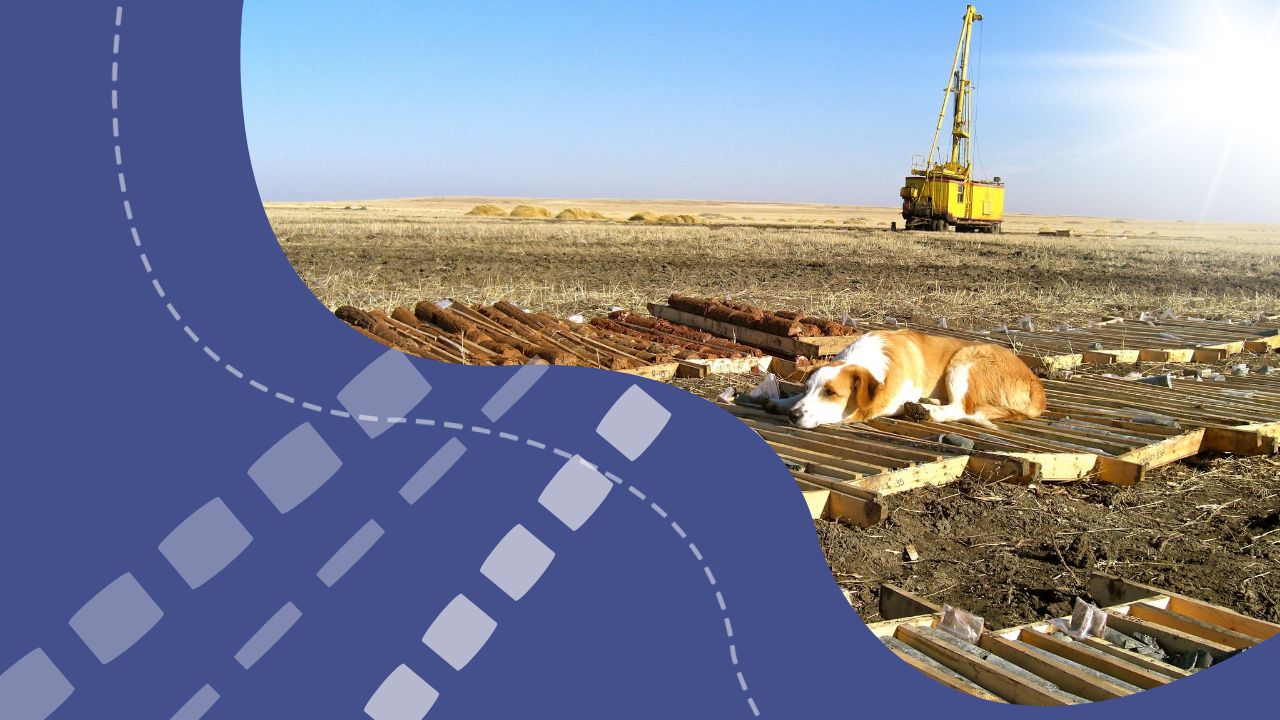
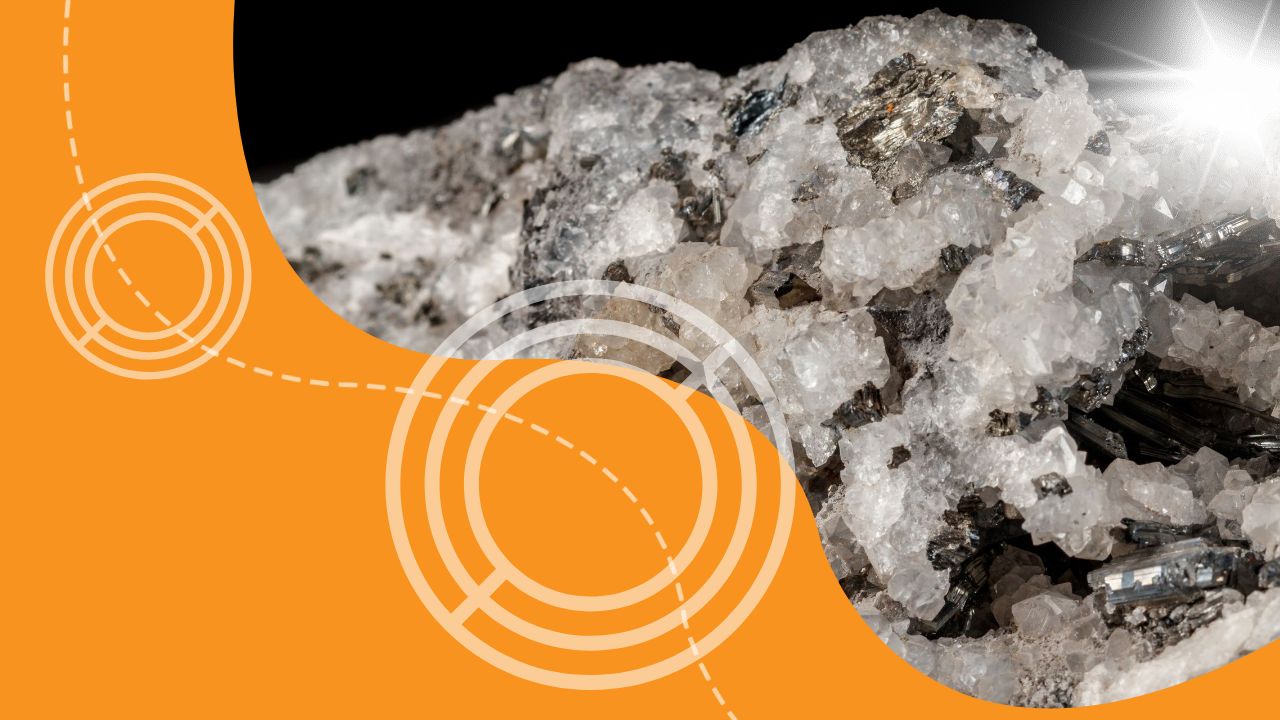
    Solidcore Resources plc (“Solidcore”) has announced a $96 million investment loan to Bai Tau Minerals (BTM), a junior exploration company specializing in copper and gold projects in Kazakhstan. This partnership aims to unlock the country’s vast copper resource potential while providing Solidcore with strategic access to key mineral assets.

    BTM’s portfolio comprises over 15 copper-porphyry and gold projects spanning 1,000 km², including Besshoky in the Karaganda region and East Balkhash-2 in Jetisu, two advanced projects with significant resource potential. The three-year loan, secured by a pledge of interest in BTM and its subsidiaries, will fund further exploration activities.

    Vitaly Nesis, Group CEO of Solidcore Resources plc, described the agreement as an industry-recognized financing mechanism. He highlighted the deal’s value in providing risk-adjusted access to green metal resources and BTM’s expertise in mineral exploration.

    The loan also grants Solidcore a right-of-first-refusal (ROFR) on any ownership transactions involving BTM or its subsidiaries, ensuring strategic exclusivity on key assets. Furthermore, broad access to BTM’s financial and technical data will facilitate accurate project valuation and support future acquisition or investment decisions.

    This partnership positions Solidcore to benefit from potentially large copper resource discoveries with limited downside risk, enhancing its strategic focus on green metals for global markets.

     

  • Solidcore Resources Announces Strategic Exploration Partnership with Bai Tau Minerals

    Solidcore Resources Announces Strategic Exploration Partnership with Bai Tau Minerals

    Solidcore Resources plc has entered into a strategic partnership with Bai Tau Minerals (“BTM”), a Kazakhstan-based junior exploration company, by extending a US$96 million investment loan. This collaboration aims to accelerate the development of BTM’s portfolio of copper and gold projects in Kazakhstan, a region with significant untapped resource potential.

    “BTM is a team of experienced geology professionals working towards unlocking Kazakhstan’s significant copper resource potential. Our agreement represents an efficient, industry-recognized financing mechanism, enabling our partner to accelerate the resource assessment. In turn, it provides us with strategic risk-adjusted access to valuable green metals resources and BTM’s mineral exploration expertise,” said Vitaly Nesis, Group CEO of Solidcore Resources plc.

    BTM’s extensive portfolio spans over 15 copper-porphyry and gold projects, covering more than 1,000 square kilometers. Among its assets, Besshoky in the Karaganda region and East Balkhash-2 in the Jetisu region are at the most advanced stages, demonstrating significant resource potential.

    The US$96 million loan, secured by a pledge of interest in BTM and its subsidiaries, will fund exploration activities. The three-year loan term provides Solidcore with comprehensive access to BTM’s financial and technical data, enabling accurate project valuation and informed decisions on potential future investments.

    As part of the agreement, Solidcore has secured a right-of-first-refusal (ROFR) on transactions involving ownership interests in BTM or its subsidiaries funded by the loan. This provision grants Solidcore strategic exclusivity on key assets.

    The partnership underscores Solidcore’s strategic focus on green metals and the discovery of potentially large copper resources, offering significant upside potential while minimizing downside risk.

  • Kazakhstan Secures $370 Million in Hungarian Investments

    Kazakhstan Secures $370 Million in Hungarian Investments

    Since 2005, Kazakhstan has attracted $370 million in Hungarian investments, President Kassym-Jomart Tokayevannounced during a joint press conference with Hungarian Prime Minister Viktor Orbán in Budapest, as reported by Trend.

    The president noted a growing interest among Hungarian companies in investment opportunities within Kazakhstan. Key discussions were held with leaders from major firms such as MOL, OTP Group, and Gedeon Richter. Highlighting this partnership, Kazakhstan signed an agreement with UBM Holding to construct three feed production plants worth $62 million.

    Tokayev emphasized the potential for collaboration in sectors like rare metals mining and processing, water resource management, and agriculture. He outlined priorities including trade diversification, adopting cutting-edge technologies, and enhancing partnerships in energy, digitalization, and transport. These initiatives, supported by the Kazakh-Hungarian Intergovernmental Commission and Strategic Council, aim to deepen economic and investment ties.

  • Canadian Company to Search for Copper and Gold in Pavlodar Region in Kazakhstan

    Canadian Company to Search for Copper and Gold in Pavlodar Region in Kazakhstan

    A Canadian company, Arras Minerals, is set to initiate active drilling in the first half of 2025 to locate copper and gold deposits in the Pavlodar region, according to the company’s press service.

    Arras Minerals has announced that it conducted extensive geological exploration in 2024 across an area of 1,700 square kilometres near its Beskauga, Elemes, and Tau projects, which are situated near Ekibastuz. During this fieldwork, the company drilled 435 holes and collected 35,000 soil samples. The exploration identified promising areas for drilling, which are scheduled to commence in 2025.

    “It is excellent to see the significant progress the Arras-Teck Exploration alliance has made in exploring this promising and underexplored area. We plan to start drilling on several priority copper targets, which have not been explored previously and are under shallow cover, in the first half of 2025,” stated CEO Tim Barry.

    The surveys were carried out at two sites. The first site, covering an area of 1,300 square kilometres, is located 56 kilometres northwest of Ekibastuz and includes the Bozshakol mine of KAZ Minerals. The second site, situated 90 kilometres southeast of Ekibastuz, is divided into the Akkuduk and Norgubek projects.

    Arras holds the third-largest copper and gold mining licence portfolio in Kazakhstan, following Rio Tinto and Fortescue. In December 2023, the company entered into an agreement with another Canadian firm, Teck Resources Limited, under which TRL will finance Arras’ $5 million exploration programme for 2024-2025. Teck also holds a 10% stake in the Beskauga project.

    In late September, Arras Minerals President Darren Klink admitted in an interview with Kitco Mining at the Precious Metals Summit in Canada that he had little knowledge of Kazakhstan three years ago but now considers the country one of the easiest places he has worked in over the last 20 years.

    “This is really a nation that has undergone significant changes even in the last five or six years. They have done an excellent job of reforming all aspects of business, but in terms of mining, they have essentially adopted the Western Australian mining code, incorporating good elements from Ontario and Quebec. Now, the major mining companies are starting to invest. From my perspective, it has been nothing but positive surprises, and from a jurisdictional standpoint, it is probably one of the most comfortable places I have worked in the last 20 years,” Klink said.

  • Kazatomprom Expands Uranium Exploration with New License

    Kazatomprom Expands Uranium Exploration with New License

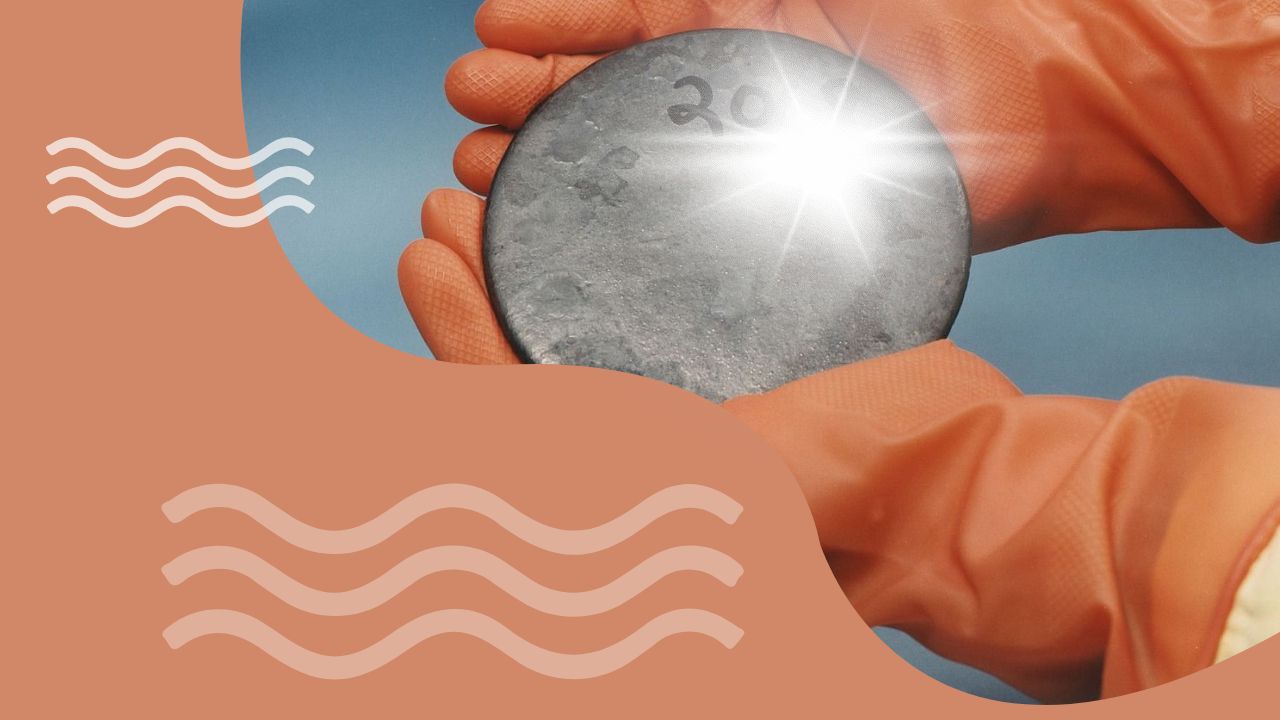
    Kazakhstan’s national atomic company, Kazatomprom, has added a new license for geological exploration to its portfolio, focusing on the Budyonovskoye area. According to an announcement on the company’s official website, Kazatomprom is set to explore uranium deposits in the “Severnoye” block.

    The newly targeted site is located in the Shu-Sarysu Uranium Province in the Suzak district of the Turkestan region. Kazatomprom has secured a six-year subsoil use contract, with an option to extend it for an additional five years. Preliminary estimates place the predictive uranium resources at over 100,000 tons, classified as R1 and R2. During the contract period, the company plans to reassess these resources and elevate them to higher confidence categories, C1 and C2.

    According to Meirzhan Yusupov, Chairman of Kazatomprom, the Severnoye block has substantial potential, thanks to its large metal reserves, favorable geological conditions, and proximity to the company’s other operational uranium projects.

    Earlier this fall, Kazatomprom received a license to explore Block No. 5 on the southern flank of the Budyonovskoye area. However, its estimated reserves are comparatively smaller at 18,000 tons of uranium.

  • Tascara Resumes Precious Metal Mining in East Kazakhstan

    Tascara Resumes Precious Metal Mining in East Kazakhstan

    The mining company Tascara LLP has announced plans to resume precious metal extraction at the Tascara deposit in East Kazakhstan, a site that has remained dormant for several years. Initially developed during the Soviet era, the deposit is now the focus of a new project submitted to Kazakhstan’s Unified Environmental Portal for regulatory review.

    The original development plan, crafted by the GINalmazzoloto Institute in 1990, involved mining through sublevel drifts and ore extraction via upward drilling fans. The current plan continues with underground mining methods, reflecting the limited remaining reserves at the site. Mining operations are projected to run from 2027 to 2029, preceded by two years of preparatory works.

    To date, Zone I of the deposit has been mined to a depth of 190 meters, while Zone III reaches 84 meters. Remaining reserves include 93,863 tons of ore, with an average gold content of 6.2 g/t and silver content of 3.9 g/t. The company plans to extract over 31,000 tons of ore annually.

    Additionally, Tascara intends to submit a separate proposal for constructing a gold extraction plant to process the mined material, marking a significant step toward expanding its operations in the region.

  • Orano Mining and Kazatomprom to Launch Uranium Processing Complex in Kazakhstan

    Orano Mining and Kazatomprom to Launch Uranium Processing Complex in Kazakhstan

    A joint venture between French company Orano Mining (51%) and Kazakhstan’s Kazatomprom (49%), known as “KATKO,” is set to begin construction on a new uranium processing complex in the South Kazakhstan’s Turkestan region. The project, located in the Syzak district, is expected to be operational by mid-2025.

    The complex will process productive solutions from the South Tortkuduk section of the Moyinkum deposit to produce a uranium desorbate, an intermediate product, which will be further processed into uranium concentrate. With an expected annual production of 2,045 tons of uranium, the plant will help the joint venture reach its target of 4,000 tons of uranium extraction annually.

    The location is close to key infrastructure, including a 90-kilometer railway line connecting the region to the Zhanatas station. The plant will occupy 39.6 hectares, and its construction will employ a shift work schedule, with two 12-hour shifts.

    KATKO’s revenue for 2023 increased slightly to 147.4 billion KZT, although net profit dropped to 66 billion KZT, reflecting rising production costs. The venture is also planning a significant expansion of its uranium production, with a new mine, “South Tortkuduk,” expected to reach full capacity within the next 15 years.

    This project represents a key development in Kazakhstan’s expanding uranium industry and highlights the country’s growing role in the global nuclear fuel market.


  • KAZ Minerals Launches New Environmental Initiative for 2024-2026

    KAZ Minerals Launches New Environmental Initiative for 2024-2026

    KAZ Minerals is embarking on the next phase of its environmental project, which will run from 2024 to 2026. As part of the initiative, the company plans to plant 20,000 trees and 20,000 shrubs, aged 2 to 3 years, around the Bozshakol copper deposit and within its 1-kilometer sanitary protection zone, according to a statement on the company’s Telegram channel.

    Experts explain in a video that green plantations not only absorb greenhouse gases but also combat noise, vibrations, and soil erosion while enhancing the local microclimate and biodiversity. Since 2015, KAZ Minerals has greened 8 hectares, planting over 130,000 seedlings.

    The company’s environmental coordinator, Kymbat Dzhambershinov, emphasized its commitment to reducing environmental impact, conserving natural resources, and protecting biodiversity. He noted that the project also serves as a scientific study, testing which plant species can adapt to the harsh continental climate of the deposit area.

    In 2024, the initiative will focus on soil preparation, including harrowing and disking. Planting will commence in 2025, followed by plant care in 2026. Environmental engineer Bulat Darimov highlighted the importance of creating a buffer zone to shield the surrounding area from industrial impacts, such as noise and vibrations.

    Plants like honeysuckle, tamarisk, and yellow acacia have demonstrated a survival rate exceeding 70%, making them particularly effective in absorbing pollutants and thriving in the local environment.


  • Ak Metal to Launch Iron Ore Mining Project in East Kazakhstan

    Ak Metal to Launch Iron Ore Mining Project in East Kazakhstan

    Ak Metal, a company led by an Almaty-based entrepreneur, is gearing up to commence iron ore mining at the Kuzinskoye deposit in East Kazakhstan. The site, located in Shemonaikha District near the village of Poperechnoye, spans 2.84 hectares and boasts two promising ore formations awaiting further evaluation.

    Initial plans include pilot industrial mining, scheduled to start in 2025. During the first two years, the company expects to extract 110,000 tons of ore annually, scaling down to 44,000 tons in 2027. This will involve 144,000 cubic meters of stripping operations, with the ore transported for processing via rail from Shemonaikha station.

    Ak Metal has been actively investing in geological exploration, with 2023 expenditures reaching 39.8 million tenge, far exceeding the required 7.9 million tenge. The company has shown steady growth, reporting 2023 revenue of 589.1 million tenge, a significant rise from 340.9 million tenge in the previous year, while net profit increased to 101.8 million tenge.

    The start of industrial mining marks a significant milestone for Ak Metal, solidifying its position in the iron ore market and driving further development.

  • Saudi Arabia’s Ambitious Mineral Strategy: A Questionable Partner for Europe?

    Saudi Arabia’s Ambitious Mineral Strategy: A Questionable Partner for Europe?

    Supply Chains

    Saudi Arabia is making a determined effort to become a significant player in the global mineral supply chain, driven by its Vision 2030 strategy to diversify its economy and reduce its dependence on oil exports. The Kingdom is seeking to strengthen its local processing and industrial value-added sectors, and is actively seeking international partners to help achieve this goal.

    A Questionable Pillar of Europe’s Diversification Strategy

    While Saudi Arabia’s efforts to develop its mineral resources sector are ambitious, there are concerns about the Kingdom’s governance and human rights standards, which could impact the operational efficiency of the sector and pose risks for European companies. The dominance of the Public Investment Fund (PIF) in the sector raises concerns about state control and the potential for supply relationships to be co-opted for foreign policy objectives.

    Saudi Arabia’s Diplomatic Efforts

    Saudi Arabia is seeking to position itself as a geopolitically neutral partner and “link” in supply chains, leveraging its financial strength and location advantages to attract international companies. The Kingdom is deepening its relationship with China, while also strengthening its ties with the US and other Western nations. Saudi Arabia is also engaging with resource-rich countries in Africa and Latin America to secure stakes in mining projects.

    Challenges and Delays

    Despite its ambitious plans, Saudi Arabia faces significant challenges and delays in developing its mining sector. The Kingdom’s geological data are lacking, and it relies heavily on foreign expertise and investment for exploration and new mining projects. The employment potential in the mining sector is limited, and the Kingdom is actively seeking international partners to develop its steel industry and other downstream supply chains.

    The Role of the Public Investment Fund

    The PIF plays a crucial role in financing Saudi Arabia’s efforts to develop its mineral resources sector and downstream industries. The fund’s extensive financial involvement gives the state considerable control over the sector, and its investment decisions are often driven by a clientelist template that favors well-established economic elites with close ties to the Saudi royal family.

    Recommendations for Targeted Cooperation

    While a strategic raw material partnership with Saudi Arabia is not currently advisable due to concerns about governance and human rights standards, targeted, selective cooperation should be pursued. The EU, alongside MSP partners such as the US and the UK, could intensify dialogue with Saudi Arabia on governance and standards setting, and encourage its involvement in international frameworks such as the Extractive Industries Transparency Initiative (EITI). European companies are expected to become increasingly involved in Saudi Arabian supply chains, and German support for the private sector should be stepped up to provide expertise and advice on the opportunities and risks of cooperating with the Saudi raw minerals sector.