Website: Kazakhstan.com

  • Kazakhstan Advances Digital Transformation of Geology: 83% of Historical Data Digitised, AI-Driven Big Data System to Accelerate Subsoil Analysis

    Kazakhstan Advances Digital Transformation of Geology: 83% of Historical Data Digitised, AI-Driven Big Data System to Accelerate Subsoil Analysis

    Kazakhstan is rapidly digitising its geological sector as the National Geological Service continues large-scale work to collect, store and convert primary geological materials into digital format — a key step in modernising the management of the country’s mineral resource base.

    According to the Ministry of Industry and Construction, 83% of geological archives accumulated over the past 80 years — more than 3.8 million units of geo-data — have already been digitised. By the end of 2025, this figure is expected to reach 97.5%, with a full transition to digital operations planned for 2026. The result will be a national digital geological information fund, providing fast online access to geological data.

    A central component of the digitalisation programme is the introduction of a Big Data system powered by artificial intelligence, which will be integrated into the Unified Subsoil Use Platform. This system will automate the analysis of geological materials, significantly speed up the processing and verification of historical datasets, and enhance the accuracy of geological interpretation.

    Using optical text recognition and machine-vision technologies, the platform will convert both archival and current geological documents into machine-readable format. Big Data tools will also support the creation of a structured geological database and an intelligent chatbot designed to help users search for and analyse information quickly and efficiently.

    Experts say the digital transformation will provide a stronger foundation for resource forecasting, attract investment into exploration, improve transparency, and enhance Kazakhstan’s competitiveness in the global critical minerals market.

  • Kazakhstan Announces Major New Discoveries of Gold, Rare Earths and Strategic Metals as Geological Survey Intensifies

    Kazakhstan Announces Major New Discoveries of Gold, Rare Earths and Strategic Metals as Geological Survey Intensifies

    Kazakhstan is accelerating its nationwide geological exploration programme, aiming to expand the area of mapped and studied subsoil from 2.1 million sq km to 2.2 million sq km by 2026. According to the Ministry of Industry and Construction, the push is already yielding significant results: exploration work completed in 2024 across 11 sites has led to the identification of promising new deposits of precious, rare and strategic metals.

    Some of the most important discoveries span four key regions. In Abai Region, geologists have outlined forecast resources of 3,200 tonnes of beryllium, 1,100 tonnes of yttrium, and 200 tonnes of niobium. In East Kazakhstan, newly identified deposits are estimated to contain 20,600 tonnes of beryllium and 600 tonnes of tungsten.

    The Karaganda Region delivered the largest rare-earth findings, with early estimates indicating 935,400 tonnes of lanthanoids. Specialists also believe the region may host 98,700 tonnes of copper, 59,800 tonnes of yttrium, 33,480 tonnes of gallium, and 7,000 tonnes of molybdenum.

    Meanwhile, Kostanay Region emerged as the country’s gold leader, with forecast resources reaching 17,500 tonnes. Prospective copper reserves there are estimated at 13,480 tonnes.

    A separate initiative — the “Predictive Assessment of Collision-Zone Granitoids in Eastern Kazakhstan” — identified three target zones with substantial potential for niobium, zirconium, and rare-earth elements. Preliminary estimates suggest more than 500,000 tonnes of niobium, 2 million tonnes of zirconium, 947,000 tonnes of rare earths, as well as 79,800 tonnes of molybdenum and 399,100 tonnes of tungsten.

    As a result of 2024 exploration activities, five new deposits have been officially added to the national register: Kok-Zhon, Altyn-Shoko, Samombet, Studenchesky and Takyr-Kaldzhir. Newly booked reserves include 98 tonnes of gold, 36,000 tonnes of copper, 11 million tonnes of manganese, and more than 1.3 million tonnes of phosphorites.

    The discoveries underscore Kazakhstan’s growing role as a major source of critical minerals and precious metals, supporting both domestic industrialisation goals and international supply-chain diversification strategies.

  • Kazakhstan Moves to Tighten State Control Over Uranium Reserves With New Subsoil Code Amendments

    Kazakhstan Moves to Tighten State Control Over Uranium Reserves With New Subsoil Code Amendments

    Kazakhstan’s Senate has approved, in two readings, a package of amendments to the Subsoil and Subsoil Use Code aimed at significantly strengthening state control over the country’s strategic uranium reserves. The reform marks one of the most substantial regulatory shifts in Kazakhstan’s uranium sector in recent years, reinforcing the dominant role of national company Kazatomprom and tightening restrictions on foreign participation.

    Under the proposed amendments, if geological exploration confirms uranium mineralisation or deposits, subsoil users will be required either to return the explored area to the state or to transfer priority purchase rights for uranium to the national company. Lawmakers say the measure is designed to eliminate risks associated with “parallel activities” by different subsoil users operating on overlapping or adjoining territories.

    Deputy Shakarim Buktugutov, cited by Kapital.kz, explained that the changes will limit the issuance of exploration licences in areas where uranium deposits or mineralisation have already been identified. Third parties will no longer be able to obtain licences to explore solid minerals in territories where uranium mining is already under way or where uranium occurrences have been officially confirmed.

    A company that discovers uranium deposits will only be able to extend its licence if it relinquishes the area containing uranium mineralisation. The rule will not apply to operations where uranium is produced as a by-product or to existing projects operated by Kazatomprom.

    The amendments also introduce stricter limits on foreign ownership. According to Deputy Chair of the Atomic Energy Agency Aset Makhambetov, foreign companies’ stakes in new uranium ventures will be capped at 25%.

    Current law requires that the national company hold more than 50% in joint uranium projects, but the new amendments will raise Kazatomprom’s minimum mandatory stake to 75%, consolidating state control over future uranium production and strategic resource development.

  • Central Asia Emerges as a Strategic Critical Minerals Hub, but Investment, Governance and Long Timelines Remain Major Hurdles

    Central Asia Emerges as a Strategic Critical Minerals Hub, but Investment, Governance and Long Timelines Remain Major Hurdles

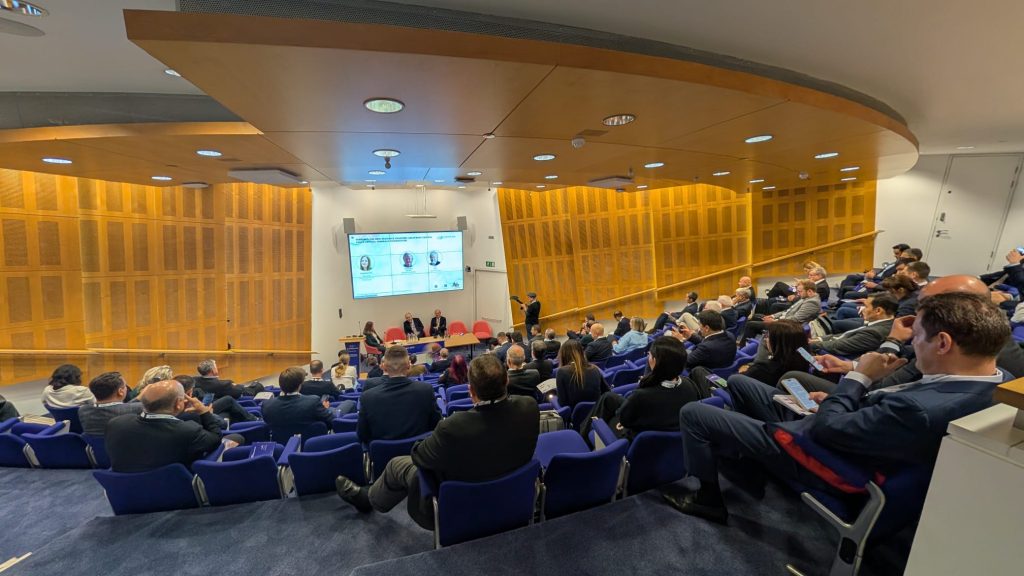
    The opening session of MINEX EURASIA 2025 — “The New Resource Frontier: Unlocking Central Asia’s Critical Minerals Powerhouse” — delivered a clear message: Central Asia has moved from a region of geological promise to a globally contested arena for critical minerals, but a substantial gap remains between ambition and execution. Speakers highlighted that while the region holds world-class deposits of lithium, tungsten, rare earth elements and other strategic minerals, underinvestment, governance challenges and slow project development continue to restrain advancement.

    The session began with a review of the region’s natural endowment. Kazakhstan — the world’s ninth-largest country — dominates regional exploration budgets, yet overall exploration spending across Central Asia remains modest compared with mature mining jurisdictions. Western participation is strikingly low, and despite a handful of standout projects, experts argued that far more risk capital is needed to convert geological maps into operating mines.

    A major theme was the mismatch between political urgency and the slow pace of mine development. Globally, the average time from discovery to commercial production now exceeds 16 years, and Central Asia is no exception. Speakers cautioned that “good geology” alone does not guarantee quick results. Long permitting timelines, regulatory uncertainty, environmental and social assessments and technical complexity remain significant barriers — all of which underscore the need for stable rules and predictable permitting systems to attract investors.

    Governance emerged as a decisive factor in Central Asia’s critical minerals trajectory. Kazakhstan was cited as a regional leader in implementing international-aligned mining reforms, including adoption of the KAZRC reporting code, a national register of qualified persons and a modernised mineral cadastre. Environmental and subsoil reforms are gradually shifting the sector away from legacy “pay-to-pollute” models toward best-available technologies and lower-impact mining. Uzbekistan, meanwhile, is rapidly implementing its own modern mining code and has expanded joint geological initiatives with Kazakhstan, signalling growing regional alignment.

    However, Kazakhstan and Uzbekistan are pursuing distinct strategies. Kazakhstan initially expected private investors to lead in critical minerals but found they instead focused on established copper and gold assets. As a result, the Development Bank of Kazakhstan has launched a multi-year, billion-dollar programme to directly support rare earth and critical mineral projects. Uzbekistan, in contrast, has adopted a state-anchored industrial model through its Technological Metals Company (TMK), which is developing more than 100 projects across 25 minerals. Its plans include large-scale tungsten development, lithium and graphite exploration and integrated upstream–midstream–downstream industrialisation.

    Both countries are shifting from exporting raw concentrates to capturing domestic value. Kazakhstan aims to seed new industries in semiconductors, batteries, permanent magnets and heat-resistant alloys, building on existing capacity such as the Ulba Metallurgical Plant. Uzbekistan’s TMK strategy links mining projects with processing plants, technology parks and industrial clusters — many in partnership with Chinese engineering and mining groups, whose turnkey project delivery capability remains unmatched.

    The geopolitical landscape is increasingly crowded. China remains the dominant external player thanks to long-term planning, Belt and Road infrastructure, strong engineering capacity and patient capital. U.S. engagement is growing, primarily through offtake-driven agreements intended to secure supply for defence and energy industries. The EU is active but constrained by scale and speed of investment, while South Korea, Japan, Türkiye and the UK are carving out niches as specialised technology and standards partners.

    Presentations from the OECD stressed that unlocking Central Asia’s mineral wealth must go hand-in-hand with governance reforms, responsible business conduct and fair taxation frameworks. A multi-year regional programme is now under way to address environmental risks, reduce illicit financial flows and build due diligence systems, with final recommendations expected in 2026.

    The UK outlined its ambition to become a key partner in Central Asia’s critical minerals sector through new bilateral agreements, export credit tools and technical support for responsible mining. Case studies demonstrated British expertise across the full lifecycle — from exploration to mine rehabilitation.

    The session concluded with cautious optimism. Central Asia has firmly entered the global critical minerals spotlight, supported by geological potential, ongoing reforms and geopolitical attention from major economies. But speakers emphasised that turning opportunity into reality will require sustained investment, credible governance, transparent partnerships and a long-term view that balances foreign capital with local development and environmental protection.


  • C29 Metals Withdraws from Kazakhstan After Denial of Rights to Uranium Project

    C29 Metals Withdraws from Kazakhstan After Denial of Rights to Uranium Project

    Australian geological company C29 Metals has announced it is ending its operations in Kazakhstan after regulators rejected its applications to obtain rights for geological exploration (GER) at the Ulutau uranium project in the Zhambyl region. The company had previously sought a stake in the project and had secured environmental approval for exploratory drilling on one block, while considering additional exploration on three more areas of the deposit, whose historical resources are estimated at 3,800 tonnes of uranium.

    To acquire 100% of the rights for exploration, C29 Metals issued additional shares worth 3 million Australian dollars, but their value has since dropped by more than half. According to the company’s report, total losses exceeded 4.9 million Australian dollars.

    Kazakhstan’s regulator rejected both the initial and repeat applications, the latter submitted in March 2025. Local media attributed the decision to national security concerns. As a result, C29 Metals has suspended exploration activities that were to be carried out in partnership with Volkovgeology, a subsidiary of Kazatomprom.

    Under current legislation, licenses for uranium production in Kazakhstan are issued only to companies in which Kazatomprom holds at least a 51% stake. Previously, such restrictions did not apply to exploration, but the Mazhilis is now reviewing amendments that would grant the national company priority rights for exploration in areas containing strategic uranium reserves. Analysts suggest that both administrative hurdles and the prospect of legislative changes may have pushed the Australian investor to abandon the project.

  • Asia United Steel to Launch Rolling Steel Production in Almaty Region by 2027

    Asia United Steel to Launch Rolling Steel Production in Almaty Region by 2027

    Asia United Steel is set to invest 289 billion tenge in launching a rolling steel production facility in the Kazbek Bek industrial zone of the Almaty region, according to the regional administration. The company plans to implement the project in three stages using funding from foreign investors.

    The plant is expected to begin operations in 2027, with an annual output capacity of up to 1.2 million tonnes of steel. Once it reaches full capacity, the new Asia United Steel facility is projected to become a major exporter of rolled steel products to Central Asian markets.

    The production site will meet modern environmental standards. In particular, the plant will be equipped with energy-efficient electric furnaces for steel melting. Using electricity instead of coal is expected to significantly reduce environmental impact.

    Located within a designated industrial zone, the facility will have access to essential engineering infrastructure and railway routes capable of handling up to 100 railcars per day.

    Kazbek Bek is one of six industrial zones currently operating in the Almaty region. The total area of the zone is 900 hectares, and accumulated investment has already reached 559 billion tenge.

  • Kazakhstan Tightens Oversight of Gold Mining Sector as Six Extraction Permits Are Revoked in 2025

    Kazakhstan Tightens Oversight of Gold Mining Sector as Six Extraction Permits Are Revoked in 2025

    Kazakhstan has revoked six gold mining permits so far in 2025 across the Aktobe, Turkistan, East Kazakhstan, and Abai regions, according to the Ministry of Industry and Construction. Although significant, the figure is lower than in 2024, when the government annulled twice as many contracts for gold-bearing ore extraction. Authorities say the revocations stem from violations of legal requirements and breaches of land-use and lease conditions.

    Members of Parliament argue that punitive measures must be strengthened further. Lawmakers are calling for tougher criminal penalties for illegal mining and the creation of a “blacklist” of irresponsible subsoil users who would face obstacles when seeking new contracts. Deputies believe such steps would reduce environmental risks and increase accountability for land rehabilitation at mining sites, LSM.kz reports.

    Earlier, the Mazhilis introduced amendments to the existing Subsoil Code. The draft legislation would require auction winners to pay their signing bonuses before receiving a subsoil licence. Those who fail to make the payment would be banned from using subsoil resources for five years and prohibited from acquiring related rights through third parties.

    These reforms reflect Kazakhstan’s broader effort to enforce stricter compliance, improve environmental protections, and ensure responsible resource development across the mining sector.

  • Tau-Ken Samruk Begins Exploration of Rare and Rare-Earth Metals in Rwanda and Afghanistan

    Tau-Ken Samruk Begins Exploration of Rare and Rare-Earth Metals in Rwanda and Afghanistan

    Kazakhstan’s state-owned mining company Tau-Ken Samruk has launched geological exploration efforts for rare and rare-earth metals in Rwanda and Afghanistan, according to Nurlan Zhakupov, Chairman of the Board of Samruk-Kazyna. The initiatives are viewed as strategically important for strengthening Kazakhstan’s resource security and expanding its processing capabilities.

    In Rwanda, the national company has already signed a cooperation agreement that will pave the way for establishing a joint venture with the country’s state enterprise. Once the joint company is formed, exploration activities will begin, eventually leading to the extraction of strategic minerals.

    Work in Afghanistan remains at an early evaluation stage. Specialists collected and analyzed geological samples in July and reported promising results. However, joint mining is not yet under consideration, as licensing and resource assessment procedures still need to be resolved.

    Zhakupov noted that these international exploration projects will help Kazakhstan develop deeper processing of raw materials sourced from third countries. The government has declared its intention to process rare and rare-earth metals domestically, and the Ministry of Industry and Construction has prepared a development program for the sector covering 2024–2028.

    Tau-Ken Samruk continues to focus on gold, copper, and lead-zinc deposits while also identifying strong potential in the extraction of strategic resources, including rare and rare-earth elements.

  • Illegal Gold Mining Operation Uncovered in East Kazakhstan, Damage Estimated at 400 Million Tenge

    Illegal Gold Mining Operation Uncovered in East Kazakhstan, Damage Estimated at 400 Million Tenge

    Authorities in East Kazakhstan have uncovered two cases of illegal gold mining, including a major operation in the Shybынды River valley in Ulan district, where offenders extracted gold without a license for two years. According to Timur Mukanov, deputy head of the regional Department of Economic Investigations, the group altered the riverbed and caused significant environmental damage, with total losses estimated at 400 million tenge.

    During the investigation, officials confiscated 6.7 kilograms of gold, specialized equipment, machinery, and $56,000 in cash. The organizers of the illegal mining scheme have been detained, and the criminal case is being prepared for court.

    The department emphasized the importance of strict oversight to prevent unlawful extraction of precious metals. Regional environmental authorities noted that earlier violations in the mining sector had resulted in 9.7 million tenge in fines for companies and individuals in East Kazakhstan.

  • Uzbekistan Eyes Kazakh Tungsten as Global Powers Compete for Strategic Metal

    Uzbekistan Eyes Kazakh Tungsten as Global Powers Compete for Strategic Metal

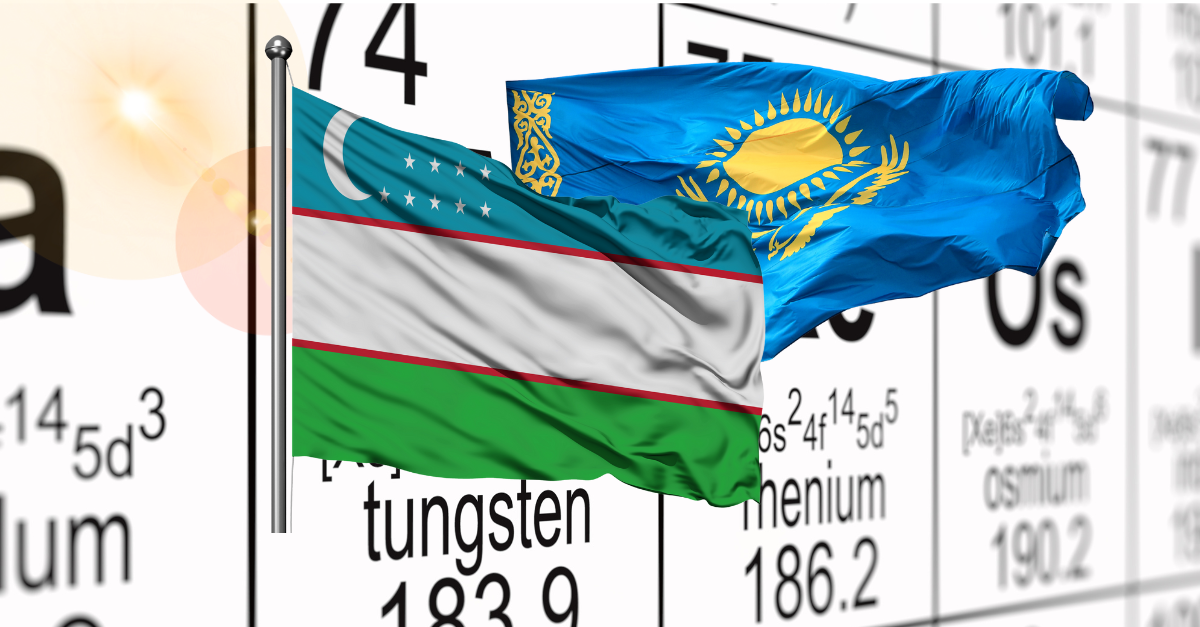
    Uzbekistan is plotting a tighter grip on critical minerals by seeking to purchase tungsten concentrate from Kazakhstan, as Uzbekistan’s government-led Uzbek Metal Processing Plant (TMK) prepares to ramp up production. Metin Alemder, TMK’s technical adviser, told inbusiness.kz at the China Mining summit in Tianjin that TMK is in talks with Kazakh colleagues to secure tungsten concentrate, signaling a strategic push to source raw materials locally for its expanding operations.

    Kazakhstan has been developing tungsten at the Boguty mine in the Almaty region near the Charyn Canyon. The project is led by Zhetyсу Wolfram LLC, in which Chinese-backed Jiaxin International Resources Investment Limited is a major shareholder. Boguty is regarded as one of the world’s larger tungsten deposits, with a mining licence valid through 2040. Early projections estimated an annual processing capacity of 3.3 million tonnes of ore to produce about 10,000 tonnes of 65% tungsten oxide concentrate, primarily destined for China. The site also contains molybdenum, bismuth, and beryllium, with plans to raise tungsten extraction to nearly 5 million tonnes of ore by 2027.

    Other Kazakh tungsten prospects include Aksoran at the SCO-Akmola border, as well as Northern Katpar and Verkhnee Kairakty in Karaganda. Notably, the last two are set to be developed via a joint venture in which Cove Capital (70%) partners with state mining firm Tau-Ken Samruk (30%) in a project budget of about $1.1 billion, with production expected to start in roughly 3.5 years. Cove Capital also has interests in Uzbekistan.

    Alemder notes that China already controls more than 80% of global tungsten production and leads fundamental research in this strategic metal, which Czech-like knowledge in Uzbekistan could help leverage. Tungsten is not a rare earth metal, but it remains a critical material due to its unique properties and supply concentration.

    TMK currently relies largely on local tungsten concentrates, with Uzbekistan able to produce tungsten using both hydrometallurgical and pyrometallurgical methods. The company’s plant in Chirchik is expanding capabilities, and a new hydrometallurgical workshop in Samarkand is slated to begin in 2027, targeting 5,000 tonnes of tungsten oxide annually. By 2030, production is expected to reach 15,000 tonnes per year, requiring growing external ore supplies. In the interim, the plant utilises residual tailings from an older deposit.

    In addition to tungsten, TMK is expanding molybdenum production from tailings from the Almalyk Mining and Metallurgical Complex and is developing tellurium and osmium. A sulfuric acid plant with a capacity of 500,000 tonnes annually is under construction, feeding consumables for the chemical sector, fertiliser production, and uranium mining via in-situ leaching, using sulfur supplied by Uzbekneftegaz and local gas-processing facilities.