Website: Eurasia.com

  • Investors Voice Concerns Over Amendments to Kazakhstan’s Subsoil Code

    Investors Voice Concerns Over Amendments to Kazakhstan’s Subsoil Code

    Recent amendments to Kazakhstan’s Code on Subsoil and Subsoil Use have raised concerns among investors, particularly over changes to the application of priority rights in subsoil use, according to industry representatives. The package of amendments was reviewed by the Mazhilis in the autumn and approved by the Senate earlier this month.

    In an interview with inbusiness.kz, Ruslan Baymishev, head of the Kazakhstan Mining Chamber, said the reforms include both positive measures and provisions that risk undermining investor confidence. He noted that since the introduction of the Subsoil Code in 2018, Kazakhstan has seen a sharp increase in private investment in geological exploration, driven by transparent rules and equal access to subsoil resources. This, he said, allowed junior and international companies to invest heavily in exploration at their own risk, generating valuable geological data for the state without budgetary spending.

    Among the positive changes, Baymishev highlighted the formal establishment of a unified digital subsoil use platform, simplification of access to exploration areas, and the introduction of electronic auctions for subsoil rights after licences are revoked or terminated. He also welcomed stricter measures against illegal mining, including the possibility of revoking exploration licences for violations, which he said protects bona fide investors.

    However, the amendments have also triggered serious concerns. Baymishev warned that the return of priority rights and the expansion of state and national company privileges, particularly in uranium and potentially rare earth elements, could signal a move toward greater state monopolization. According to him, such measures weaken the principle of open and equal access to subsoil resources that previously attracted major global investors and significantly increased exploration spending.

    Another source of concern is the application of priority rights outside auction mechanisms, which Baymishev described as a “side entry” dependent on discretionary decisions. He said this raises questions about fairness and predictability for investors. Industry representatives are also wary of potential spillover effects from hydrocarbons regulation into the solid minerals sector, which could distort competition and create unequal conditions.

    Baymishev stressed that while the state’s goal of increasing geological knowledge through private investment is understandable, regulatory conditions must remain transparent and uniform for all market participants. He emphasized the need for a clear medium-term strategy to ensure investment returns and avoid deterring international capital.

    Despite the concerns, the Mining Chamber said it continues to engage in dialogue with government bodies and lawmakers, aiming to preserve the core principles of the 2018 reform while refining specific mechanisms. Baymishev warned that a shift back toward manual regulation could redirect exploration investment flows to other jurisdictions at a time when global demand for new mineral discoveries is growing.

  • Senate Approves Amendments to Subsoil Code Strengthening Digitalization and Investment Incentives

    Senate Approves Amendments to Subsoil Code Strengthening Digitalization and Investment Incentives

    The Senate has approved amendments to the Code on Subsoil and Subsoil Use in two readings during a plenary session, endorsing a package of reforms aimed at modernizing regulation of the mining sector and boosting investment attractiveness.

    Presenting the document, Senator Sagyndyk Lukpanov said the amendments formally establish a unified subsoil use platform as the core digital infrastructure of the industry. The platform will operate with an open database of geological information and cover nearly all business processes and public services related to the exploration and extraction of solid and common minerals. The law also закрепляет статус национальной геологической службы and grants strategic investors priority rights to explore and mine solid minerals.

    The legislation provides for integration of the unified platform with the state fuel and energy management system, which collects, stores, and analyzes data on hydrocarbon resources. In addition, the national geological service is designated as the sole operator responsible for managing geological information. As a state body subordinate to the geology committee, it will not be subject to privatization and will ensure a centralized, standardized approach to studying the national subsoil fund, eliminating data duplication and fragmentation.

    A number of amendments introduce electronic auctions as a mechanism for granting subsoil use rights. These auctions will be used to allocate free subsoil plots as well as areas where subsoil use rights have previously been terminated. The reforms also raise the required share of domestic content in works and services from 50% to 70% for exploration and mining operations, including uranium projects.

    Additional provisions regulate the granting of subsoil use rights for facilities involving technogenic mineral formations located within populated areas. One of the licensing conditions for such activities is the mandatory removal of extracted technogenic mineral materials beyond settlement boundaries, followed by their processing.

    The amendments also expand investment incentives for subsoil users implementing projects to process solid minerals. These preferences, already reflected in the new Tax Code, include exemptions from corporate income tax and land tax for 10 years, property tax for 8 years, and VAT on imported equipment for 5 years. At the same time, the minimum investment threshold for such processing projects is increased tenfold, from 7 million to 70 million monthly calculation indices.

  • JSW Completes Deepening of Shaft III at Pniówek Mine, Enhancing Safety and Efficiency

    JSW Completes Deepening of Shaft III at Pniówek Mine, Enhancing Safety and Efficiency

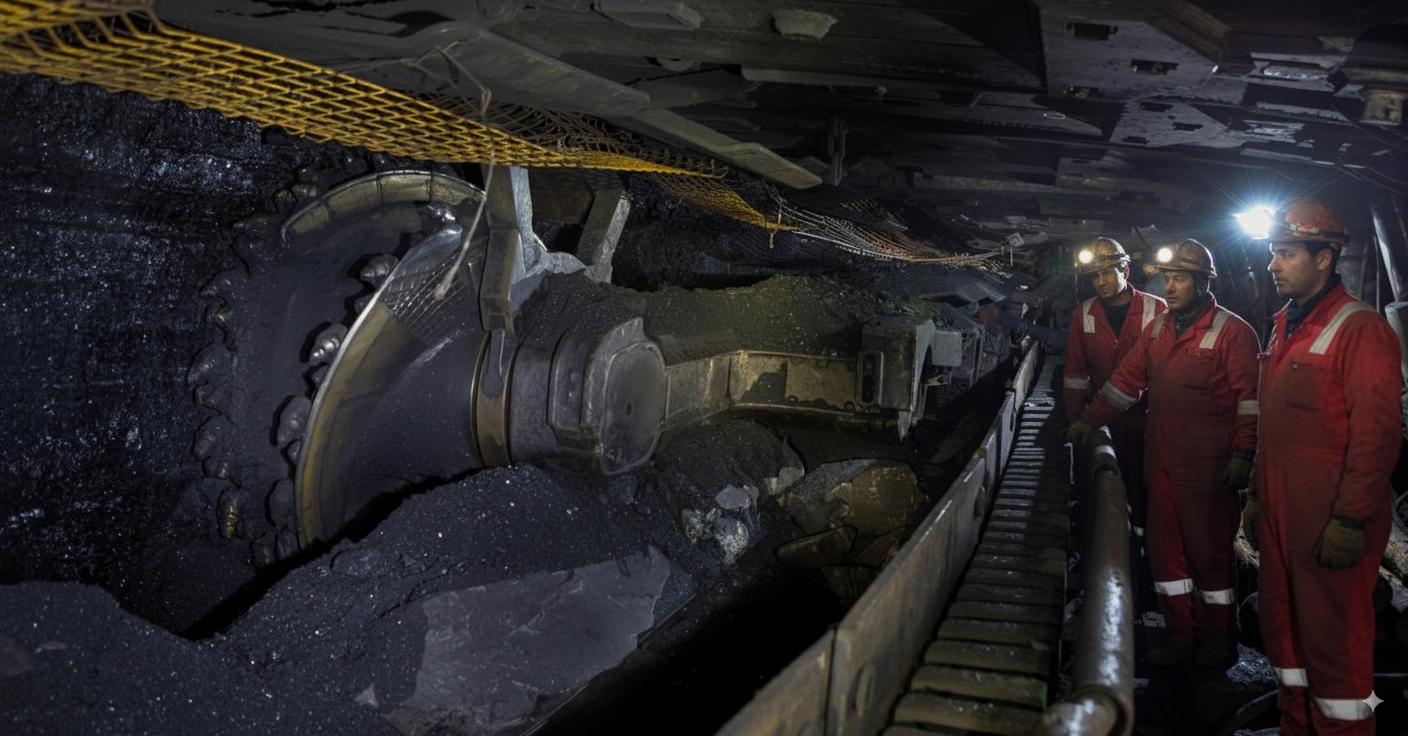
    Jastrzębska Spółka Węglowa (JSW), the European Union’s largest producer of coking coal, has completed a major investment project at its Pniówek mine, finalizing the deepening of shaft III to a depth of 1053 meters and commissioning a new operational horizon at the 1000-meter level. The company announced the milestone in a press release issued in December.

    The project involved extending shaft III from its previous depth of 856 meters and modernizing the hoisting installations in both the eastern and western sections to service the new horizon. Work on the project began in 2020 and was carried out under full operating conditions by a consortium comprising PBSz SA and PPG ROW-JAS.

    According to mine officials, the deepening significantly improves occupational safety, transport logistics, and working conditions for miners. Shaft III, with a diameter of 7.5 meters, performs key ventilation and transport functions, including air extraction, personnel transport, and material handling. Following completion of the project, the shaft now serves three operational levels: 705, 830, and the newly commissioned 1000 level, which has become the mine’s primary horizon. Around 60% of employees now begin their shifts at this level.

    The launch of the 1000 level has allowed the mine to discontinue material transport from the 830 level, directly improving safety and productivity. A new three-deck cage capable of carrying up to 78 people has been installed, while upgraded hoisting machines and new ropes enable the handling of heavier loads. The ventilation system has also been enhanced as part of the investment.

    Mine representatives described the project as a critical step for long-term operations. Management noted that deepening the shaft while maintaining production at the 705 and 830 levels was particularly challenging, requiring the use of an artificial bottom to ensure uninterrupted and safe operations.

    The completion of shaft III comes as JSW moves forward with broader strategic measures. In October 2025, the company announced the start of preparatory work for a large-scale business restructuring aimed at improving liquidity and securing financial stability in the short and medium term.

  • Sale of Kazakhmys Corporation Finalised, New Owner to Take Over in December

    Sale of Kazakhmys Corporation Finalised, New Owner to Take Over in December

    Negotiations over the sale of Kazakhstan’s Kazakhmys Corporation have been completed, with the company expected to change ownership in December. According to National Business Kazakhstan, the agreement on the transfer of ownership is planned to be signed before the end of the year and has already received regulatory approval.

    The new owner of Kazakhmys will be Nurlan Artykbayev, founder of construction group Qazaq Stroy, whose personal wealth is estimated at about 228 million dollars. Qazaq Stroy’s press service told NBK that the preliminary value of the transaction, based on both independent and joint audits, stands at 3.85 billion dollars.

    Following the ownership change, Kazakhmys’ strategic priorities are expected to remain intact. Qazaq Stroy said the arrival of a new shareholder will strengthen the company’s long-term strategy, focusing on improving operational efficiency, expanding the resource base, and implementing a large-scale investment program. The Kazakhmys group currently includes 37 companies and major production facilities, many of which are operating at around 50% capacity and require modernization.

    For the period from 2026 to 2045, planned investments exceed 3 trillion tenge, or more than 5.5 billion dollars. These funds are earmarked for upgrading processing plants, introducing hydrometallurgical technologies, developing underground mining projects, and expanding power generation capacity. The company’s target is to increase copper production to about 500000 tons per year by 2032.

    Nurlan Artykbayev, aged 50, has also controlled Qazaq Kalium Ltd. since 2023, a company developing the Satimola potash deposit. In 2024, one of his companies acquired a 9% stake in Kazakhtelecom from Jusan Bank.

    Kazakhmys’ main shareholder has been oligarch Vladimir Kim, who owns 70% of the corporation and is also the principal owner of KAZ Minerals Group and RBK Bank. The remaining 30% of Kazakhmys Holding Ltd is controlled by his business partner Eduard Ogay. Media outlets have indicated they will continue to monitor developments surrounding the transaction in case its terms change.

  • China Lithium Prices Jump After Yichun Moves to Revoke Mining Licences

    China Lithium Prices Jump After Yichun Moves to Revoke Mining Licences

    Lithium prices in China rose sharply after authorities in the country’s main lithium-producing hub announced plans to revoke dozens of mining licences, fuelling investor concerns over future supply.

    The most actively traded lithium carbonate contract on the Guangzhou Futures Exchange climbed as high as 109860 yuan per metric ton on Wednesday, its highest level since June 2024, before closing up 7.61% at 108620 yuan.

    The Bureau of Natural Resources of Yichun, a key lithium centre in Jiangxi province, said it intends to cancel 27 mining permits following a public consultation period ending on January 22. The notice was published on the bureau’s official website last week.

    According to the published list, all of the licences have already expired, in some cases more than ten years ago. Most were originally issued for ceramic clay or limestone mining. One permit linked to a lithium-bearing ceramic stone mine was held by Jiangxi Special Electric Motor, which said it has lodged an objection with local authorities. The permit in question expired on September 15 2024.

    Analysts at Galaxy Futures noted that the cancellations are unlikely to have a direct impact on current lithium supply, as none of the revoked licences relate to operating mines. Nevertheless, the announcement heightened market anxiety over longer-term availability, pushing lithium carbonate prices higher.

    The latest move follows a broader clean-up of mining permits in Yichun that began in September. The bureau previously revoked six licences on November 27.

    Lithium carbonate prices have been trending upward since August, after mining at CATL’s Jianxiawo mine was suspended due to the expiry of its mining licence. Strong demand from the energy storage sector has provided additional support to the market.

  • Tajik Metallurgical Plant to Build Iron Production Facility Under Import Substitution Program

    Tajik Metallurgical Plant to Build Iron Production Facility Under Import Substitution Program

    ZAO Tajik Metallurgical Plant has signed an agreement with the government of Tajikistan to construct a new iron production facility, according to the Committee for Investments and State Property Management. The project will be implemented in several stages, with the first phase scheduled to come on stream in 2027 and the second to be completed by 2031.

    Once fully operational, the plant is expected to process up to 2.5 million tons of iron ore annually, producing around 1.1 million tons of iron concentrate. The project may also allow for the extraction of associated by-products.

    The source of raw materials has not been specified, though the Tajik Metallurgical Plant is located in the Sughd region, which is known for its rich iron ore resources. The area hosts the large Chokadambulak iron-bismuth deposit as well as other promising sites, including Tutli Kuduk.

    The investment project will be financed exclusively with domestic funds and is classified as part of Tajikistan’s import substitution program. At the same time, the company plans to supply iron ore concentrate not only to the domestic market but also for export.

    During the first stage of the project, the company expects to create about 1200 new jobs, with more than 800 additional positions to be added after the final launch.

    The announcement follows the recent commissioning of another metallurgical facility in Tajikistan, Aluminium Avvalin, which was launched last week.

  • Mozambique Smelter Shutdown Set to Tighten Global Aluminum Supply in 2026

    Mozambique Smelter Shutdown Set to Tighten Global Aluminum Supply in 2026

    The planned shutdown of Mozambique’s Mozal aluminum smelter is expected to weigh heavily on global aluminum supply next year, forcing European Union buyers to seek alternative sources, analysts say.

    Mining group South32 confirmed that the Mozal smelter, with an annual capacity of 560000 metric tons, will be placed on care and maintenance from mid-March after negotiations with power utilities and the Mozambican government failed to secure a new electricity supply agreement.

    Trade Data Monitor figures show that in the first 10 months of 2025, Mozal shipped nearly 430000 tons of aluminum to the EU, making Mozambique the bloc’s largest supplier of primary aluminum with close to one fifth of total imports.

    ING now expects a global aluminum deficit of around 600000 tons in 2026, according to analyst Ewa Manthey. The bank had previously forecast a deficit of 200000 tons, following a shortfall of about half that size in 2025. Manthey said Europe is likely to compensate for the loss of Mozal supply through increased imports from Canada and the Middle East.

    European demand for primary aluminum is estimated at about 9 million tons per year, according to industry group European Aluminium. The impact of Mozal’s shutdown is being compounded by reduced output at Century Aluminum’s Iceland smelter, where production has fallen by roughly two thirds following an electrical failure. Iceland has been the EU’s second-largest aluminum supplier this year.

    Supply pressures are also being intensified by regulatory and trade factors. From January, the EU’s Carbon Border Adjustment Mechanism will impose a carbon tax on aluminum imports, while permitted imports of Russian aluminum will be capped at 50000 tons between February 26 and December 31.

    Prices have responded accordingly. Three-month aluminum on the London Metal Exchange was trading about 0.5% higher at around $2880 per ton, close to the more than three-year high of $2920 recorded in early November and again in early December. The European duty-paid premium rose to a 10-month high of $340 per ton at the start of December and was last seen at $326.

    According to consultancy CRU, a full closure of Mozal would turn its forecast of a roughly 200000-ton aluminum surplus in 2026 into a deficit. CRU’s head of aluminum raw materials, Ross Strachan, said producers in the Gulf region are well positioned to increase shipments to Europe, attracted by elevated premiums.

  • Portugal Emerges as Potential Hub for Critical Minerals as Exploration Intensifies

    Portugal Emerges as Potential Hub for Critical Minerals as Exploration Intensifies

    Europe is closely monitoring developments in Portugal as private companies carry out preliminary studies to assess the presence of critical minerals beneath the country’s surface. The growing interest is driven by the need to secure supplies of rare earths and other strategic elements essential for modern technologies, amid efforts by the European Union to reduce its dependence on China.

    Brussels has already fast-tracked several extractive projects linked to critical raw materials, and new geological data suggest that Portugal’s resource potential may be broader than previously assumed. According to Luís Martins, a geologist at Portugal’s National Laboratory for Energy and Geology (LNEC), the country is on the verge of a new mining-driven transformation. He noted that Portugal has strong expertise in mining and environmental management compared with many other European states.

    Exploration activities, including test drilling, are currently underway in parts of the Alentejo and the Northwest Transmontano regions, such as Moncorvo, an area with a long mining history. Martins stressed, however, that commercial extraction remains a distant prospect, explaining that rare earth elements are often associated with iron deposits, as seen in Moncorvo.

    In the Alentejo, areas including Monforte-Tinoca, Assumar, Crato-Arronches, and Penedo Gordo have already revealed the presence of highly sought-after elements. These include zircon, hafnium, titanium, niobium, tantalum, yttrium, and scandium. While not all of these minerals fall strictly within the rare earth category, many are classified as strategic or critical, heightening EU interest.

    Martins explained that rare earth elements comprise 17 chemical elements, including the 15 lanthanides as well as scandium and yttrium, which share similar chemical properties and often occur in the same deposits. These materials are vital for a wide range of industrial and technological applications due to characteristics such as magnetism, luminescence, and electrical resistance.

    The prospect of expanded mining activity raises concerns about environmental impacts, landscapes, and traditional rural livelihoods. Resistance has already been seen in northern Portugal, where communities have opposed lithium mining projects. Despite this, Martins believes economic considerations are likely to prevail. He pointed to two major untapped gold deposits in Montemor and Jales/Gralheira, which together could yield up to one million ounces of gold, currently valued at approximately 3.6 billion euros.

  • Tahltan Nation Backs IBA for Skeena’s Eskay Creek Gold-Silver Project

    Tahltan Nation Backs IBA for Skeena’s Eskay Creek Gold-Silver Project

    The Tahltan Nation has voted in favor of the Impact Benefit Agreement linked to the development and future operation of Skeena Resources’ Eskay Creek gold and silver project in British Columbia. Support for the agreement was confirmed following a referendum held among Tahltan Nation members.

    Skeena, which is dual-listed and owns the Eskay Creek project outright, said the IBA sets out a comprehensive framework for shared benefits between the company and the Tahltan Nation. These include employment and business opportunities for Tahltan members and enterprises, training and education programs aimed at building long-term capacity, funding for a facility to support Tahltan elders, and meaningful financial participation in the project.

    The company noted that a decision by the Tahltan central government board on whether to formally grant consent for the Eskay Creek project is expected to be considered in January 2026.

    Skeena executive chairperson Walter Coles said the ratification of the agreement reflects extensive collaboration and trust between the parties, adding that the IBA establishes new industry benchmarks for First Nation involvement in environmental protection and benefit-sharing. Senior vice president of external affairs Justin Himmelright подчеркнул, что соглашение рассматривается как основа долгосрочного и содержательного партнерства, подчеркнув значительную роль Tahltan Nation в формировании экологических, культурных и экономических приоритетов проекта.

    According to Skeena, the agreement formalizes years of cooperation and is intended to ensure that Tahltan values are embedded throughout the life of the Eskay Creek project.

  • KGHM Signs Impact and Benefit Agreement with Sagamok Anishnawbek for Canadian Mine Project

    KGHM Signs Impact and Benefit Agreement with Sagamok Anishnawbek for Canadian Mine Project

    Polish mining group KGHM has signed an impact and benefit agreement with the Sagamok Anishnawbek First Nation in Canada as part of plans to develop a new copper and nickel mine in Ontario. The agreement relates to the Victoria project, located about 35 kilometers west of the city of Sudbury.

    The arrangement provides for the participation of Sagamok Anishnawbek members in various stages of the project, including mine development and environmental protection activities. The agreement was signed last week by Sagamok Anishnawbek Chief Angus Toulouse and Marek Bednarz, chief executive officer of KGHM International, the Canadian subsidiary of KGHM Polska Miedź.

    KGHM, whose largest shareholder is the Polish state, is one of Poland’s largest industrial companies and among the world’s leading producers of copper and silver. The company acquired the Victoria copper and nickel deposit in 2012 but suspended development for several years due to declining mineral prices. The project was revived approximately three years ago as market conditions improved.

    According to KGHM Polska Miedź CEO Andrzej Szydło, the agreement represents a key milestone in advancing the Victoria project and demonstrates the company’s commitment to social dialogue and maintaining strong relations with local communities. KGHM also noted that it has worked with the Sagamok Anishnawbek for more than a decade during exploration activities and throughout the permitting process.

    The company said the agreement is intended to ensure stable cooperation throughout the mine’s entire lifecycle, from construction and production to eventual closure. It also provides tangible economic and development benefits for the Sagamok Anishnawbek community and guarantees its involvement in environmental protection measures linked to the project.

    The signing comes amid broader efforts by Canadian and Ontario authorities to attract international investment into the mining sector. At the same time, analysts have highlighted the importance of Indigenous consent, noting that First Nations have historically borne disproportionate environmental and social impacts from mining developments.