Website: Eurasia.com

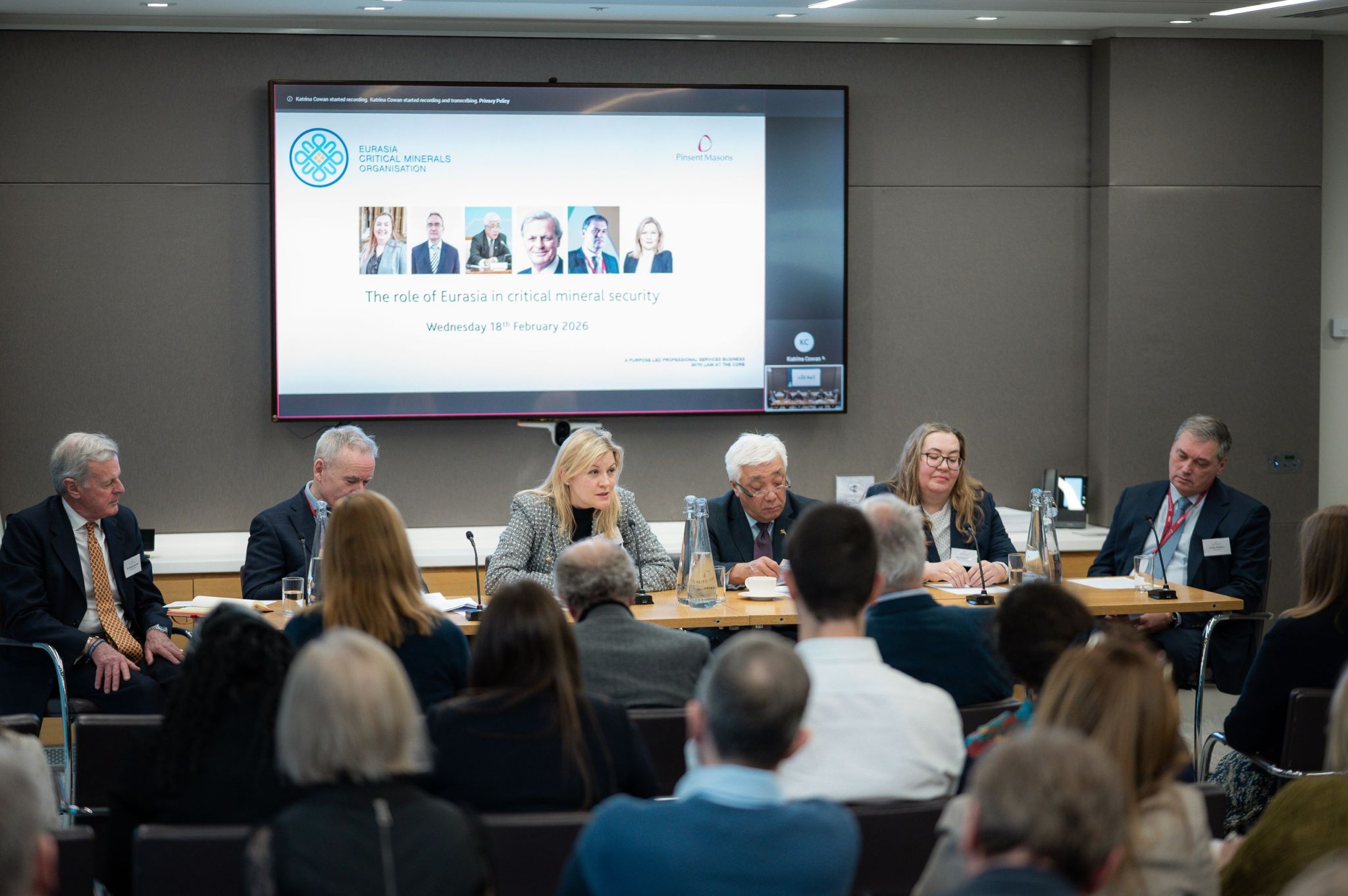
  • First Meeting of the Eurasian Critical Minerals Organisation (ECMO)

    First Meeting of the Eurasian Critical Minerals Organisation (ECMO)

    The panel discussion marked the first public engagement of the Eurasian Critical Minerals Organisation and focused on the growing strategic importance of Eurasia in global critical mineral supply chains. Particular attention was given to Kazakhstan, Uzbekistan, Mongolia, Kyrgyzstan and Tajikistan, set against a backdrop of geopolitical change, supply-chain vulnerability and rising global demand for responsibly sourced critical raw materials.

    Speakers highlighted the diversity of investment environments across the region. Mongolia was cited as a leading example of transparency, due to its publicly accessible national geological database, which provides information on licences, ownership, geological data and environmental conditions. This level of openness was seen as a strong advantage for investors. Other countries in the region were described as having extensive geological data inherited from the Soviet period, much of which has yet to be fully digitised or made widely accessible.
    The panel agreed that improving geological data transparency across the region would significantly strengthen investor confidence and support new exploration.

    Kazakhstan was recognised as the most established mining jurisdiction in the region, with a long history of production and a diverse mineral base. Uzbekistan was described as an increasingly important emerging player, combining significant mineral potential with ongoing economic and regulatory reforms aimed at attracting international investment.

    Kyrgyzstan and Tajikistan were discussed as highly prospective but more constrained environments, where progress on governance, infrastructure and regulatory consistency will be important to unlocking long-term, sustainable investment.

    Mongolia was noted for its openness to mining investment, alongside the need to balance development with environmental and social considerations.

    The discussion also addressed the region’s strategic geography. Positioned between Russia and China, Eurasian countries are increasingly integrated into regional transport and infrastructure corridors, including those associated with China’s Belt and Road Initiative. While such investment was recognised as important, speakers stressed the shared objective among regional governments of diversifying their international partnerships.

    A broad and balanced investor base was described as being firmly in the national interest, strengthening resilience and reducing over-reliance on any single partner.

    Panellists also highlighted the growing link between critical minerals, industrial strategy and security. Recent geopolitical developments, including the war in Ukraine, have sharpened European focus on supply-chain resilience and strategic autonomy. Minerals found across Central Asia and Mongolia were described as essential inputs for clean energy technologies, advanced manufacturing and defence-related applications.

    From a geological perspective, the panel emphasised that large parts of the region remain underexplored, despite extensive historic discoveries. Many critical minerals occur as by-products of major commodities or within historic mine tailings. Advances in extraction and processing technologies, alongside the digitisation of legacy data and the use of modern analytical tools, were identified as key opportunities to unlock this potential.

    The political context was discussed through the lens of expanding C5+1 engagement formats between Central Asia and major global partners, including the EU, the UK, the US and others. These frameworks reflect growing recognition of Central Asia as a coherent region and a constructive partner in global economic and resource security discussions. However, speakers agreed that the priority now is to translate dialogue into practical outcomes and investable projects.

    The role of ECMO


    The panel concluded that ECMO has an important role to play as a practical, delivery-focused platform. Rather than duplicating existing diplomatic initiatives, ECMO aims to support implementation by bringing together governments, state-owned enterprises, investors, technology providers and financial institutions. By promoting transparency, best practice and ESG-aligned development, ECMO can help reduce investment risk, support responsible project development and unlock international capital. In doing so, ECMO seeks to help Kazakhstan, Uzbekistan, Mongolia, Kyrgyzstan and Tajikistan turn their significant mineral endowments into resilient, diversified and sustainable supply chains .
  • Qarmet Launches Manganese Ore Production at West Karazhal Deposit

    Qarmet Launches Manganese Ore Production at West Karazhal Deposit

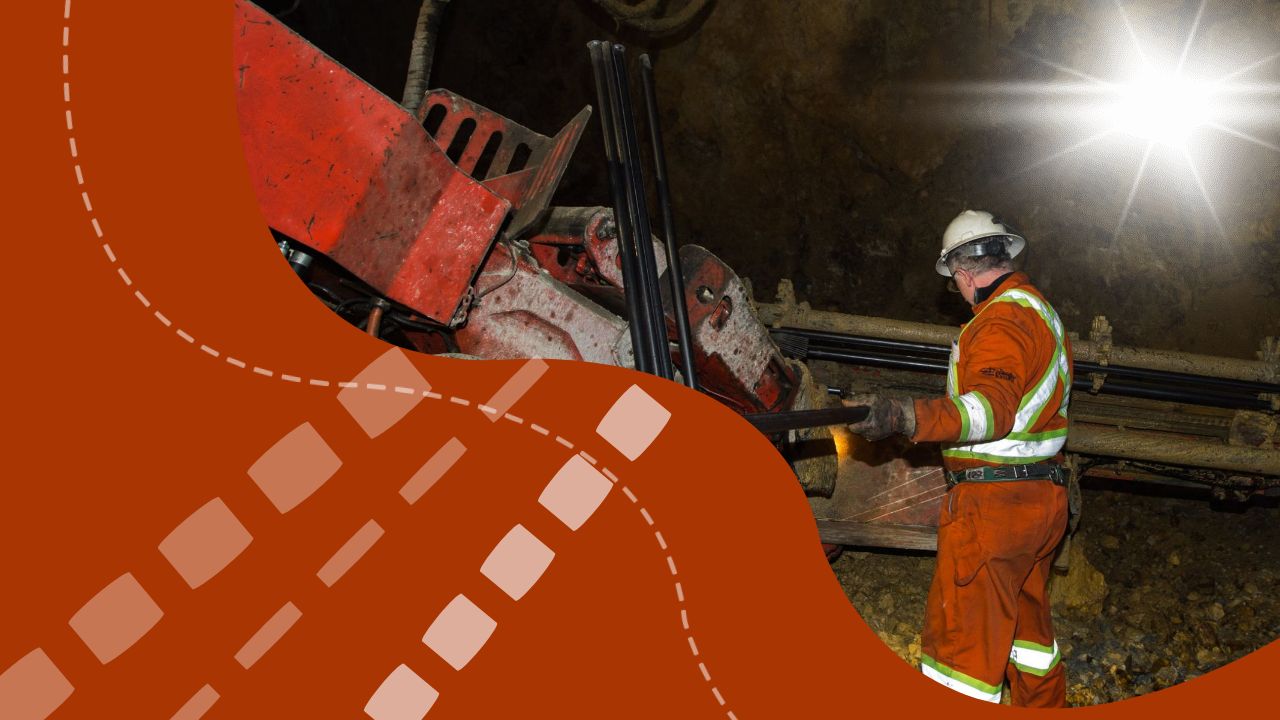
    Qarmet has commenced manganese ore extraction at the West Karazhal deposit of its Iron Ore Department following the breakthrough connection of underground workings, marking the first such operation at the site in more than 30 years.

    The newly developed mining horizon has been integrated with the mine’s main automotive decline, enabling large-scale underground equipment to access previously remote sections of the шахта. Previously, operations in this area were carried out manually without high-capacity machinery. The technical upgrade now allows the company to begin industrial-scale manganese mining.

    The West Karazhal deposit is considered one of the largest manganese resources globally, with reserves estimated at 349 million tonnes. In 2026, Qarmet plans to extract 500,000 tonnes of manganese ore, with a long-term target of reaching design capacity of 2.5 million tonnes per year.

    Manganese is set to become a strategic focus for the operation, forming a central pillar of Qarmet’s long-term development plans. The company intends to increase production volumes, introduce advanced engineering solutions and adopt best international practices in both mining and processing.

    According to Qarmet, interest from potential buyers has already been confirmed through supply inquiries, underscoring the commercial prospects of the project.

    Meanwhile, the Atasu mine currently produces 2.2 million tonnes of ore annually. Through the construction of the Central Shaft Group, the company aims to quadruple output to 9.5 million tonnes by 2028.

  • Coal Sector Protests and Shortages Threaten Power Supply in Romania and Bosnia

    Coal Sector Protests and Shortages Threaten Power Supply in Romania and Bosnia

    Workers in the coal mining and thermal power sectors across Southeast Europe are facing mounting pressure from austerity measures and supply disruptions, raising concerns about electricity generation and energy security in the region.

    In Romania, employees of state-owned Complexul Energetic Oltenia (CE Oltenia) have staged protests, including hunger strikes, in response to proposed wage cuts and the possible cancellation of meal vouchers. Thirteen workers have reportedly gone on hunger strike, while demonstrations have taken place at several coal mines and one thermal power plant.

    During a meeting with union representatives, Prime Minister Ilie Bolojan stated that CE Oltenia could only be exempted from austerity measures if it improves efficiency and reduces reliance on state aid. A government memorandum clarifying the situation is expected to be discussed next week. Energy Minister Bogdan Ivan noted that Romania had previously renegotiated with the European Commission the closure deadline for certain coal-fired power plants, extending it beyond December 31, 2025.

    Union representatives warned that if their demands are not addressed, protests could escalate and further reduce already strained coal supplies feeding the Rovinari and Turceni thermal power plants, which are central to Romania’s power system.

    Similar challenges are emerging in Bosnia and Herzegovina. The Ugljevik thermal power plant is currently offline due to coal shortages and has recently reduced salaries for all employees. In late January, the Government of the Republic of Srpska agreed to transfer part of the Ugljevik coal concession from Comsar Energy RS, majority owned by Russian businessman Rashid Sardarov, to RiTE Ugljevik, the plant’s operator.

    The transferred deposit reportedly contains around 50 million tonnes of coal, enough to supply the plant for approximately 25 years. The reserves had originally been earmarked for the planned Ugljevik 3 project, which was never completed.

    Labor tensions have also surfaced at the Zenica coal mine, which is scheduled for closure. In September, miners staged a five-day hunger strike over unpaid wages.

    The combined impact of labor unrest and coal shortages has contributed to a sharp rise in electricity imports. In 2025, Bosnia and Herzegovina’s electricity imports reached a record €321.6 million, roughly double the previous year, partly due to production halts at coal-fired facilities.

  • KazZinc Reports $5.1 Billion Revenue in 2025 as Profit Surges on Higher Metal Prices

    KazZinc Reports $5.1 Billion Revenue in 2025 as Profit Surges on Higher Metal Prices

    Kazakhstan-based KazZinc generated $5.1 billion in revenue in 2025, according to preliminary financial results published by its main shareholder, the Anglo-Swiss commodity group Glencore, which owns nearly 70% of the company. The remaining stake is largely held by state mining holding Tau-Ken Samruk.

    In addition to revenue, the report disclosed key performance indicators for KazZinc in 2025, including adjusted EBITDA of $1.642 billion, depreciation of $666 million and adjusted EBIT of $976 million.

    For comparison, in 2024 KazZinc recorded revenue of $4.2 billion, adjusted EBITDA of $1.185 billion, depreciation of $725 million and adjusted EBIT of $460 million.

    Operating costs in 2025 amounted to $4.333 billion, resulting in net profit of $774 million for the year. Of this, approximately $540 million was attributable to Glencore as the controlling shareholder. Dividends paid to the non-controlling shareholder, primarily Tau-Ken Samruk, reached $242 million. In 2024, KazZinc’s net profit stood at $308 million with costs of $3.9 billion.

    The improved financial performance was largely driven by higher prices for key metals produced by the company, including zinc, gold and copper. In its annual presentation, Glencore reported that adjusted EBITDA for its metals and minerals segment rose 18% year-on-year to $7 billion, supported by stronger zinc margins, gold-related investments at Altyntau Kokshetau and increased copper volumes and prices in the second half of the year.

    Glencore also recorded a non-cash balance sheet capitalisation of $249 million related to the extension of KazZinc’s lease of the Bukhtarma hydropower plant. The group noted expectations of closures of several smaller Kazakh mines.

    According to Interfax-Kazakhstan, Glencore’s net profit in 2025 amounted to $363 million on revenue of $247.54 billion, while its net debt at year-end stood at $11.17 billion.

    Earlier reports indicated that as part of its portfolio restructuring, Glencore may announce in the coming weeks the sale of its 70% stake in KazZinc. Analysts estimate the asset’s value at approximately $5 billion.

  • Sibanye Stillwater Reaffirms Battery Metals Strategy Despite Keliber Impairment

    Sibanye Stillwater Reaffirms Battery Metals Strategy Despite Keliber Impairment

    South African mining group Sibanye Stillwater remains committed to its battery metals strategy despite recording an additional 2.46 billion rand ($152.6 million) impairment on its Keliber lithium project in Finland, CEO Richard Stewart said during a results call.

    The company, which began in 2013 with three gold mines before expanding into platinum group metals, has in recent years diversified into lithium, nickel and zinc as part of a strategic shift toward metals used in renewable energy and decarbonization technologies.

    In 2025, Sibanye booked total impairments of 7.8 billion rand on Keliber, reflecting a weaker long-term price outlook for lithium hydroxide. The asset is currently valued at approximately 9 billion rand. Earlier in February 2025, the company also withdrew plans to invest in the Rhyolite Ridge lithium project in the United States after lithium prices declined sharply.

    Stewart said the group’s long-term strategy remains focused on supplying critical metals that support the global energy transition. At Keliber, Sibanye has opted for a phased production approach, beginning with spodumene concentrate while deferring potential production of battery-grade lithium hydroxide until market conditions improve.

    He added that policy initiatives by the European Union and the United States to reduce reliance on Chinese battery metals could improve the long-term pricing environment for projects such as Keliber.

    Financially, Sibanye reported headline earnings of 2.44 rand per share in 2025, compared with 0.64 rand the previous year. The improvement was driven by stronger commodity prices, including a 39% increase in the average rand gold price and a 28% rise in the average South African platinum group metals basket price.

    The stronger performance enabled the diversified miner to declare its first dividend since 2023.

  • Zhana Mys to Launch Six-Year Gold and Copper Exploration at Kara Kabyland Site in Abai Region

    Zhana Mys to Launch Six-Year Gold and Copper Exploration at Kara Kabyland Site in Abai Region

    Kazakhstan-based Zhana Mys LLP plans to begin geological exploration at the Kara Kabyland site in the Abai region, according to its statement of intended activity. The subsoil plot is located in the Ayagoz district, approximately 210 km east of the district centre of Ayagoz and 20 km south of the village of Emeltau.

    The exploration licence, issued by the Ministry of Industry in July 2025, covers 63 blocks with a total area of 145 square kilometres. The study programme is designed for a six-year period.

    Historical Soviet-era geophysical surveys in the area identified the promising Sharyk 1 gold prospect, along with other occurrences of copper, molybdenum, polymetals and gold. The Ayagoz district already hosts smaller gold deposits such as Taskora and Muzbel. Notably, aerial gamma-spectrometric methods were previously applied in the area, simultaneously measuring total radioactivity as well as uranium, thorium and potassium content.

    The exploration programme includes topographic and geodetic surveys, geochemical sampling, and geophysical work such as aeromagnetic surveys, induced polarization (IP-SG) electrical prospecting and profile electrical tomography. Mining and drilling operations will also be conducted to collect samples for laboratory analysis, alongside geological and hydrogeological assessments of potential development conditions.

    A light aircraft with a flight endurance of at least five hours will be used for комплекс aerogeophysical surveying at a scale of 1:20 000, according to the project documentation. Electrical prospecting is specifically aimed at identifying and delineating potential copper-porphyry mineralization zones and assessing their distribution within the licence area.

    Environmental documentation notes the presence of small rodents, lizards and venomous pit vipers in the area, as well as occasional sightings of saiga antelope, argali, hares, badgers, wolves and bustards. Migratory birds such as ducks and waders are observed during seasonal flights. The district is sparsely populated.

    No water bodies are located directly adjacent to the exploration site. The nearest major water body is Lake Balkhash, approximately 130 km away. The project area lies outside designated water protection zones.

    According to media reports, Zhana Mys previously held several licences in the Northern Balkhash region and in 2023 was among subsoil users that returned certain licences. Public records indicate that the company’s founder is Solidcore Eurasia, affiliated with gold mining holding Solidcore Resources, whose shares are listed on the Astana International Financial Centre exchange. Earlier licence registers published in 2023 listed Kanat Dosmukametov, head of Solidcore Eurasia, as the beneficial owner.

  • US Energy Secretary Says Greenland Interest Driven by Security, Not Mining

    US Energy Secretary Says Greenland Interest Driven by Security, Not Mining

    The Trump administration’s primary interest in Greenland is rooted in national security rather than the development of its rare earth or energy resources, US Energy Secretary Chris Wright said at a conference in Paris hosted by the French Institute of International Relations.

    President Donald Trump has repeatedly expressed interest in expanding US influence in Greenland and has explored potential mineral supply agreements as part of a broader strategy to reduce reliance on China for critical raw materials. However, Wright clarified that mineral development is secondary to security considerations, particularly in the context of expanding the US military presence on the Arctic island.

    “We’ve got all sorts of places to mine rare earth metals and produce oil and gas,” Wright said, adding that while resource development might benefit Greenland economically, the United States’ core objective is strategic security.

    Rare earth elements have been central to Washington’s geopolitical strategy, as the US seeks to challenge China’s dominance in the supply of critical minerals used in technologies ranging from smartphones and renewable energy systems to advanced defence applications.

    During the early months of his second term, Trump pursued mineral supply discussions with Greenland and Ukraine. More recently, however, the administration has shifted focus toward downstream processing, widely regarded as the key bottleneck in building alternative supply chains outside China.

    Wright also downplayed the scarcity narrative surrounding rare earth elements, noting that the materials are geographically widespread and that more commercially attractive mining jurisdictions exist elsewhere.

  • Kazakhstan to Launch 200 Industrial Projects in 2026 Targeting KZT 1.5 Trillion in Import Substitution

    Kazakhstan to Launch 200 Industrial Projects in 2026 Targeting KZT 1.5 Trillion in Import Substitution

    Kazakhstan plans to implement a pool of 200 investment projects this year aimed at generating import substitution worth 1.5 trillion tenge, according to statements made at a board meeting of the Ministry of Industry and Construction.

    The flagship projects include new production facilities for mineral fertilizers, specialised machinery and ferrosilicon in the Zhambyl, Pavlodar and Karaganda regions.

    Once all projects reach full capacity, total output is expected to amount to approximately 2.3 trillion tenge. Of this, around 0.5 trillion tenge is projected for export markets, while 1.5 trillion tenge will contribute directly to import substitution.

    First Deputy Prime Minister Roman Sklyar instructed the ministry to accelerate the launch of the National Industrial Information System and to present a new model for the development of special economic zones within one month. He also tasked officials with expanding geological exploration to 2.2 million square kilometres and updating plans related to rare metals development.

    Earlier, citing a forecast by MINEX Kazakhstan, analysts noted that the country’s mining and metallurgical complex in 2026 will operate under the simultaneous influence of rising global metals demand and tightening domestic regulatory and fiscal conditions. According to the review, the sector is entering a phase of deep structural transformation.

  • Velta Agrees Sale to U.S. Investor CRML as Part of Strategic Relaunch Plan

    Velta Agrees Sale to U.S. Investor CRML as Part of Strategic Relaunch Plan

    Ukrainian titanium producer Velta is entering a new phase of development after its owner, businessman Andriy Brodsky, agreed in early 2026 to sell the company to U.S.-based investment group CRML in what market sources describe as a “survival and relaunch” transaction.

    The deal is designed to secure fresh capital and reposition the company within global titanium supply chains. Under the agreement, Velta is expected to strengthen integration with major Western industrial partners and expand its footprint in the international titanium market.

    As part of its transformation strategy, Velta signed an agreement with European Lithium and initiated a due diligence process, a key step before further structural decisions are taken. Following the audit, the partners may consider spinning off Velta as a standalone entity and pursuing a listing on the NASDAQ stock exchange in the United States.

    A NASDAQ listing would provide access to one of the world’s deepest pools of technology-focused capital and could support large-scale fundraising. The company intends to channel new investment into building a metallic titanium plant based on its proprietary technology, as well as expanding research and development capabilities.

    Industry observers say the transaction opens new financing pathways and positions Velta to evolve into a vertically integrated titanium player with advanced technological expertise. The strategy also includes investment in in-house power generation to lower operating costs and improve efficiency.

    If completed, a U.S. stock market listing would mark one of the most notable Ukrainian M&A developments in the post-2022 period, highlighting the ability of export-oriented, high-tech manufacturers to attract Western investment despite challenging market conditions.

    The transaction signals more than a change in ownership, potentially marking a broader reset for Ukraine’s titanium industry and its integration into global supply chains.

  • Strickland Metals Targets Major Growth with 70,000m Drill Campaign at Serbia’s Rogozna Gold Project

    Strickland Metals Targets Major Growth with 70,000m Drill Campaign at Serbia’s Rogozna Gold Project

    Strickland Metals has outlined an aggressive growth strategy for its Rogozna gold project in Serbia, positioning the asset as one of the largest undeveloped gold resources among ASX-listed explorers. The company plans to undertake a 70,000-metre drilling programme in 2026, the largest exploration campaign in the project’s history, ahead of delivering a Pre-Feasibility Study (PFS) in the first half of 2027.

    The Rogozna project currently hosts a total resource of 8.6 million ounces of gold equivalent (AuEq) across four defined deposits, representing a 58% increase from the 5.4 million ounces announced in 2024. The deposits include Gradina, Shanac, Medenovac and Copper Canyon, with Shanac accounting for the largest share at 5.3 million ounces AuEq. Gradina stands out for its higher grade, hosting 1.2 million ounces at 3.0g/t AuEq, offering strong underground mining potential with recoveries of around 90% through conventional flotation.

    Strategic validation has come from Zijin Mining, which holds a 4% stake in Strickland. Zijin is already the largest mining operator in Serbia, and its investment provides both technical endorsement and regional credibility.

    Serbia’s mining jurisdiction is considered favourable, located within the Western Tethyan Belt and home to multiple large porphyry systems. The country is Europe’s third-largest copper producer, with mining contributing approximately 2.7% of GDP. Major international operators including Rio Tinto and BHP are present in the country, reinforcing its status as an established mining destination.

    Recent drilling has delivered two new discoveries within 15 months. At Red Creek, located near Shanac, drilling returned intercepts including 53 metres at 2.3g/t AuEq. At Kotlovi, west of Medenovac, results included 277.3 metres at 1.3g/t AuEq. Both zones remain open in multiple directions, suggesting further resource growth potential.

    In February 2026, Strickland completed an oversubscribed A$55 million institutional placement, lifting its cash position to A$68.2 million and increasing institutional ownership to 38%. The company is fully funded through PFS completion in H1 2027, supporting both the large-scale drilling programme and ongoing technical studies.

    The 2026 programme will include resource expansion drilling, scoping studies, additional discovery testing across the 184km² licence area and porphyry exploration. Multiple resource updates are expected through late 2026, culminating in PFS delivery in early 2027.

    With a current market capitalisation of approximately A$592 million, the company trades at roughly US$49 per contained ounce of gold equivalent. The scale of the resource base, ongoing exploration success and strategic backing position Rogozna as one of the most significant gold development projects among ASX-listed companies.