Website: Eurasia.com

  • Lithium Mining Plans Resurface in Serbia Amid EU Interest

    Lithium Mining Plans Resurface in Serbia Amid EU Interest

    Serbia’s lithium mining plans, previously shelved in 2022 following widespread protests, have re-emerged. Despite Prime Minister Ana Brnabić’s earlier announcement that the controversial Rio Tinto-backed Jadar project was terminated, recent reports suggest the multinational company continues preparatory activities. These include land acquisitions and community sponsorships in the Loznica region, raising concerns about resumed extraction efforts.

    Germany and the EU, prioritizing lithium for energy needs, seem willing to collaborate with Serbia’s right-wing government, led by Aleksandar Vučić, despite ongoing allegations of authoritarianism. While Vučić views lithium mining as a missed economic opportunity, Green Party representatives in parliament have demanded stricter protections for affected communities. The revival of mining plans risks undermining public trust in the EU accession process, given the perceived double standards regarding environmental and democratic values.

  • EU Bolsters Lithium Supply with Latin American Partnerships

    EU Bolsters Lithium Supply with Latin American Partnerships

    The European Union is intensifying collaborations with Latin America to secure critical raw materials, particularly lithium, essential for its energy transition. Facing a 12-fold rise in lithium demand by 2030 and 21-fold by 2050, the EU relies heavily on Chile, which supplies 79% of its refined lithium. A trade agreement with Chile, effective February 2025, introduces a chapter dedicated to energy and raw materials—an EU first.

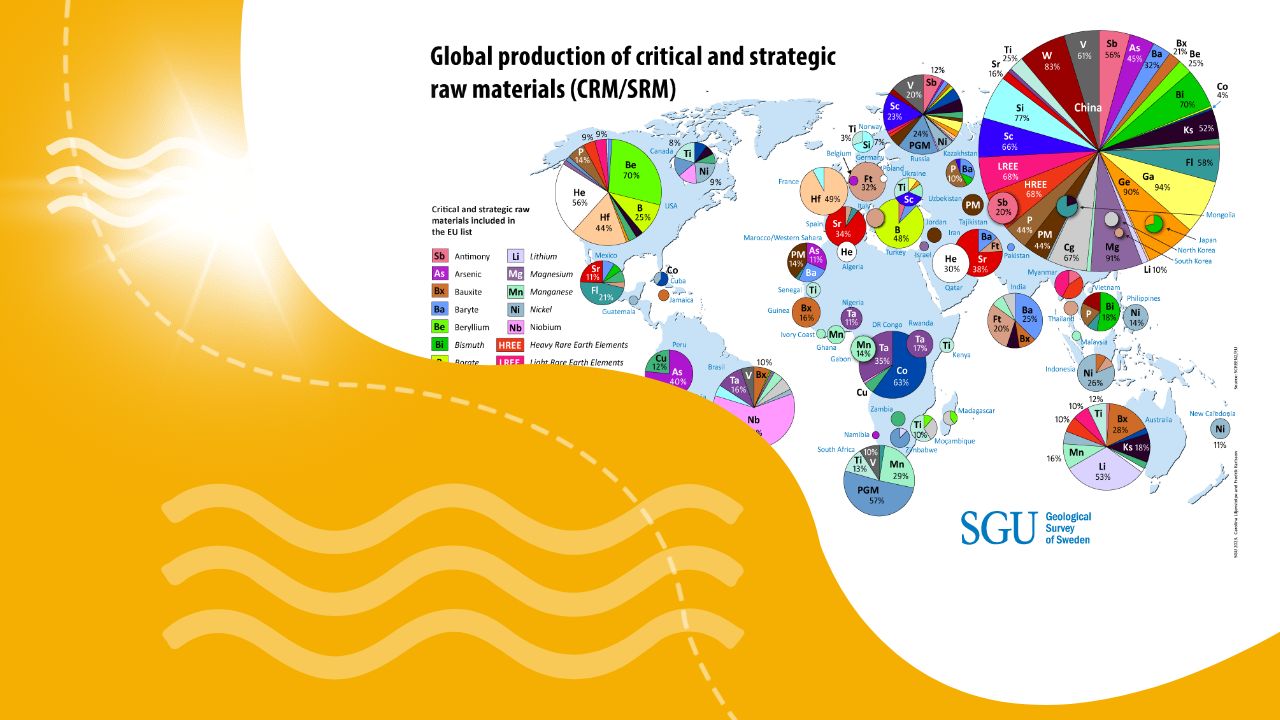
    Additionally, the EU has reached a preliminary deal with Mercosur to lower tariffs and export restrictions. Brazil, the region’s leading supplier of critical raw materials, and other Latin American countries extract 25 of the 34 materials on the EU’s critical list.

    While these partnerships offer economic opportunities, they face environmental and social challenges. Over 40% of environmental conflicts in Latin America are linked to mining activities. Concerns persist about the sustainability of water-intensive lithium extraction, despite EU assurances of provisions for sustainable mining and environmental assessments.

  • Dundee Precious Metals (DPM) Preliminary Production Results for 2024

    Dundee Precious Metals (DPM) Preliminary Production Results for 2024

    Dundee Precious Metals Inc. (TSX: DPM) reported its preliminary gold and copper production for Q4 and FY 2024. Both Chelopech and Ada Tepe mines achieved their annual production guidance, marking DPM’s tenth consecutive year meeting gold production targets.

    Chelopech processed 2,143.7 Kt of ore, producing 167,000 ounces of gold and 29.7 million pounds of copper for the year, while Ada Tepe processed 772.4 Kt, yielding 94,300 ounces of gold. Consolidated annual production totaled 261,300 ounces of gold and 29.7 million pounds of copper. The Q4 results were highlighted by Ada Tepe’s strongest quarter with 29,000 ounces of gold produced.

    Additionally, DPM concluded a tolling agreement, receiving $162M from Sinomine Resource Group, and maintained capital returns through share repurchases ($50M in 2024) and dividends ($0.04/share payable January 15, 2025).

  • Kazakhstan’s Foreign Investment Inflows Plummet to Historic Low

    Kazakhstan’s Foreign Investment Inflows Plummet to Historic Low

    In 2024, Kazakhstan experienced a significant decline in foreign direct investment (FDI), with inflows dropping 32.3 times compared to the same period in 2023, from $2.3 billion to $72.9 million, marking the lowest level recorded since 2005. This drastic decrease was first highlighted by economist Galymzhan Aitkazin.

    The National Bank of Kazakhstan’s data revealed that FDI includes reinvested earnings and debt instruments in addition to foreign equity participation. For the entire year of 2023, FDI inflows had already halved compared to the previous year, reaching $3.4 billion. The peak of foreign investment was in 2008 at $14.3 billion, while the lowest (excluding 2024) was in 2005 at $2 billion.

    Russia led FDI into Kazakhstan in 2023 with $931.9 million in the first half of the year, although this represented a 21.4% decline from the same period in 2023. Other top contributors included Singapore, Luxembourg, Switzerland, and Cyprus. The wholesale and retail trade, financial and insurance activities, and manufacturing sectors attracted the most investments.

    Conversely, capital outflows from Kazakhstan were significant in the first half of 2024, with the United Kingdom receiving $1 billion, followed by the USA ($353 million), China ($244 million), and France ($148 million). Aitkazin attributes this trend to capital repatriation, loan repayments to foreign parent companies, and profit or dividend withdrawals.

    By the end of the first nine months of 2024, FDI outflows amounted to $1.5 billion, compared to $701.5 million in inflows during the same period in 2023. The net FDI position stood at minus $1.6 billion, an improvement from minus $3.2 billion in 2023.

    Aitkazin describes the net FDI situation as catastrophic, citing capital outflows and reduced investments in resource sectors due to the completion of major projects and the ongoing uncertainty in the investment climate and business environment.

    Despite the challenges, Kazakhstan’s gross FDI inflows for the first three quarters of 2024 totaled $12.7 billion, a 35.7% decrease year-on-year. In 2023, Kazakhstan ranked sixth globally in macroeconomic development and FDI attraction, according to the IMF and FDI Intelligence.

    Aitkazin notes that while gross FDI inflows reflect foreign investors’ interest in Kazakhstan’s economy, they do not account for capital outflows. Ex-president Nursultan Nazarbayev had set a target of $30 billion in FDI by 2025, with the highest inflow recorded in 2012 at $28.8 billion and the lowest in 2015 at $15.4 billion.

    In August 2023, National Bank analysts concluded that the government of Kazakhstan uses an inaccurate metric to assess FDI effectiveness, as it overlooks capital outflows, thus consistently showing positive results. The Bank stated that gross FDI data alone is insufficient to understand the full picture of investment flows.
  • Tokayev Pushes for Faster Nuclear Power Plant Construction in Kazakhstan

    Tokayev Pushes for Faster Nuclear Power Plant Construction in Kazakhstan

    Kazakh President Kassym-Jomart Tokayev has called for the acceleration of nuclear power plant construction in Kazakhstan. According to Tokayev, the country may build two or three large nuclear stations to advance its nuclear energy sector.

    “We are currently focused on major infrastructure projects, digitalization, artificial intelligence, and nuclear energy. These are the key strategic areas for the development of our country. The government must prioritize these critical issues in its work,” the president emphasized.

    Tokayev also discussed the future of nuclear energy in Kazakhstan, noting the need for faster progress.

    “Regarding the construction of nuclear power plants — we need to speed up. As I mentioned in an interview, we plan to build two large plants, possibly three. We must transform Kazakhstan into a country with a developed nuclear energy sector, a nation where artificial intelligence functions and digitalization is fully implemented,” he concluded.

    On October 6, 2023, Kazakhstan held a referendum on the construction of nuclear power plants in the Almaty region. Tokayev had stated that, should the public approve, the construction would be undertaken by an international consortium of companies.

    The referendum results showed that 71.12% of Kazakh citizens voted in favor of nuclear plant construction. The Ministry of National Economy announced that the state would not fund the project. Instead, the government is considering project financing, with funds potentially provided by a consortium of international financial institutions. The state would repay this loan not from the national budget, but from the revenue generated by the nuclear plants.

    Kazakhstan is currently considering four companies as potential suppliers of nuclear technology: CNNC (China), Rosatom (Russia), KHNP (South Korea), and EDF (France).

  • UzKTK Aims to Boost Tungsten Production by 50 Times by 2030

    UzKTK Aims to Boost Tungsten Production by 50 Times by 2030

    Uzbekistan Technological Metals Combinat (UzKTK) has ambitious plans to significantly increase its production of tungsten and molybdenum by 2030. The company aims to boost tungsten production by a staggering 50 times and molybdenum production by 3.4 times in value terms.

    This announcement was made by Ulugbek Ruziyev, Deputy Head of UzKTK. He highlighted the company’s commitment to developing Uzbekistan’s rare metals sector, with 34 projects focused on exploration, extraction, and processing.

    UzKTK’s diverse project portfolio includes:

    • Exploration: 17 projects dedicated to identifying and assessing new deposits of lithium, tungsten, tantalum, niobium, graphite, and other rare earth metals.
    • Technology development: 8 projects focused on developing specialized technologies for processing rare metals.
    • Geological data analysis: 6 projects aimed at consolidating geological mapping, biochemical, and geophysical data.
    • Resource utilization: 3 projects focused on utilizing additional metals and rare elements.

    Established in July 2024 on the foundation of the “Rare Metals and Hard Alloys” scientific and production association, UzKTK is poised to become a key player in Uzbekistan’s burgeoning rare metals industry.

    This ambitious growth strategy aligns with the government’s focus on developing the rare metals sector. President Shavkat Mirziyoyev has called for $500 million in projects for the extraction and processing of rare earth metals, recognizing their growing importance in the global market.

    Uzbekistan has also strengthened international collaborations in this area, signing memorandums of understanding with the European Union and the United States on cooperation in critical raw materials. These partnerships will facilitate the development, financing, and infrastructure needed to support the sustainable supply of these valuable resources.

  • Navoi Mining and Metallurgical Combine Boosts Production by 39% in 2024

    Navoi Mining and Metallurgical Combine Boosts Production by 39% in 2024

    Navoiy Mining and Metallurgical Combinat (NGMK), Uzbekistan’s leading gold mining company, has shared its 2024 performance results. In 2024, NGMK produced goods worth 93.9 trillion sums, representing a 5.3% growth compared to 2023. However, when compared to the 2023 report, the production volume in sum terms increased by 39.1%.

    NGMK paid 57.5 trillion sums in taxes and dividends to the Uzbekistan state budget.

    Investment programs were implemented with a total value of $790 million, creating 715 new jobs. As part of the localization program, NGMK produced goods worth 916 billion sums and procured products worth 6.2 trillion sums through inter-industry industrial cooperation.

    By implementing a set of measures to optimise costs, NGMK managed to reduce the production cost by 3.7 trillion sums.

    In October 2024, NGMK issued its first Eurobonds worth $1 billion on the London Stock Exchange (LSE). The bonds consist of two tranches: one worth $500 million with a four-year maturity and a 6.7% annual coupon rate, and another worth $500 million with a seven-year maturity and a 6.95% annual coupon rate.

    The total demand for the Eurobonds reached $5.5 billion, the highest for Uzbekistan issuers since the first sovereign bond issuance in 2019. NGMK plans to issue another $500 million worth of Eurobonds in 2025.

  • Kazakh-Chinese Nuclear Fuel Venture Hits Production Milestone

    Kazakh-Chinese Nuclear Fuel Venture Hits Production Milestone

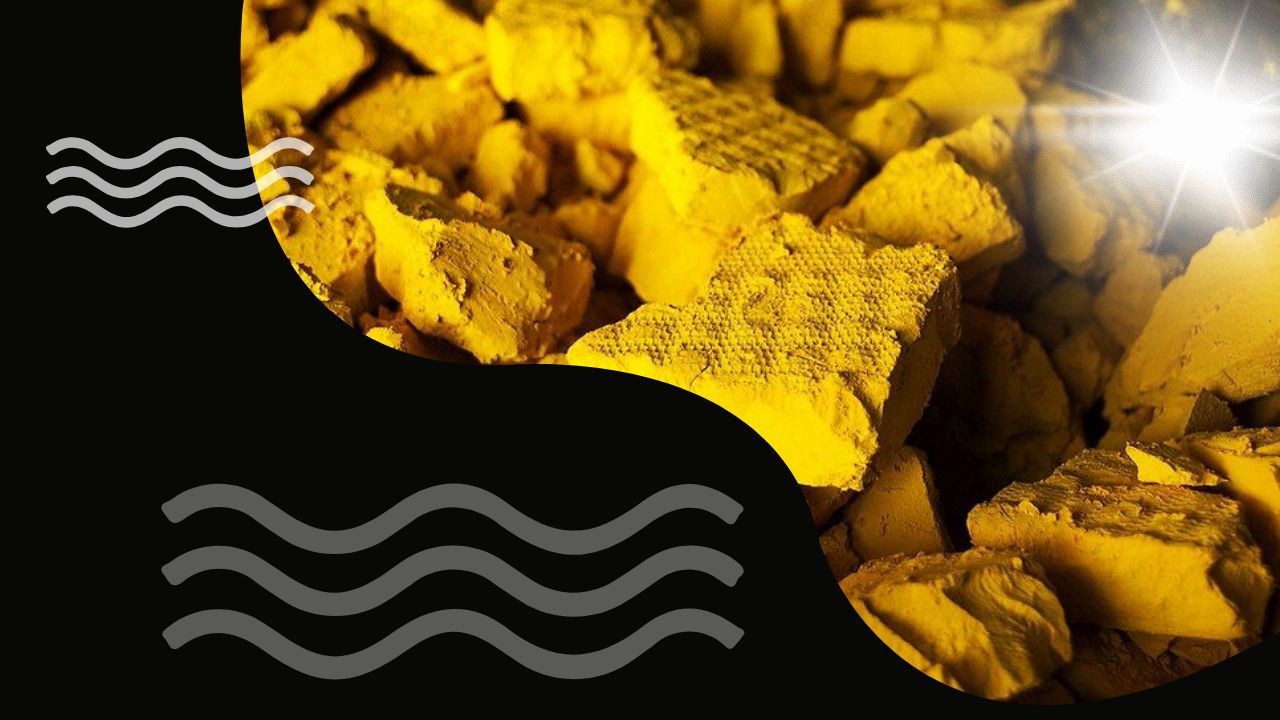
    The Kazakh-Chinese joint venture, Ulba-TVS LLP, has successfully reached its target production capacity of 200 tons of low-enriched uranium fuel assemblies by the end of 2024. This achievement is enough to reload nuclear fuel for six reactors.

    The Ulba-TVS plant, operational since November 2021, has played a crucial role in meeting the increasing demand for nuclear power in China. The facility, located in Kazakhstan, is the only one in Central Asia dedicated to producing nuclear fuel for power plants. It has received certification from Framatome and recognition as a certified nuclear fuel supplier from the China General Nuclear Power Corporation (CGNPC-URC), the end user in China. This certification enhances the plant’s credibility and ensures the high quality of its nuclear fuel products.

    The joint venture is 51% owned by Ulba Metallurgical Plant (Kazatomprom) and 49% by CGNPC-URC. In December 2022, Ulba-TVS delivered its first consignment of fuel assemblies to a Chinese nuclear power plant. Kazatomprom is the world’s largest producer of uranium, with the company’s attributable production representing approximately 20% of global primary uranium production in 2023.

  • Kazakhmys to Reclaim Land After Clay Mining in Kazakhstan

    Kazakhmys to Reclaim Land After Clay Mining in Kazakhstan

    Kazakhmys, led by billionaire Vladimir Kim, has announced plans to halt clay extraction at the Topar Power Distribution Station and initiate reclamation efforts at the Jalayir-1 clay deposit in Kazakhstan’s Abai District, Karaganda region.

    According to a statement on the planned activities, the project will begin and conclude in 2026, with a focus on rehabilitating the land affected by previous mining activities. The company holds the rights to a 13.2-hectare plot, located 3 kilometers west of the Karabas station and 7 kilometers south of the town of Abai. As of early 2023, the Jalayir-1 deposit was estimated to contain 906,000 cubic meters of clay, extracted via open-pit methods from south to north. However, Kazakhmys has not disclosed how much clay will be mined before the reclamation process starts in 2026.

    In addition, Kazakhmys revealed plans to begin the extraction of 156,000 tons of construction stone at the Jalayir site in March or April 2025. The mining operations are expected to last for 220 days, with the full amount of stone to be extracted in one year.

    The Topar Power Distribution Station, which is part of Kazakhmys, is primarily involved in electricity generation, distribution, and the handling of non-hazardous waste. Kazakhmys Power Projects B.V., a subsidiary of Kazakhmys, owns the station. The Kazakhmys group is largely controlled by Kazakhmys Copper, with 99.1% of the company’s shares owned by this entity. The ultimate parent company, Kazakhmys Holding Limited, is based in the Astana International Financial Centre (AIFC) and is 70% owned by Vladimir Kim, ranked fourth on Forbes’ list of Kazakhstan’s wealthiest individuals with a net worth of $3.6 billion, while 30% is held by Eduard Ogai, who is ranked 13th with a net worth of $800 million.

  • Barroso’s Lithium Mining Row in Portugal shows no sign of easing

    Barroso’s Lithium Mining Row in Portugal shows no sign of easing

    Tensions are escalating in Boticas, Portugal, where Mayor Fernando Queiroga has accused Savannah Resources, a lithium mining company, of trespassing on private land outside their permitted area. Queiroga condemned the company’s actions, alleging they used the national guard (GNR) to intimidate a landowner who refused them access. He criticised Savannah’s “colonial and abusive tone” and their aggressive pursuit of lithium mining in the region.

    Savannah Resources CEO Emanuel Proença denies the accusations, stating the company operates strictly within its granted easements. He claims the mayor and local activists are inventing flaws to obstruct the project.

    This latest clash follows Savannah’s controversial plan to expropriate 472 plots of land in Boticas, a move that has further inflamed residents and the local council. Queiroga vows to fight the expropriation, stating the council will not sell its land “for any price.”

    Despite strong local opposition and concerns about environmental damage, the Portuguese government continues to support Savannah’s lithium mining project. The company, which has delayed its start date multiple times, now aims to begin operations in 2027. The battle for Barroso’s lithium shows no signs of abating.