German-Australian start-up Vulcan Energy Resources has been awarded €104 million in public funding to advance its clean lithium production project in Germany, the company announced on Tuesday. The funding comes from the federal government and the states of Rhineland-Palatinate and Hesse, and is part of Berlin’s broader strategy to boost electric vehicle (EV) manufacturing and reduce dependency on foreign raw material imports.
The grants will support Vulcan’s €690 million investment in a geothermal-powered lithium extraction and refining facility. The project includes a plant in Landau, where lithium chloride will be extracted from geothermal brines, and a conversion plant near Frankfurt to produce lithium hydroxide — a vital input for EV battery production.
The company aims to commission its first large-scale industrial plant by the end of 2026, with a projected annual output of 24,000 tonnes of lithium hydroxide. This volume would be sufficient to power approximately 500,000 EVs per year, according to Vulcan.
Germany currently relies heavily on lithium imports from countries such as Australia, Argentina, Chile, and China. However, a recent study by the Federal Institute for Geosciences and Natural Resources and the Fraunhofer IEG suggests the country has enough lithium reserves to meet domestic demand for decades.
Germany’s lithium demand is expected to hit 170,000 tonnes annually by 2030, driven by a sharp rise in battery production needs. Economy Ministry State Secretary Stefan Rouenhoff emphasized the importance of the project, stating: “In times of increasing geopolitical challenges, it is necessary to intensify efforts to open up alternative sources of raw materials for our domestic economy.”
The €104 million in grants will begin disbursement on October 1, spread over a 36-month period. The federal states of Rhineland-Palatinate and Hesse will each co-finance approximately 30% of the total support package.
Four Members of the European Parliament from the Green/EFA group have accused the European Commission of bypassing transparency in its fast-track process for approving strategic critical raw material (CRM) mining projects. The MEPs say the Commission has refused to disclose impact assessments, kept expert identities confidential, and withheld the exact locations of several major projects—even those granted strategic status under the Critical Raw Materials Act (CRMA).
Despite multiple formal requests, the MEPs received only publicly available summaries, without access to details about projects such as Mina Doade in Spain, Barroso in Portugal, Sakatti in Finland, a lithium facility in France, and major overseas initiatives in Serbia and New Caledonia. A letter demanding transparency was sent to the Commission in May, followed by what the MEPs describe as a vague and insufficient reply.
The European Commission has defended its actions, citing Article 46 of the CRMA, which permits the withholding of trade secrets and private information related to external experts. However, critics argue that this undermines the democratic oversight process and turns the CRM Board—tasked with overseeing implementation—into a powerless body.
Across Europe, opposition to mining projects is intensifying. In France and Finland, local communities are pushing back against operations near protected areas, such as Natura 2000 sites. In Serbia, protests continue against the controversial Jadar lithium project. Environmental groups warn that accelerating mining approvals without reducing material demand or securing public consent risks serious ecological and social consequences.
While the EU intensifies efforts to secure domestic sources of lithium, cobalt, and rare earths, concerns are growing that the drive for speed and supply security is coming at the cost of transparency and public trust.
The session centered on how Central Asia is leveraging technological innovation—including digitalisation, automation, and advanced environmental management—to enhance mining sector efficiency, safety, and sustainability. It aimed to demonstrate actionable strategies for modern mining through a holistic integration of international best practices and standards, thereby boosting the region’s global competitiveness.
Digitalisation and Automation:
Speakers showcased how leading mining companies are applying digital tools for both open-pit and underground operations. Solutions described included integrated mine planning software, real-time process monitoring, and AI-driven resource optimization—all aimed at reducing operational costs and improving decision-making precision.
Laboratory Automation:
Presentations covered the shift from manual to automated laboratory systems in mining plants. Automated labs minimize human error, ensure impartiality in sample analysis, speed up turnaround times, and provide more reliable data for key processes like metal balancing, which directly impacts profitability.
Holistic, Integrated Approach:
The traditional, compartmentalized mining process is being replaced by holistic models that connect exploration, development, production, and closure. Integrated data analysis and digital twins help mines anticipate and manage ore variability, environmental risks, and process challenges across the full mine life cycle.
Modern Analytical Techniques:
New lab management solutions, such as Laboratory Information Management Systems (LIMS), streamline routine sample analysis, improve resource management, automate data entry, and assure compliance with international standards—including relevant ISO certifications. They improve sample traceability, equipment calibration, and response to quality deviations.
Environmental and Social Responsibility:
Consultancies highlighted approaches for integrating environmental management plans from project onset through mine closure and land rehabilitation, designing site-specific solutions and upholding international certifications.
Implementation of International Standards:
Consistent alignment with, and integration of, international environmental and quality management standards was emphasized as essential for Central Asian mines seeking international investment and sustainable operations.
Workforce Development:
Automation and digital tools are expediting onboarding and reducing planning errors, while fostering interdisciplinary collaboration across geology, mine planning, and environmental science.
Case Studies:
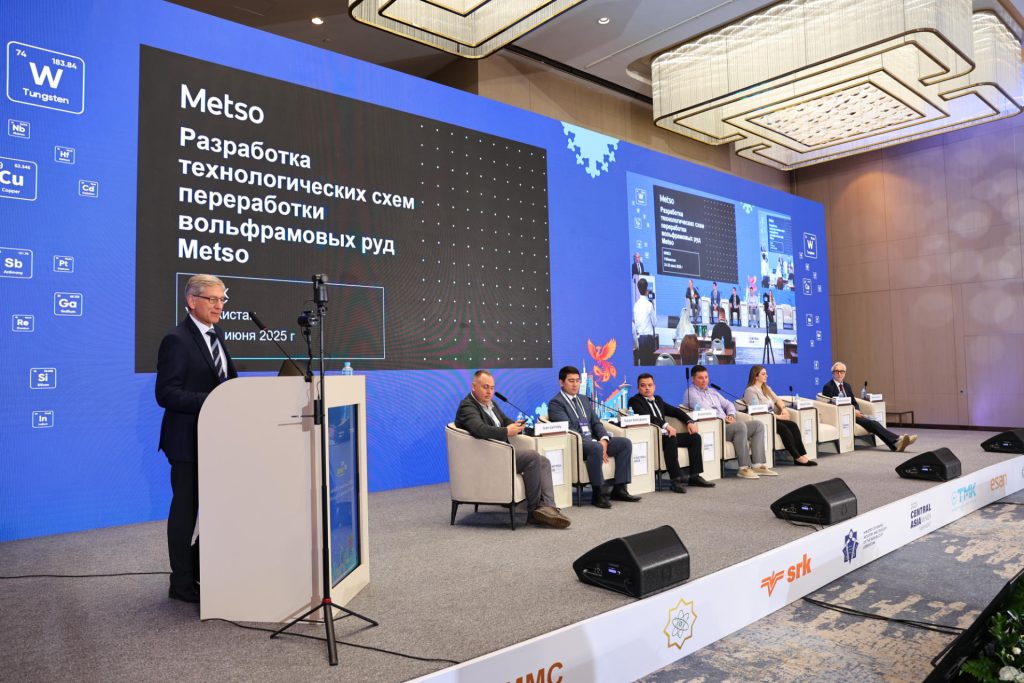
Speakers illustrated the practical impact of these technologies with real-world examples, particularly in the processing of critical materials such as tungsten, demonstrating sensor-based sorting, gravity and flotation separation, and hydrometallurgical refining—all developed to reduce energy, water, and reagent consumption.
In sum, Central Asia’s mining leaders are rapidly adopting international technologies and standards—alongside innovations in automation, laboratory efficiency, and environmental management—to secure a future of competitive, responsible, and resilient mineral production.
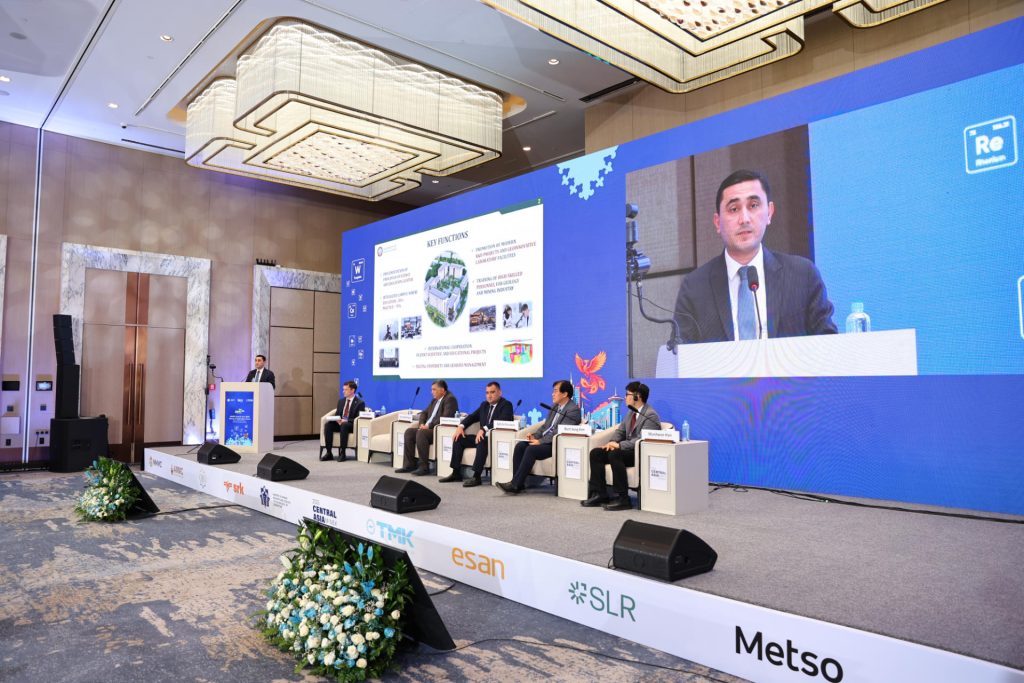
Uzbekistan is emerging as a regional leader in the field of critical minerals research and training. The country is making significant investments in institutional capacity building, illustrated by the establishment of the Higher School of Technological Metals at TMK. This new institution is forming a hub for global academic collaboration, bringing together international partners to explore innovative educational and scientific models aimed at driving progress and securing a skilled, sustainable workforce for the sector.
Recent efforts are underpinned by Uzbekistan’s ambitious commitment of $2.6 billion over three years (2025–2027), dedicated to 76 projects focusing on 28 types of rare and critical minerals. These include vital resources for emerging technologies—such as tungsten, lithium, titanium, vanadium, and others crucial for aerospace, renewable energy, and advanced manufacturing. The government’s strategic move is to pivot from simply exporting raw materials, prioritising instead advanced processing and high-value-added production, which will greatly increase the value of the country’s mineral output.
Supporting this shift, techno-parks and specialised technology hubs are being developed in mining-rich regions like Tashkent and Samarkand. These centres will integrate training, research, and innovation, helping to modernise the industry and cultivate local expertise. Additionally, President Mirziyoyev has instructed state officials to facilitate technology transfer, open modern laboratories, and establish new training facilities to prepare a new generation of mineral specialists.
The sector is also promoting international educational exchanges and joint programmes, such as partnerships with foreign universities and research institutes specialising in geology and mining. This collaborative approach is expected to not only raise scientific standards and technological capabilities but also address the anticipated demand for highly qualified professionals, estimated at around 13,000 specialists by 2030 in Uzbekistan’s mining sector.
In summary, Uzbekistan’s commitment to research, training, and institutional development—supported by international collaboration—is positioning it as a future hub for critical minerals and scientific innovation, with a clear focus on sustainability, advanced technology, and global competitiveness.
By 2040, global uranium demand for the nuclear sector is expected to have risen by 80%. This projected increase will drive the long-term growth in uranium requirements, resulting in the depletion of many large, low-cost uranium projects and a reduction in secondary sources. The difference between established uranium supply sources and actual demand could reach approximately 46,000 tonnes of uranium in 2040. Central Asia—in particular, Kazakhstan and Uzbekistan—is strategically positioned as it possesses abundant uranium resources, giving these countries a significant role in shaping the future of global energy supply.
Central Asia’s uranium industry, especially in Uzbekistan, is undergoing substantial transformation to meet these rising demands. Recent regulatory updates in Uzbekistan have facilitated increased uranium production, with targets set to exceed 7,000 tonnes per year by 2030 and total resources surpassing 100,000 tonnes. The region has pioneered the use of in-situ leach (ISL) and in-situ recovery (ISR) mining methods, which are less invasive and more cost-effective compared to traditional mining. These advancements aim to both respond to the lower-carbon energy transition and support the energy needs of emerging technologies like data centres, artificial intelligence, and cloud computing.
Globally, multiple countries—including China, India, the USA, France, and those in Central Asia—have nuclear power station construction either planned or underway, accompanied by growing interest in small modular reactors (SMRs). As part of broader development strategies, Uzbekistan is also working to diversify its energy mix, integrating renewables such as wind and solar to enhance energy security and reduce environmental impact.
In parallel, uranium producers such as Navoiuran (Uzbekistan) are scaling up operations. Historically a major exporter of natural uranium, the company is expanding both its production and its compliance with international environmental and safety standards. Continued international partnerships and joint projects, especially with Chinese, French, and other global firms, are integral to these efforts.
On the supply side, the global uranium market is entering a period of tighter balances. Many low-cost resources are being exhausted, existing mines are closing or reducing output, and about 46,000 tonnes of uranium required by 2040 remains unassigned to identified projects. While there are still ample uranium reserves worldwide, much of it is at a higher extraction cost, and less of it is of the affordable variety necessary for sustained industry growth at current prices.
Kazakhstan and Uzbekistan will play pivotal roles in closing this supply gap. Their reserves—mostly discovered and developed during the Soviet era—are in geologically favourable sandstone formations suitable for ISL mining. However, future expansion will likely require exploring more challenging deposits in deeper or less accessible formations, sometimes beyond traditional uranium-mining regions, underscoring the importance of continued technological innovation and international cooperation.
In summary, Central Asia is poised at the heart of the nuclear energy supply chain, with both opportunities and challenges ahead due to increasing global demand, the depletion of easily recoverable reserves, and the drive for greater energy diversification and environmental responsibility.
Central Asia is at a critical juncture, facing the environmental legacy of past industrial and mining activities while striving for a sustainable, responsible future. The region’s mining sector must contend with the consequences of unsustainable practices—such as ecosystem damage, water resource strain, and community health impacts—yet it also stands to benefit from abundant renewable energy, global investment, and a growing focus on low-carbon technologies and ESG (environmental, social, governance) standards.
Responsible mining and remediation:
There is an urgent need to move away from traditional extraction-only approaches toward integrated models that balance economic growth with environmental stewardship. Restoration of land and water resources—damaged by years of overexploitation and pollution—is now prioritised, utilising innovative rehabilitation and monitoring strategies.
Water and waste management:
With increasing climate sensitivity and pressure on regional aquifers and rivers (such as the Amu Darya), sustainable water use in mining is critical. Solutions discussed include stormwater harvesting, improved dam lining, reducing evaporation and seepage losses, and regional collaboration for shared water resources.
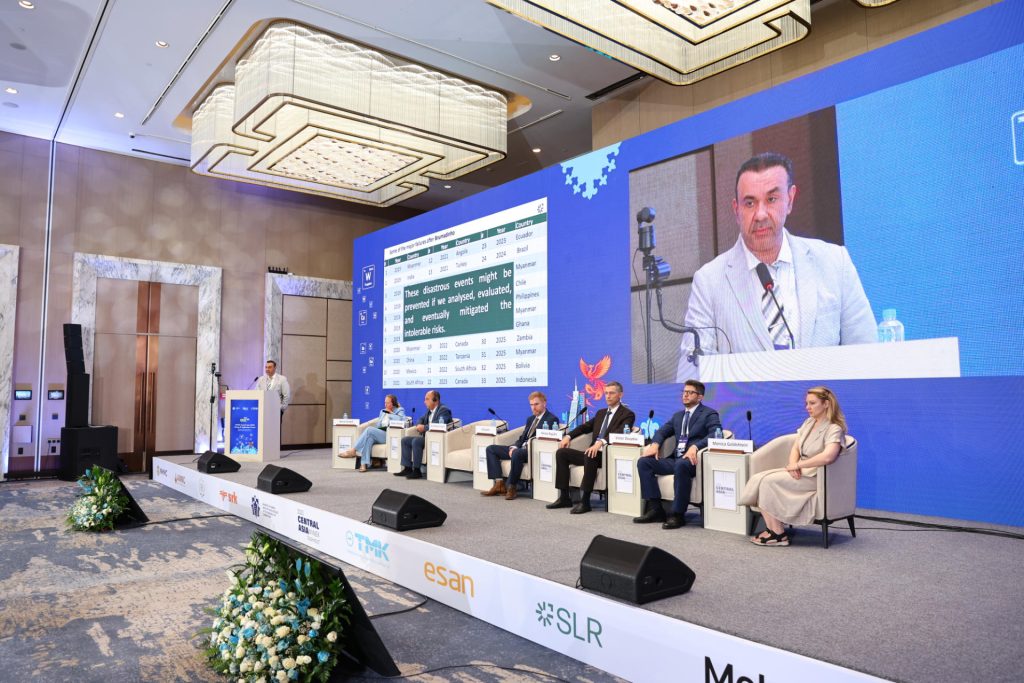
Risk-based approach to tailings safety:
Rather than relying solely on standard-based “tick box” assessments, practitioners now emphasise risk-based methodologies to identify, prioritise, and mitigate the most credible failure modes for tailings storage facilities. This approach draws lessons from high-profile disasters elsewhere, showing the importance of robust monitoring, transparent risk profiling, and targeted interventions.
Technological innovation:
The adoption of technologies such as high-efficiency tailings thickeners, advanced water recycling systems, and state-of-the-art geotechnical monitoring (including radar and satellite surveillance) is enabling safer and more resource-efficient mining. Practical case studies demonstrated marked reductions in water consumption, energy use, and operational risk.
ESG and management systems:
Creating resilient, all-encompassing ESG management systems is essential—not merely as a tick-box exercise for certification, but as an operational backbone. Effective systems are data-driven, supported by senior leadership, and integrate international standards with regional legislative requirements. Continuous improvement, simplification, and genuine commitment throughout organisations are seen as crucial for avoiding social and environmental failures.
Stakeholder engagement:
Long-term success requires meaningful and ongoing engagement with communities, regulators, and investors. Social licence to operate depends on transparency, fair impact assessment, and responding proactively to local concerns and regulatory expectations.
Regional and transboundary cooperation:
Given Central Asia’s interconnected river systems and shared environmental risks, collaborative approaches—such as joint water management models and cross-border emergency response plans—are increasingly in focus.
Ongoing challenges include:
Skills shortages and health and safety perceptions deterring new talent;
Legacy of dense mining activity near populations;
Navigating complex new regulatory and investor expectations while expanding production.
In summary: Central Asia’s mining sector is moving to a model that integrates environmental responsibility, social engagement, and technological best practice. The region’s ability to align project development with both investor expectations and community well-being will determine whether its mineral wealth becomes a foundation for enduring, shared prosperity—or further environmental stress.
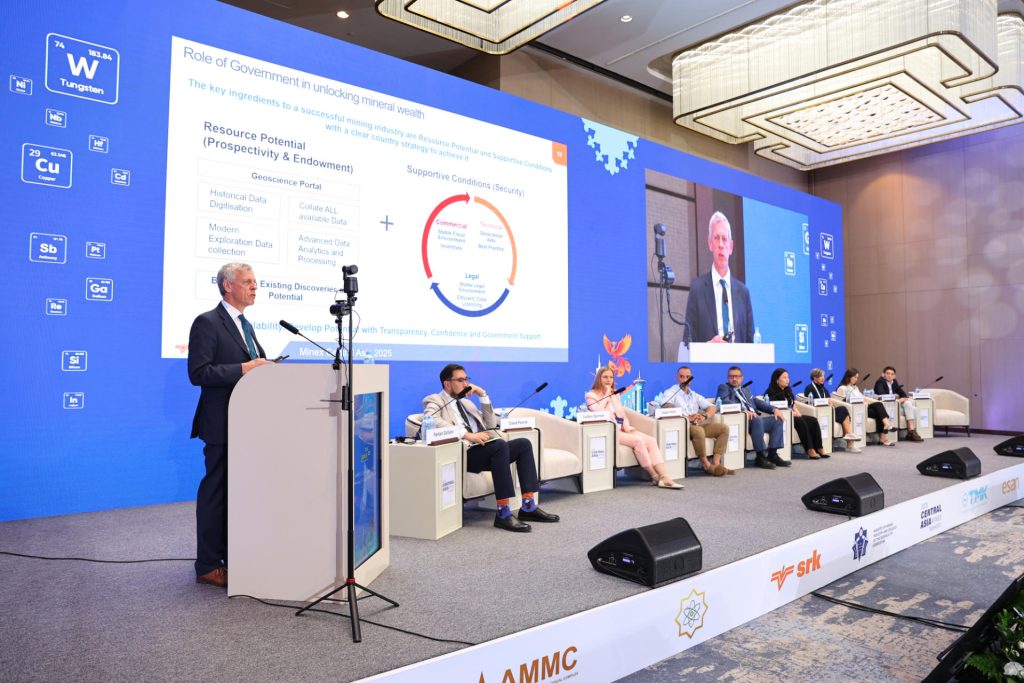
Central Asia possesses immense, largely untapped mineral resources, positioning the region as a major potential hub for global raw materials critical to economic growth, industrial development, and the energy transition. Recent years have seen significant advancements and strategic shifts aimed at unlocking this potential, with stakeholders focusing on three principal areas:
Technological Advances in Exploration and Extraction
Modern geological exploration methods are being deployed to identify resources beneath challenging terrains, such as mountainous regions and deep sedimentary covers, where much of the remaining mineral wealth is likely to be found.
Companies and governments have begun digitizing vast libraries of Soviet-era geological data and integrating them into accessible geoscience portals—a crucial step in expediting exploration and attracting foreign investment.
Cutting-edge geophysical surveying, spectral analysis, machine learning, and digital twins are increasingly standard in exploration efforts, with several firms and service companies actively applying these methods to reduce costs, speed discovery, and optimize resource modelling.
Sustainable Resource Management and Value Chain Optimisation
There is growing emphasis on sustainable mining practices: stakeholders are aligning with global environmental standards (such as those discussed at COP28), prioritizing high-grade, low-impurity concentrates, and investing in green technologies for low-carbon steel and metal production.
Efforts are underway to improve data transparency, regional geophysical surveys, and environment-focused regulations, as these are seen as prerequisites for efficient and sustainable resource development.
Governments are updating legislative frameworks and encouraging regional cooperation to connect resource bases with infrastructure and markets, aiming to optimize logistics, power supply, and talent development.
Investment, Infrastructure, and Regional Partnerships
The region is attracting heightened international interest and capital, particularly from China, which seeks reliable supplies of critical minerals for the green transition, and from the EU and US as they diversify supply chains away from traditional sources.
Kazakhstan, for example, plans to open over 30 new mining deposits by 2025 through advanced surveying and innovative strategies—setting a model for neighbouring states.
Major mining and processing investments are being made in Uzbekistan, both by Chinese partners and by multinationals, aiming at copper, rare earths, iron ore, and more.
At the national and regional levels, governments are focusing on digitizing data, stabilizing tax regimes, offering investment incentives, protecting investors, and developing human capital to foster a competitive mining sector.
Challenges and Recommendations:
Persistent challenges include underdeveloped infrastructure, remote deposit locations, insufficient geological funding, and slow legal harmonization.
Speakers recommended that governments increase funding for geological surveys, ensure rapid and transparent data access, and balance fiscal incentives with national interests to maximize benefits from large-scale projects.
International best practices—such as Australia’s “Explore for the Future” initiative, which makes high-quality geoscience data freely available—are highlighted as models for Central Asian states to replicate in order to boost exploration and investment.
Conclusion for Stakeholders:
Central Asia stands at a pivotal moment: to realise its mineral potential, governments, investors, and experts must intensify efforts to modernise geological data, invest in sustainable infrastructure, offer a stable regulatory environment, and promote regional cooperation. By following these recommendations, the region is well-positioned to become a cornerstone of global supply chains for critical minerals.
Romania’s Rovina Valley Project — one of Europe’s largest gold-copper developments — is advancing steadily toward construction, with a final Environmental Impact Assessment (EIA) submission expected in the coming months. The project, operated by Toronto-listed Euro Sun Mining, is strategically located in the country’s historic mining region and holds an estimated 10.4 million gold-equivalent ounces.
CEO Grant Sabor described the deposit as “one big block of uniform copper and gold,” making it exceptionally predictable and operationally low-risk. The site’s porphyry-style mineralization supports long-term, stable production.
The project is also a pillar of the EU’s Critical Raw Materials Act (CRMA), having received strategic designation that streamlines permitting timelines and places it within Europe’s priority infrastructure. The CRMA aims to reduce the bloc’s reliance on foreign imports by supporting domestic mining initiatives with clear regulatory paths.
A major financial breakthrough was secured through a $200 million facility agreement with global commodity trader Trafigura. The partnership also includes plans for an additional $200 million in debt financing, supporting full-scale development. Sabor emphasized the deal’s non-dilutive structure and strategic value beyond capital.
Operational milestones in the next 12 months include finalizing government approvals, acquiring remaining land, and preparing for construction. Once fully permitted, Rovina Valley is expected to become the largest mine development in Romania in over 40 years.
Despite previous permitting delays and financing difficulties, the project is poised to deliver hundreds of local jobs, bolster Romania’s fiscal position, and contribute significantly to European mineral supply security.
Kazakhstan will begin developing three new copper deposits — Aidarly, Koksay, and Benkala — aiming to double its copper ore production to 300 million tonnes within the next five years, according to Deputy Minister of Industry and Construction Olzhas Saparbekov.
The announcement came during a government meeting focused on boosting the country’s mineral output. In addition to the copper plans, Saparbekov said iron ore extraction is also expected to rise by 40% by 2030, reaching 52 million tonnes annually. This increase will support the expansion of Qarmet’s processing facilities and the launch of new hot-briquetted iron (HBI) production plants.
Looking ahead to 2025, the government anticipates a twofold increase in copper refining, along with a more than twofold rise in lead production, a 50% increase in aluminium output, and an 11% boost in zinc production.
To sustain this growth, Kazakhstan will allocate at least 30 billion tenge toward geological exploration next year. The funding will come from subscription bonuses collected through mineral rights auctions.
Prime Minister Olzhas Bektenov noted that revenues from these bonuses are expected to increase as the government refines its calculation methodology to optimise income from the mining sector.
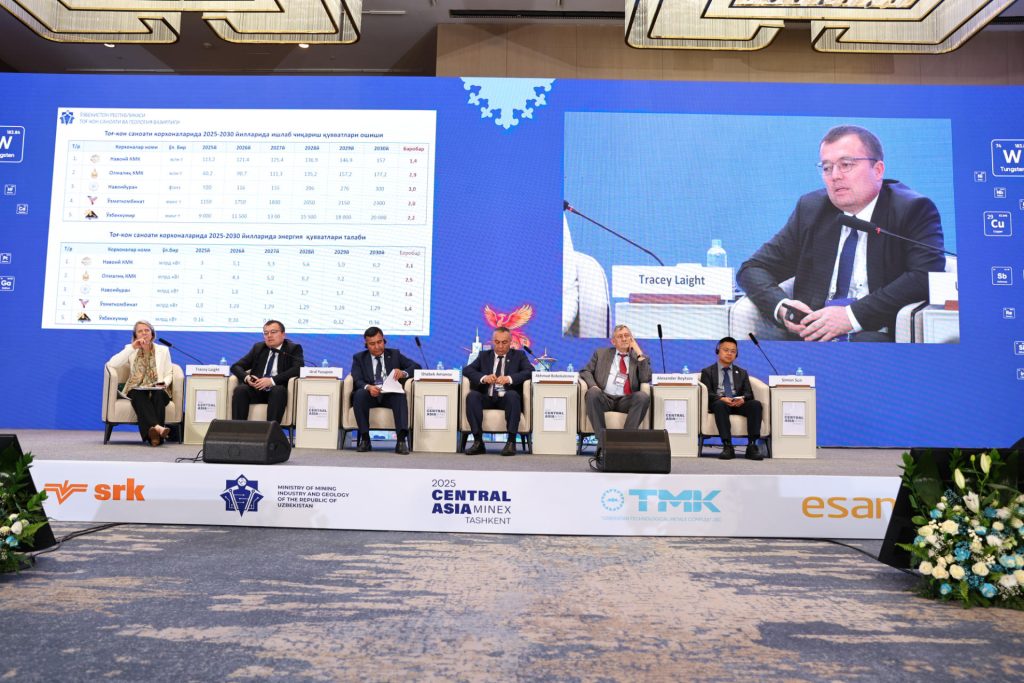
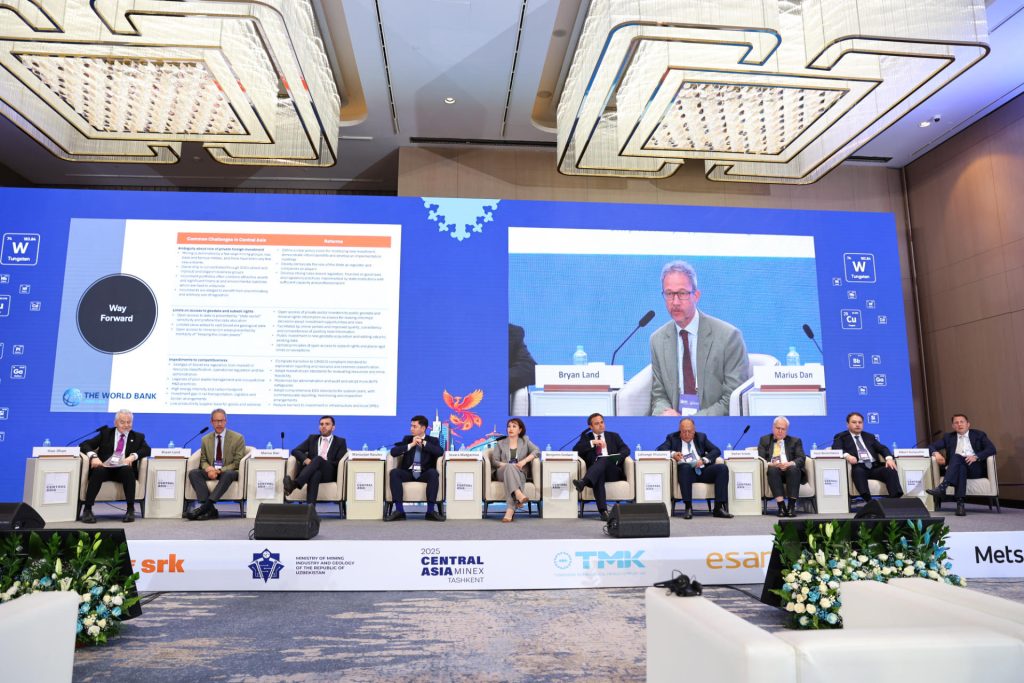
This session focused on creating an investment-ready framework for Central Asia’s critical minerals sector, emphasising the importance of a robust regulatory foundation to unlock long-term investment. Industry experts and policymakers explored recent mining reforms, especially in Uzbekistan and Kazakhstan, and discussed broader regional initiatives aimed at enhancing legal clarity and institutional capacity. The dialogue consistently returned to aligning regulatory frameworks with international standards to ensure greater transparency, predictability, and ESG (environmental, social, and governance) compliance.
Key points covered:
Investor Confidence and Private Capital: Panellists highlighted that capital remains cautious, particularly in “non-traditional” or higher-risk destinations like Central Asia, preferring established mining hubs. Governments must therefore undertake substantial reform to compete globally for scarce private investment, which tends to flow only after the early, riskier phases have attracted capital and shown stability.
Progress and Reform in Kazakhstan and Uzbekistan:
Kazakhstan, the region’s most mature mining jurisdiction, has implemented a significant 2018 Subsoil Code and is pursuing further reforms, though implementation gaps remain.
Uzbekistan has rapidly improved its investment climate since 2017, including liberalising currency exchange, enacting new investment laws with foreign investor guarantees, establishing a Foreign Investors Council, and launching an ambitious privatisation and IPO programme for state enterprises—notably through the new National Investment Fund, managed by Franklin Templeton.
Privatisation and Market Access:
Uzbekistan’s strategy includes listing major state assets on local and international exchanges, with the aim of improving governance, increasing transparency, and creating a pipeline of investable companies for institutional investors. This approach, it is argued, will foster greater competition and reduce state dominance, thus encouraging more foreign investment.
Sustainable Mining and ESG:
Central Asian nations are increasingly focused on ESG standards and sustainable practices as a means of strengthening global investment appeal. The session underlined the region’s need to add value within the supply chain—moving from raw mineral extraction to processing and manufacturing—to overcome geographic limitations (such as being landlocked).
Geopolitical Dynamics and Competition:
The region faces both risks and opportunities amid complex international competition, with China remaining a prominent investor and competing interests from Europe and other global powers. The panel discussed how geopolitical factors and changing regulatory approaches (such as new Chinese ESG requirements) shape both investment flows and strategic policy.
Challenges with Capital Markets:
Despite the “critical” classification of certain minerals, the public capital markets do not always recognise their importance through high valuations. There was debate over why, if these resources are so vital to governments, public or policy-driven capital does not take a greater equity stake—especially given private capital’s risk aversion.
Case Studies and Real-World Application:
Presentations included examples such as Uzbekistan’s gold producer Navoi Company, highlighting successful governance reforms, international bond issuances, and progress towards international best practices.
International Finance and Support:
Entities like UK Export Finance and the World Bank outlined their roles in providing guarantees, loans, and technical assistance, further supporting the sector’s opening to global markets.
The session concluded with a panel Q&A exploring the obstacles to attracting the required private equity, the role of strategic (especially Chinese) investment, and the future trajectory for Central Asia as an emerging node in global critical mineral supply chains. Presenters consistently emphasised the need for ongoing reform, transparency, and practical implementation—not just policy announcements—to truly create an investment-ready future for the region.