The grant of a 25-year exploitation concession to Leading Edge Materials for the Norra Kärr heavy rare earth project in southern Sweden represents one of the most significant developments in European critical minerals in years — not because it completes the supply chain, but because it creates the legally secured upstream anchor without which no European mine-to-magnet chain is possible.
Why heavy rare earths are different from every other critical mineral
Dysprosium, terbium and yttrium are not simply scarce — they are structurally irreplaceable in the applications that define the energy transition and modern defence. Dysprosium maintains the coercivity of neodymium-iron-boron permanent magnets at elevated operating temperatures; without it, EV motor performance degrades in real-world conditions. Terbium performs a similar function at even smaller addition volumes, making it among the most cost-sensitive elements in the entire battery supply chain on a per-kilogram basis. China controls approximately 85 to 90% of global rare earth processing capacity, and its dominance in the heavy rare earth segment specifically is even more pronounced, because ionic clay deposits that supply much of the world’s heavy rare earth production are geologically specific to southern China’s weathering conditions.
What makes Norra Kärr exceptional
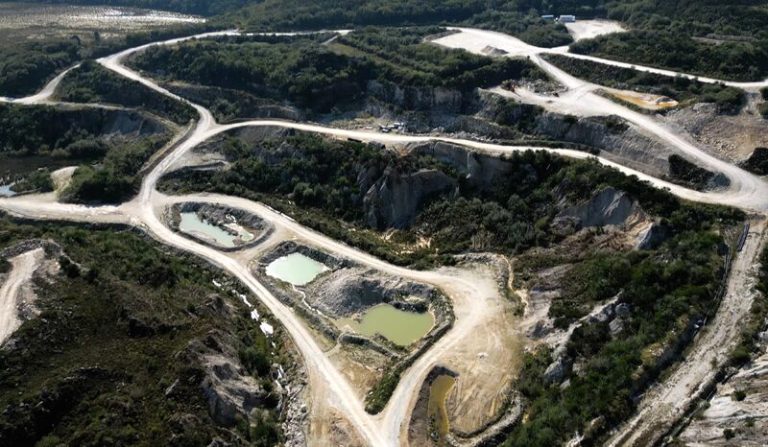
Most operating rare earth mines produce predominantly light rare earth elements, with heavy rare earths as a byproduct. Norra Kärr inverts that ratio. The deposit’s eudialyte-group mineralogy concentrates dysprosium, terbium and yttrium as the primary economic drivers. At projected annual output of approximately 248 tonnes of dysprosium oxide and 36 tonnes of terbium oxide from a 5,340-tonne mixed rare earth oxide operation, independent research by the Edison Group estimates Norra Kärr’s dysprosium output alone would exceed total current European annual demand of approximately 200 tonnes — making it potentially the first European project capable of satisfying the continent’s entire requirement for this critical element.
Technical work on the deposit spans 15 years, including a pre-feasibility study from 2015. That foundation means the company is advancing from an accumulated knowledge base rather than a greenfield position.
What the mining lease actually changes
Before the exploitation concession, every conversation with investors, financiers and potential offtake partners was framed by the residual risk of the concession not being awarded. That risk no longer exists. The project has moved from contingent to confirmed: 25 years of legally secured development rights transform the investment conversation from whether the project can proceed to when and on what terms.
For the European Investment Bank and Nordic Investment Bank — both of which require completed feasibility studies and de-risked development assets before entering formal due diligence — the mining lease is a prerequisite. Binding offtake discussions with European refiners and separators seeking dysprosium and terbium supply are now transactional conversations rather than planning exercises.
How the 2016 setback was overcome
The original exploitation concession granted in 2013 was revoked in 2016 on environmental grounds relating to the project’s proximity to Lake Vättern, one of Sweden’s largest freshwater bodies. The redesigned project incorporates two fundamental changes: the mine footprint has been reduced by 65%, and all chemical processing has been fully decoupled from the mine site, with downstream hydrometallurgical work to be conducted at a separate pre-permitted industrial facility. The mine site sequence is now limited to quarrying, crushing, grinding, magnetic separation and concentrate transport — removing the most complex chemical activities from the ecologically sensitive location without materially altering project economics.
The race between European policy and non-European capital
The Norra Kärr concession arrives at a moment when US capital is already moving faster than European policy. Energy Fuels has acquired Vacuumschmelze, Europe’s largest permanent magnet manufacturer. USA Rare Earths has taken stakes in French refiner Carester and UK metallisation company Lescoma Metals. The pattern mirrors the US approach of deploying public capital as a catalyst for private investment — a mechanism that has mobilised significant private sector activity in the United States while European critical minerals policy has generated frameworks without equivalent capital deployment.
The next steps for Norra Kärr are an updated pre-feasibility study, environmental permit application under Sweden’s Environmental Code — benefiting from 15 years of baseline data and the project’s reduced footprint — and engagement with CRMA strategic project designation. Sweden is implementing a single-authority environmental permitting framework that should be operational when the Norra Kärr application is submitted, potentially reducing timeline and procedural complexity. The company targets first production within four years.
A genuinely sovereign European heavy rare earth supply chain requires not just Norra Kärr but separation capacity, alloying capability and magnet manufacturing infrastructure built by European entities with European capital. The mining lease provides the upstream anchor. Whether European policy can move quickly enough to build the remaining links before non-European capital occupies those positions is the defining industrial sovereignty question of this decade.