Europe’s lithium supply problem is structural, not cyclical. Battery-grade lithium cannot be sourced from a spot market and delivered in weeks — it requires years of upstream development, precise mineral processing and tightly controlled chemical conversion before it reaches a cathode plant. Europe currently produces almost none of this input domestically, leaving EV manufacturers and battery gigafactories exposed to supply chains running through Australia, Chile and Chinese processing infrastructure.
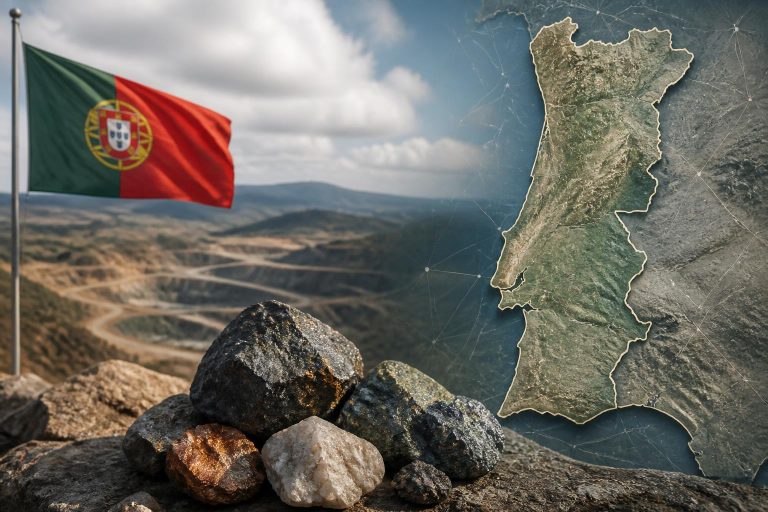
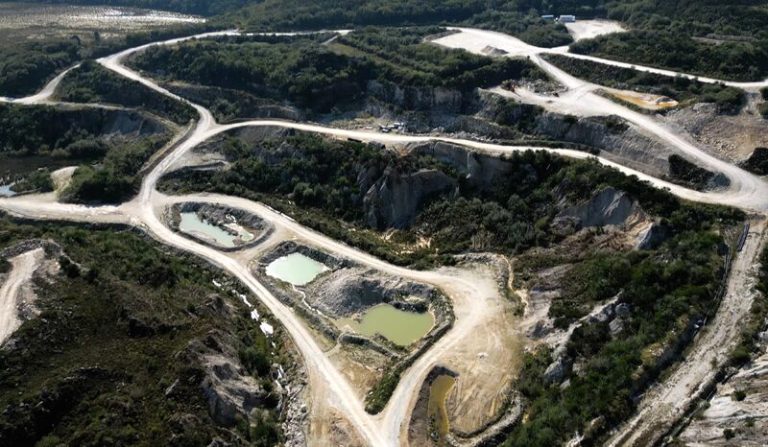
Portugal’s Barroso deposit, developed by London-listed Savannah Resources, represents the most advanced and largest-scale attempt to change that reality within European borders.
The geological foundation
Barroso sits within the Iberian Massif, a Variscan-age geological formation that hosts one of the world’s densest concentrations of lithium-bearing pegmatite bodies. The primary mineral at the deposit is spodumene — the commercially preferred hard-rock lithium source for battery manufacturers, whose chemical structure enables efficient conversion to lithium hydroxide monohydrate, the form most compatible with the nickel-rich NMC cathode chemistries used in high-energy-density EV batteries.
The confirmed mineral resource stands at 39 million tonnes at an average grade of 1.05% Li₂O — Europe’s largest confirmed spodumene deposit by a substantial margin. Potential extensions of 35 to 62 million tonnes could push the total above 100 million tonnes and extend the mine life beyond 50 years. Portugal’s Atlantic coastline position adds a logistics advantage: Barroso sits within 300 kilometres of five deep-water ports, enabling concentrate delivery to processing facilities in northern Europe or North America at substantially lower cost than landlocked Central European competitors.
The processing chain
Run-of-mine ore passes through crushing, dense media separation and froth flotation to produce spodumene concentrate grading approximately 6% Li₂O — the product sold to downstream converters. Those converters roast the concentrate to convert alpha-spodumene to the more reactive beta form, then leach with acid to produce lithium hydroxide or carbonate. The deposit also contains recoverable feldspar and quartz for the ceramics and glass industries, providing co-product revenues that improve economic resilience during periods of price softness.
At the DFS target of 191,000 tonnes per year of spodumene concentrate, Barroso would produce enough lithium to supply battery packs for approximately 500,000 electric vehicles annually — meaningful but not sufficient to close Europe’s structural deficit, underlining the scale of the continent’s supply challenge.
State commitment and project milestones
In January 2026 Portugal awarded Savannah a €110 million non-reimbursable grant — one of the largest direct fiscal contributions to a single European mining project in recent history. Non-reimbursable grants reduce capital expenditure without creating debt obligations, directly improving the project’s internal rate of return and signalling that the Portuguese state has moved from rhetorical support to material financial commitment. The project was classified as a strategic project under the EU’s Critical Raw Materials Act in March 2025. A final investment decision is targeted for end of 2026, with construction in 2027 and first production in late 2028.
A decade of opposition and the June 2026 injunction
Barroso has faced persistent community and legal opposition for close to a decade, with intensity unusual even by global mining standards. A precautionary injunction granted by the Mirandela Administrative and Fiscal Court on 9 June 2026 halted geotechnical fieldwork for three weeks, filed by the Barroso Assembly of Common Land Holders following the granting of a second administrative easement. The Portuguese government intervened by formally declaring the project of national and European strategic importance, arguing the suspension endangered the energy transition framework. The injunction was lifted on 30 June 2026, with no right of appeal available to opponents against the lifting order.
The Barroso region holds GIAHS designation from the UN Food and Agriculture Organisation, recognising its Globally Important Agricultural Heritage status linked to centuries-old communal land management and agropastoral farming. This designation carries no legal veto over mining, but exposes the project to international environmental advocacy that regulatory opposition alone cannot generate. Environmental concerns centre on projected annual water consumption of up to 600,000 cubic metres and potential groundwater impacts on surrounding agricultural communities.
The strategic supply chain case
A significant portion of global lithium processing capacity sits within Chinese industrial infrastructure, meaning that even when raw lithium is sourced from Australia or Chile, the chemical conversion step frequently passes through Chinese facilities before reaching European battery makers. A domestic European spodumene producer at Barroso’s scale would allow European converters to establish processing relationships entirely within EU and friendly-nation supply chains — directly addressing the bloc’s stated objective of repatriating critical mineral value chains and reducing strategic exposure to third-country processing dependencies.