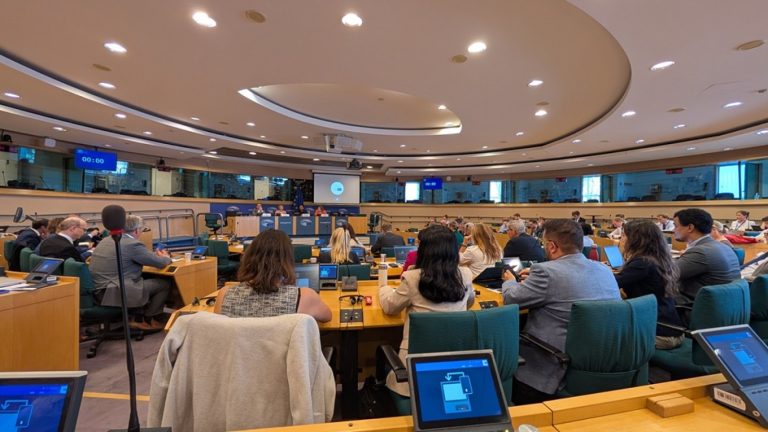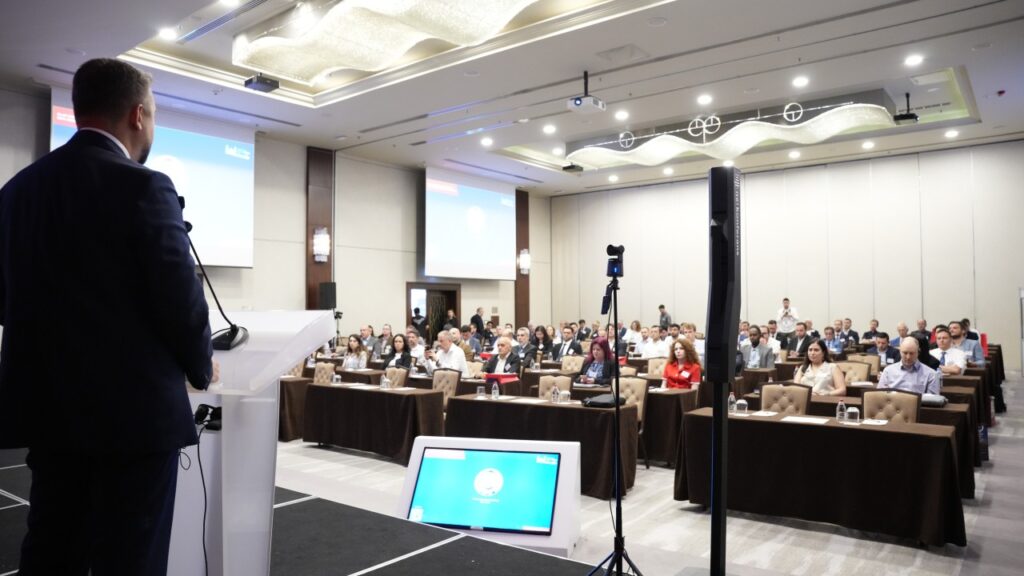
Over 140 delegates from 18 countries gathered at the MINEX Asia Forum in Ankara on Wednesday. The room was senior, the agenda substantive, and the conversation rarely left the strategic layer.
Why this moment matters: the demand imperative

İbrahim Halil Kırşan, President of the TOBB Türkiye Mining Assembly, opened with the global frame and did not soften it. Drawing on IEA data, he put the stakes plainly: by 2040, mineral utilisation in renewable energy will increase four-fold under the Sustainable Development Scenario and six-fold under Net Zero. On a commodity-specific basis, lithium demand alone is projected to surge 42-fold under the SDS. Electric vehicles, wind turbines, defence systems, smartphones, fibre optic networks: the slide mapping how much metal goes into each clean energy technology was not background material. It was the case for why everyone in the room was in Ankara on a Wednesday morning. Ayhan Yüksel of the Chamber of Mining Engineers picked up the regulatory thread, tracing Türkiye’s mining legislation from the 1954 Mining Law through seven amendments to the 2025 revisions — a progression from state-dominated extraction toward an investment-oriented framework that nonetheless preserves strategic sovereign control over mineral assets.
Türkiye’s REE ambition: the numbers behind the claim
The most forensically detailed presentation of the morning came from Dr Hüseyin Çaldırak of TENMAK’s Rare Earth Elements Research Institute, and it moved the Beylikova story from political ambition to technical specificity.

The deposit: 694 million tonnes of resource at approximately 2% NTE grade, containing an estimated 12.5 million tonnes of potential rare earth reserves — widely described as the world’s second-largest REE reserve after China’s Bayan Obo, with a planned full-scale facility targeting 570,000 tonnes of ore per year and projected annual revenues of approximately $220 million. China currently controls approximately 70% of world NTE production and over 90% of processing and magnet manufacturing capacity. Demand will grow more than 60% by 2030, with EV motors as the primary driver — REE demand from electric vehicle motors has risen from less than 1% of total magnet NTE demand in 2015 to 9% today, projected to reach approximately 18% by 2030. minexasia
The domestic arithmetic is striking. With a 2035 national energy target of 48GW of wind capacity from 15GW today, Türkiye will need approximately 3,461 tonnes of NTE just for its own wind turbine fleet. At 10,000 tonnes per year, Beylikova covers that domestic requirement entirely — and still exports. The Western response to Chinese dominance is correspondingly large: a $12 billion US DoD partnership with MP Materials, NdPr offtake agreements at a $110/kg floor price, and a US National Defense Industrial Strategy that from January 2027 will prohibit SmCo and NdFeB production involving China, Russia, Iran or North Korea at any stage. The technology gap for Türkiye remains real: China controls export licences for all products containing Chinese-origin REEs, and Beylikova’s separation technology is still under development. But the strategic window has rarely been wider.
The $13.5 trillion question: four countries, four trajectories
The invisible foundation: data, laboratories and bankability
Abdullah Buhur of ARGETEST made what might have seemed like a narrower technical argument — but it ran directly to the financing panel that followed. In modern mining, he argued, you must extract the data from the ore before you extract the ore itself. Incomplete or inaccurate geochemical and metallurgical data leads to wrong process designs and facilities that cannot operate. Reliable end-to-end data generation is what makes CRIRSCO, JORC and UMREK-compliant reporting possible — and compliant reporting is what makes a project financeable. ARGETEST, founded in Ankara in 2012 and now holding ISO/IEC 17025 ILAC accreditation, has already opened its first international laboratory in Tashkent, with three further countries in active planning. The message to Central Asian and Caucasus projects represented in the room: the laboratory infrastructure that underpins bankable feasibility studies is arriving regionally, not just in London or Perth.
The Tethyan Belt — geology mapped, execution pending

EBRD’s Deputy Head of Türkiye, Mehmet Uvez, reframed the Middle Corridor precisely: not a transport route, but a platform for trade resilience and industrial value chains. The numbers behind the commitment: €24.4 billion in cumulative EBRD investment in Türkiye, a record €2.7 billion across 54 projects in 2025 alone, and up to €500 million in sovereign lending for the INRAIL Istanbul North Rail Crossing — a missing link for the Trans-Caspian route. The OECD presented EU-funded research on connectivity and CRM export potential across Central Asia. The USGS gave a frank country-by-country assessment: the region holds 39% of global manganese ore reserves, 31% of chromium, 20% of lead, and significant shares of zinc, titanium, copper and cobalt — the endowment is not in question; investability is. Discovery Alert
Simon Glancy of Strategic Solutions brought the most granular data of the session. Uzbekistan possesses over 29 types of rare and rare earth metals, but only copper and tungsten are being developed at scale, with UzTMK’s exports forecast to reach $80 million by 2030 — just 3% of total industry output. For nearly every strategic mineral in the region, Chinese investors are already the dominant or sole significant foreign presence. His core proposal — a Central Asian CRM alliance structured around hub processing facilities in Kazakhstan and Uzbekistan, with Kyrgyzstan, Tajikistan and Turkmenistan feeding in semi-processed material — was the most concrete regional architecture offered on the day.
Key takeaways:
- The demand case is irrefutable: a 42-fold lithium surge and a 6-fold increase in total mineral use for renewables by 2040 under Net Zero are the operational context for every investment decision in this room
- Beylikova’s significance rests not on reserve size alone but on arithmetic: at 10,000t/yr NTE, Türkiye covers its domestic wind energy mineral needs and becomes a net exporter to allies seeking diversification from China
- Laboratory infrastructure — accredited, internationally recognised — is a prerequisite for bankability; its regional arrival is an enabling condition, not a detail
- Turkish companies have a specific and underexploited opportunity as providers of engineering, processing technology, lab services and advisory capacity across the Central Asian CRM ecosystem
Who is funding the future — and how fast?
The financing session assembled the most concentrated group of development finance institutions seen at a MINEX event: EIB, EBRD, IFC, ADB, UKEF, KfW IPEX-Bank, the Türkiye Wealth Fund and BORG Capital Insights, moderated by Han Ilhan of Catalis Strategies. Hogan Lovells opened with the political risk framing: investment treaties, investor-state arbitration and export credit insurance are not bureaucratic formalities — they are the mechanism that makes Western private capital competitive with Chinese state finance. The ADB’s CMM Value Chains Initiative presented a holistic approach: diversified and resilient supply chains, domestic value addition, ESG standards as competitive advantage rather than compliance burden.

Then came the baseline that set the terms for the panel’s candour. In 2023 alone, Chinese firms invested more than $120 billion in overseas mining and processing; China now controls approximately 60% of lithium processing, more than 70% of cobalt refining, and over 90% of battery material manufacturing. Against that, Western institutional capital’s pace and structural flexibility were scrutinised without diplomatic cover. The headline conclusion: the institutions are present, the mandates are real, the appetite exists — but speed, flexibility and first-loss willingness on frontier projects remain the decisive variables. Kazakhstan’s tungsten makes the point exactly: the country’s entire 2025 export volume — roughly 3,700 tonnes — went to a single destination: China. The mineral wealth is there. The offtake relationships are not. ENERPO JOURNALEast Asia Forum
Key takeaways:
- Five multilateral development banks in one session signals intent; coordinated deployment, not just parallel presence, is the next requirement
- Political risk instruments are the mechanism that makes Western private capital competitive with Chinese state finance on frontier projects
- The US DoD’s $12bn MP Materials partnership and the 2027 prohibition on Chinese-stage REE production in defence supply chains mark the clearest shift yet from policy to procurement
- Türkiye imported over 170 tonnes of gold in 2024 while producing just 32 tonnes domestically — a country with $3.5 trillion in reserves running a gold trade deficit is a measure of the distance between geological wealth and industrial policy China Population Density Map
The Turkish industrial offer
DAMA Engineering traced four decades of Turkish mining advancement — from Atatürk’s 1935 founding of MTA and Etibank on the same day, pairing geological discovery with production capacity, through the arrival of global majors following the 1985 Mining Law, to the UMREK reporting code and modern integrated processing plants. The arc: Türkiye absorbed international best practice and is now in a position to export that capability eastward along the Middle Corridor.
Devrim Aksu closed with the challenge that cuts across every projection of regional growth. Global talent shortages in geologists and mining engineers, scarce digital mining skills, the absence of remote operations workforce models at scale: her presentation put the question plainly — “Who Will Build the Workforce Behind the Critical Minerals Boom?” — and left it unanswered, because it is genuinely unanswered. Women remain a structurally underutilised reserve in mining talent pipelines across the region; the business case is now as compelling as the equity case.
The day’s through-line
If one argument ran through every session on Day 1, it was this: the strategic case for the Middle Corridor as a global critical minerals supply line is no longer being made — it is being assumed. The debate has moved to execution. Who finances, who processes, who certifies the data, who builds the workforce, and who captures the value — these are the questions that will define the next decade.
A jurisdiction that ranked 104th in global mining investment attractiveness a decade ago now sits in the global top ten — not because its geology changed, but because its framework did. Türkiye has more mineral wealth, a better geographic position, four decades of engineering capability, and direct access to European markets. Kazakhstan produces 38% of the world’s uranium and has the majors already in country. Uzbekistan has the momentum of a country that has been closed and is now opening fast. The room in Ankara on Wednesday contained many of the institutions that could unlock all three. Whether the urgency matches the opportunity is the question Day 2 will not answer either — but it will sharpen it.
The evening closed at the British Embassy, hosted by the Department for Business and Trade. Day 2 continues tomorrow.