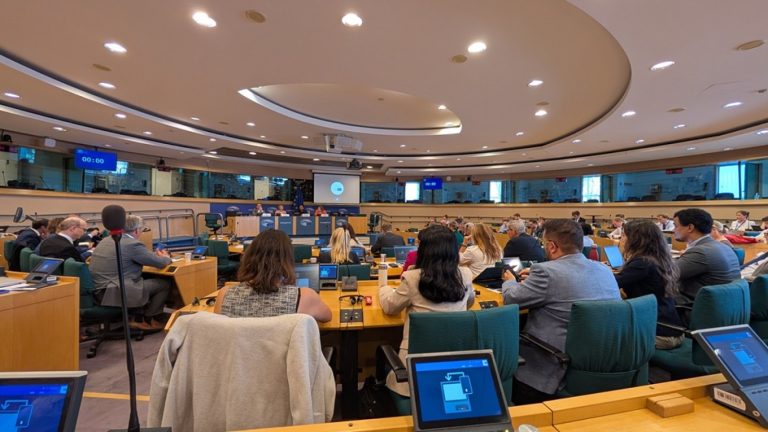
A series of high-level diplomatic and business meetings held on the sidelines of the Astana Mining and Metallurgy Congress 2026 reinforced Kazakhstan’s positioning as a central node in global critical minerals supply chains, bringing together the European Union, the United States and Central Asian partners in consecutive days of structured dialogue.
On 11 June, Prime Minister Olzhas Bektenov chaired the 19th Kazakhstan–European Union Dialogue Platform, attended by heads of European diplomatic missions, leading business associations and international companies. The meeting addressed the investment climate, trade and industrial cooperation, harmonisation of technical standards and collaboration in geological exploration and critical raw materials. Bektenov noted that the EU remains Kazakhstan’s largest trade and investment partner, accounting for more than 30% of the country’s foreign trade, with cumulative European investment exceeding $200 billion. Particular attention was paid to critical minerals cooperation and the development of the Trans-Caspian International Transport Route as a strategic logistics corridor linking Central Asia to European markets.
Said Sultanov, Managing Director of Xcalibur Smart Mapping Kazakhstan, presented initiatives covering modern geoscience technologies, geological infrastructure modernisation and high-precision airborne geophysical surveys aimed at unlocking Kazakhstan’s mineral potential.
The day before, on 10 June, the C5+1 Critical Minerals Dialogue brought together the United States and all five Central Asian states. David Fogel, US Assistant Secretary of Commerce, highlighted Kazakhstan’s significant resource potential and its importance in building secure and diversified critical mineral supply chains — reaffirming that critical minerals remain a strategic priority for the Trump administration’s engagement with the region.
Speaking on the sidelines, Said Sultanov of Aurora Minerals Group said Kazakhstan was attracting growing international interest from major mining investors across multiple geographies. “Russian, European, and Chinese companies are already actively involved in exploration projects across Kazakhstan. The arrival of US companies will further strengthen competitiveness in the sector and create new opportunities for investment, technology transfer, and industry development,” he said.