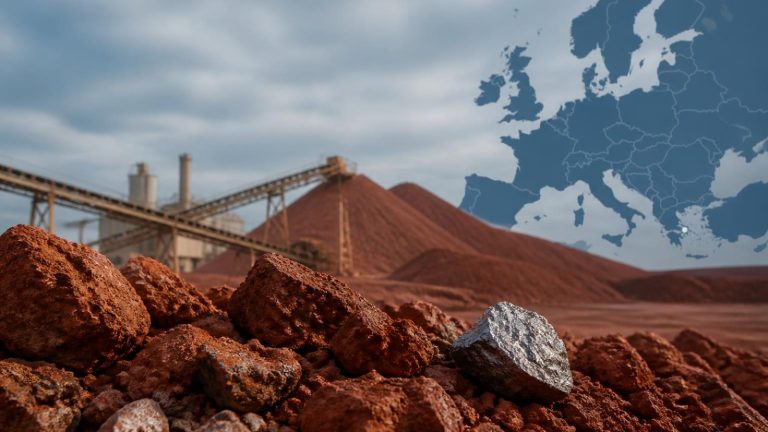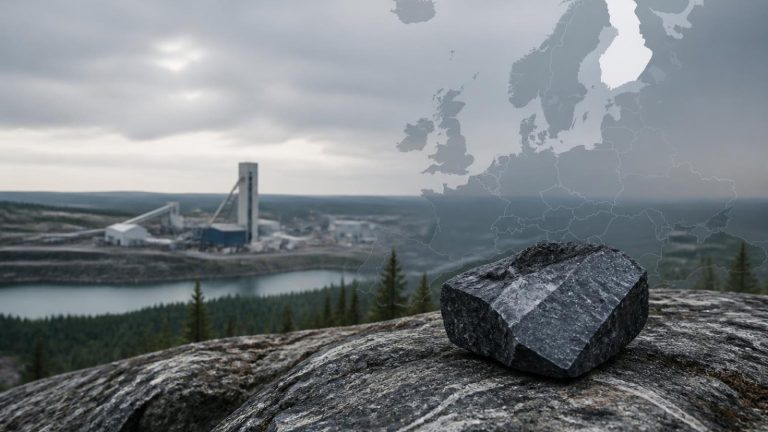
Deep in the wooded Little Carpathian hills near Bratislava, a Soviet-era mine shaft bores into a hillside above the Slovakian wine town of Pezinok. The Trojarova antimony deposit, discovered by Soviet engineers in the 1980s and abandoned when the Iron Curtain fell, has become an unlikely symbol of Europe’s failure to match its critical minerals ambitions with the money and institutional resolve to act on them.
Military Metals Corp, the small Canadian company that acquired Trojarova almost two years ago, is pitching the project as a chance for Europe to secure domestic supply of a metal used in munitions, night vision goggles, infrared sensors, fire retardants and nuclear energy. If reactivated, the site could supply as much as a third of the continent’s annual antimony demand of approximately 6,000 tonnes and be operational within two to three years. But the company, with a market capitalisation of less than $30 million, needs partners — and Europe has not yet provided them. No offtake agreement has been secured from EU buyers.
Antimony sits at the intersection of several geopolitical fault lines. China controls approximately 80% of global processing capacity and, along with Russia and Tajikistan, dominates primary supply. Beijing imposed sweeping export controls on critical minerals and rare earths last year, and the US has since aggressively pursued partnerships and project financing worldwide. Europe has lagged. “Antimony is a textbook example of a small-volume mineral with outsized strategic impact,” said Sabrina Schulz of the European Initiative for Energy Security. “Europe is almost entirely import-dependent, and supply is highly concentrated.”
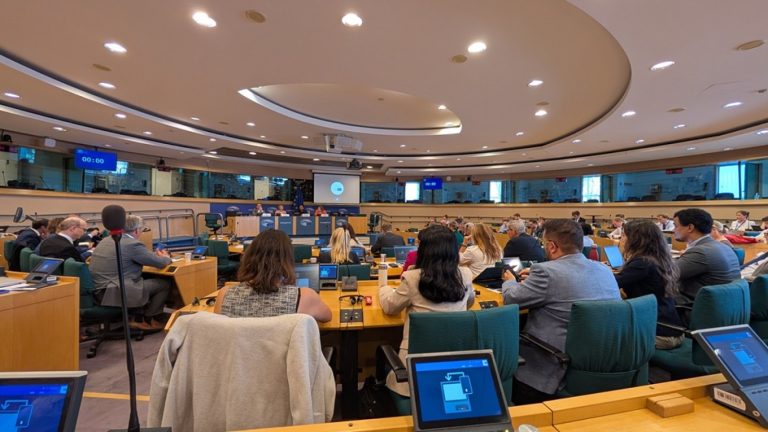
The gap between European ambition and action is not lost on officials inside the bloc. The European Critical Raw Materials Act of 2023 set targets for extracting at least 10% and processing 40% of annual key mineral consumption — benchmarks that galvanised some action on battery metals but have not been extended to defence-critical materials such as antimony, gallium and germanium. Brussels officials lack both the mandate and the budget to pursue the kind of direct project financing the US has deployed. Germany’s own €1 billion raw materials fund has supported only two projects and is criticised for creating more qualification hurdles than it removes. Between the economy ministry, the chancellery and the foreign ministry in Berlin, there is still no agreed definition of what a de-risking strategy in critical minerals actually entails, according to people familiar with the internal discussions.
Frank Hartmann, the German foreign ministry official responsible for Asia, was direct at a March event in Berlin: “What we have to do is long-term strategy, take money and funds into our hands to invest in these critical mineral funds for the next 10 years. Otherwise, we never escape this dependency trap.”
The contrast with American action is stark. One US company has already approached Military Metals about Trojarova. Last month, the US government’s investment arm agreed a $5 million deal to restart a dormant antimony mine in North Macedonia. As US President Donald Trump heads into summit talks with Xi Jinping in Beijing this week, the Trojarova situation illustrates precisely what European officials fear — that any deal struck between Washington and Beijing could bypass Europe entirely.
Military Metals CEO Scott Eldridge has outlined a vision that goes beyond the mine itself — with plans to produce ingots directly for defence clients and potential refining partnerships in Germany and Sweden that could anchor a complete European supply chain. But execution requires partners that have not materialised. Thomas Hüser, the company’s chairman and a former Glencore executive, put the situation plainly: “What we are still lacking is not ambition, but execution. Europe’s raw materials strategy remains fragmented, slow, and often disconnected from industrial reality.”
The EU and US last month reached a coordination accord on critical minerals supply chain policies, which Military Metals hopes could eventually lead to joint investment and offtake partnerships for Trojarova. Whether that translates into concrete action — or remains another framework document in a drawer — may determine whether Europe’s most strategically important forgotten mine stays forgotten.