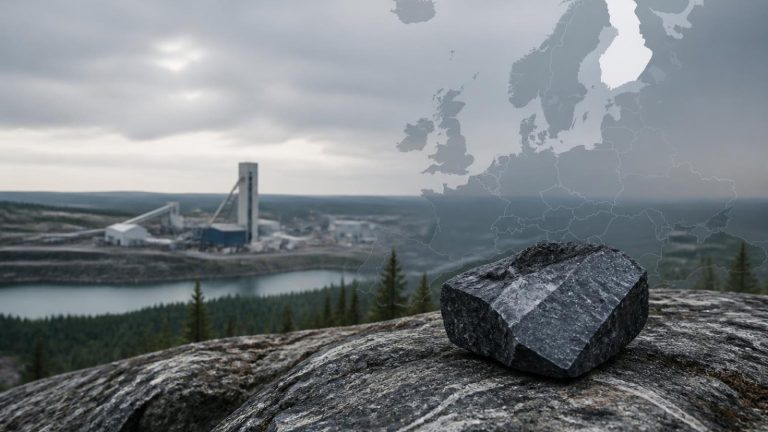
Mongolia’s mining sector remains the backbone of its national economy, shaping both its growth trajectory and global trade position. Today, the extractive industry contributes roughly 25% of GDP, 30% of the national budget, and an overwhelming 95% of exports. Copper, gold, coal, iron, oil, and polymetallic resources dominate this export mix, reinforcing the country’s dependence on continued exploration success.
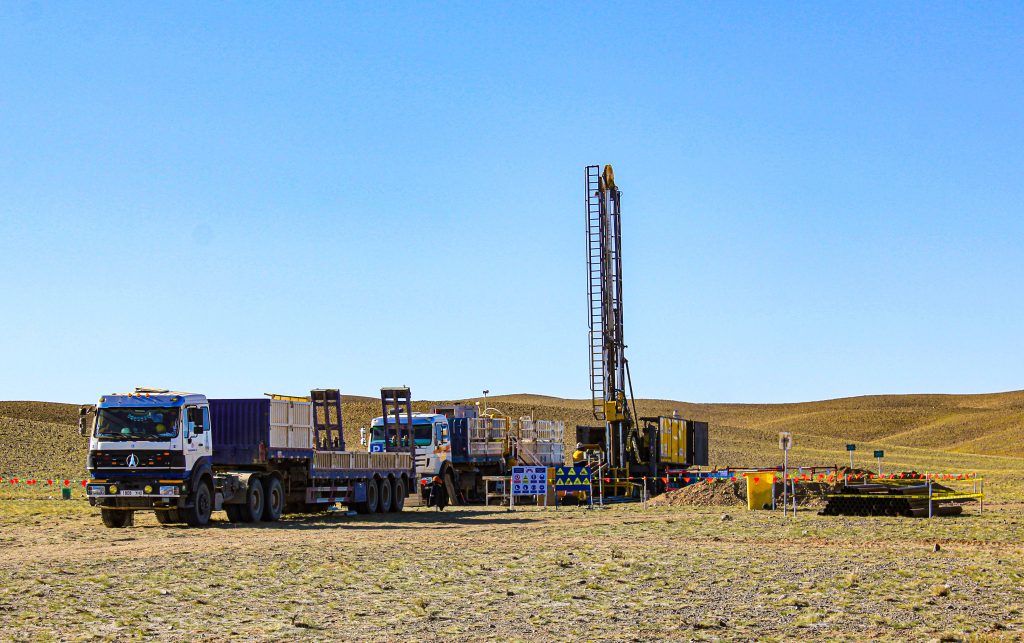
The drilling industry played a critical role in advancing these mining developments. The modern era of Mongolia’s drilling industry began in the early 2000s, when the development of the Oyu Tolgoi project attracted global expertise and technology. The entry of international contractors such as Major Drilling introduced advanced drilling techniques, setting new benchmarks for performance and efficiency.
Since then, the industry has matured alongside Mongolia’s broader mining ambitions. Today, exploration activity is increasingly concentrated in the South Gobi Copper-Gold Corridor—a region considered the country’s most promising frontier for the next world-class discovery.
As global copper and gold prices remain strong, the economic significance of this region continues to grow. Exploration programs here are not just about incremental gains; they are driven by the strategic objective of finding “the next Oyu Tolgoi”.
Key Projects Driving Drilling Demand
Kharmagtai: A Near-term copper-gold producer
Among the most advanced projects in the corridor, the Kharmagtai copper-gold project stands out for both its scale and development timeline. With 47.5 million tons of indicated resources and projected first production by 2027, it represents a major near-term opportunity. Its proximity to Oyu Tolgoi and long mine life further enhance its strategic value, positioning it as a cornerstone of Mongolia’s next generation of mining assets.
Tereg Uul: Expanding the porphyry trend
Located along the same mineralized belt, the Tereg Uul prospect highlights the broader potential of the region. Stretching across a 50-kilometer porphyry corridor, it reflects the scale of geological continuity that continues to attract international investment. Recent acquisition activity and committed exploration spending indicate growing confidence in the project’s long-term potential, reinforcing the importance of sustained drilling campaigns.
Zuun Mod: Deepening confidence through drilling
In Bayankhongor province, the Zuun Mod molybdenum-copper project demonstrates how targeted drilling programs are refining resource understanding. Recent campaigns have focused on shallow zones while extending deeper sections to improve geological continuity. This phased
approach—combining near-surface testing with deeper extensions—illustrates the evolving sophistication of Mongolia’s exploration strategies.
Bayan Khundii: High-grade gold momentum
The Bayan Khundii gold project represents one of Mongolia’s most promising gold developments. Recent drilling has delivered high-grade intercepts beyond the current resource model, significantly expanding the mineralized footprint. Nearby satellite deposits, such as Dark Horse, further enhance the project’s value, with ongoing drilling aimed at both resource expansion and processing optimization. Together, these efforts underline how continuous drilling drives not only discovery but also project economics.
Mongolia’s Drilling Talent Goes Global
As domestic projects advanced, Mongolia’s drilling workforce began to gain international recognition. Trained initially through exposure to global operators and modern equipment, Mongolian drillers quickly developed a reputation for technical skill and resilience.
By the early 2000s, these specialists had already established an international presence, leveraging their expertise in directional drilling. Their career took them to 70–80 countries on all continents. Today, Mongolian drillers operate across more than 20 countries, particularly in Africa, but also in regions such as South America, Australia, and the Middle East.
Their experience spans a wide range of commodities—from copper and gold to uranium and gas—and includes some of the world’s most challenging drilling environments. High-altitude projects in the Andes, deep and complex deposits in Europe, and extreme desert conditions in Africa have all become part of their portfolio.
What distinguishes Mongolian drillers is not only technical capability but also adaptability. Whether operating at 4,900 meters above sea level or in remote desert terrains, they have consistently delivered strong performance—often earning recognition as top-performing crews on international projects.
Over its 30-year drilling history at the Simandou Iron Ore Project in Guinea, West Africa, an estimated 15 to 18 international drilling crews rotated through one of the world’s most challenging exploration environments. Among them, industry insiders consistently point to the Mongolian drilling teams as the standout performers.
The Current Challenges
Despite these strengths, Mongolia’s drilling industry faces significant domestic challenges. Exploration activity has declined since its peak in the early 2010s, reflecting both market cycles and structural constraints.
One of the most critical issues is the imbalance between exploration and mining licenses. International best practice suggests that exploration licenses should significantly outnumber
exploitation licenses. In Mongolia, however, the opposite is true, with exploration licenses covering less than 2.8% of the country’s territory.
This imbalance has direct implications for drilling demand. Reduced exploration activity translates into fewer drilling contracts, putting pressure on service providers and limiting industry growth.
However, the Minister of Industry and Mineral Resources Mr.Damdinnyam works to fix it and emphasized: The exploration sector has been falling since 2010. We will reopen Mongolia’s exploration sector. State budget funds will be used to dramatically increase explorations.
At the same time, workforce sustainability is emerging as another concern. While Mongolian drillers are highly skilled, the industry faces a shortage of new entrants. The need to train and develop the next generation is becoming increasingly urgent as the average workforce ages.
Mr.Erenbaatar, CEO of Elgen drilling company, said: The average age of drillers in large drilling companies is 35 years old, which makes training, preparing, and infusing a new generation of drillers a key goal of our company. In the coming years, we will pay special attention to this area, actively working to train drillers, form an experienced team, and strengthen it.
The cyclical nature of exploration is clearly reflected in Mongolia’s drilling sector. During the peak years between 2008 and 2012, hundreds of drilling companies operated in the country, supported by strong demand and high drilling rates.
Today, however, pricing has stagnated, with drilling costs failing to keep pace with inflation or technological advancement. This signals a softer market environment and highlights the dependence of the drilling industry on broader exploration cycles.
Yet even within this downturn, consolidation has taken place. A smaller number of stronger national companies such as Erdene Drilling, Elgen, Ord Geo, and Tanan Impex have emerged, equipped with larger fleets and improved capabilities—an indication of gradual industry maturation.
Outlook: Reigniting Exploration Momentum
Looking ahead, Mongolia’s drilling industry stands at a crossroads. On one hand, it benefits from world-class geology, a proven track record of major discoveries, and a globally competitive workforce. On the other, it faces declining exploration activity and structural constraints that must be addressed.
Government efforts to revive exploration—through increased funding and policy support—could play a pivotal role in reversing the current cycle. If successful, these initiatives may unlock vast underexplored regions, where nearly 60% of the country remains insufficiently surveyed.
Ultimately, the future of Mongolia’s drilling industry will depend on its ability to align these elements: revitalizing exploration, investing in people, and continuing to adopt advanced technologies.
If these pieces come together, the country may not only discover its next Oyu Tolgoi—but also further cement its position as a global exporter of elite drilling talent.