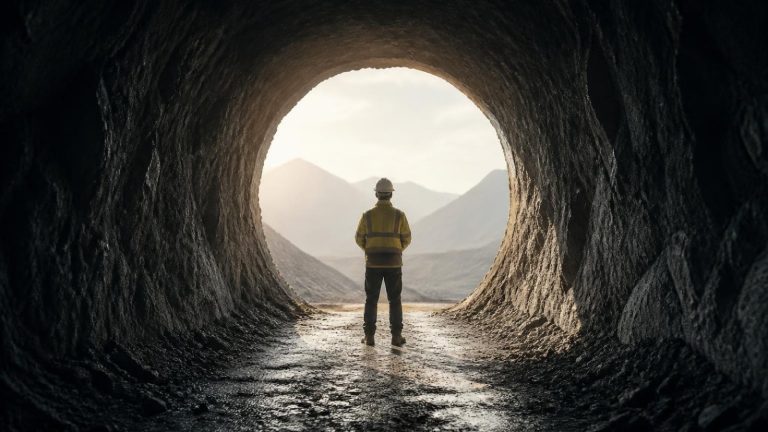
Zinnwald Lithium has received a permit from the Saxon Mining Authority to construct an approximately one-kilometre exploration tunnel at its Zinnwald Lithium Project in Germany, clearing a significant regulatory hurdle for one of Europe’s most advanced hard-rock lithium developments.
The permit, granted to the company’s German subsidiary Zinnwald Lithium GmbH, allows construction of a tunnel from a portal at the former Zinnwald Border Station site — a location that has been largely idle since the Czech Republic joined the Schengen area in 2007 — adjacent to federal highway B170 between the villages of Zinnwald and Altenberg. The tunnel is valid until 31 December 2027 and may be extended.
The exploration tunnel is designed to gather geotechnical, seismic and hydrogeological data on the ore body and will enable the extraction of up to 2,000 tonnes of bulk samples for metallurgical testing and product qualification. According to the company’s pre-feasibility study published in March 2025, a portion of the tunnel alignment may be incorporated into permanent mine infrastructure subject to future regulatory approvals — a provision that could reduce construction costs and timelines if the project advances to production.
The permit does not authorise mining operations. Commercial production from the deposit will require additional permits, including the completion of an environmental impact assessment and a public consultation process.
The Zinnwald project hosts a measured and indicated mineral resource estimate of 193.5 million tonnes and a proven and probable reserve of 128.1 million tonnes, with the project targeting production of battery-grade lithium hydroxide. Chief executive Anton du Plessis described the permit as “an important step in the ongoing de-risking of the Zinnwald Lithium Project” following what he called a comprehensive submission process.