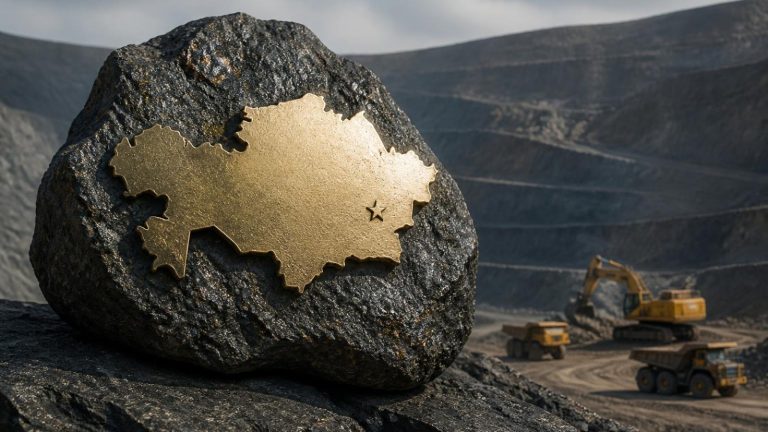
Kazakhstan’s subsoil reform programme has delivered a 2.5-fold increase in geological exploration investment — rising from $400 million in the pre-reform period of 2012 to 2017 to $1 billion between 2019 and 2024 — but the country now faces a fresh challenge: several major deposits are approaching exhaustion, and new discoveries must be made within the next five years to safeguard the industry’s long-term future.
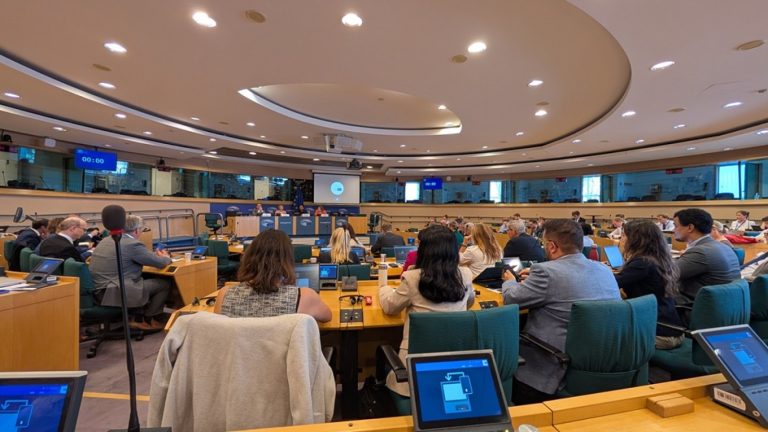
Those were among the most striking findings to emerge from the MINEX Kazakhstan 2026 forum in Astana, where more than 500 specialists from 33 countries and 40 exhibitors gathered under the motto “Mineral Resources of Kazakhstan: Reforming for Value in a Multi-Vector Reality.”
Vice minister of industry and construction Iran Sharkhan opened a strategic session by detailing the concrete results of the 2025 exploration season. The 17 deposits newly registered on the state roster this year — including the largest, Kok-Zhon, Altyn-Shoko and Samombet — yielded reserve additions of 136 tonnes of gold, 152 tonnes of silver, 75,000 tonnes of copper and 1.3 million tonnes of phosphorites. Kazakhstan’s mineral resource base now encompasses approximately 10,000 registered deposits, and the 2018 Subsoil Code reform has created the competitive environment that produced the investment surge the sector has seen in recent years.
Rustam Shuntukov, managing director of the mining and metallurgical complex department at the National Chamber of Entrepreneurs Atameken, acknowledged significant systemic progress — particularly the opening of virtually all of Kazakhstan’s territory to exploration through improved access to geological information and the integration of digital decision-making tools. But he struck a note of urgency on depletion. “We have old deposits where the remaining extraction period is only five to six years — that is a major risk for the sector,” he said. “We need to structure our work so that over the next five years we can open new deposits and then ensure their full development over ten years.”
Nikolai Radostovets, executive director of the Republican Association of Mining and Metallurgical Enterprises, welcomed the influx of new investors and modern technology as a long-awaited development. But it was Ruslan Baimishev, president of the Kazakhstan Mining Chamber, who raised one of the forum’s most pointed governance questions: how to preserve market-wide transparency while extending preferential rights to strategic investors.
Baimishev acknowledged that the strategic investor status cannot and should not be available to all — but warned that the mechanism must be clearly understood across the industry if it is not to damage the broader investment climate. “For investors operating under the general regime, transparency in decision-making is critically important,” he said. “The mechanism must be comprehensible to the entire sector, and transparency can be ensured through digitalisation and open data.”