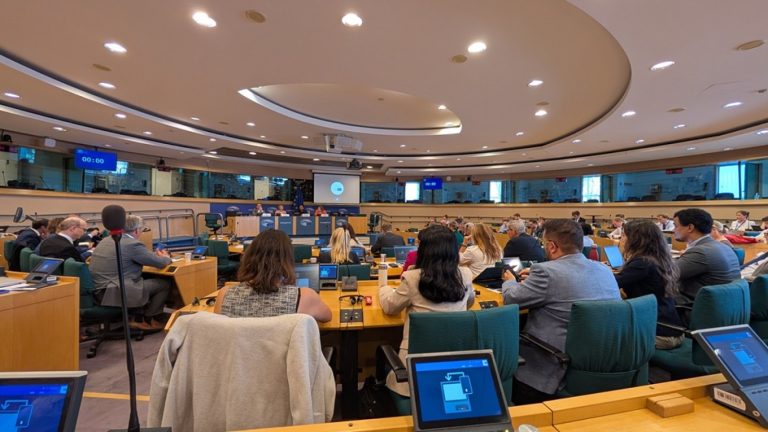
Environmental organisations have raised serious concerns after European Commissioner for Environment Jessika Roswall held a private meeting in Stockholm with a hand-picked group of industrial and mining industry lobbyists to discuss the future of the EU’s Water Framework Directive — the bloc’s primary legal instrument for protecting rivers, lakes and drinking water supplies — with no environmental or civil society representatives invited to attend.
The Water Framework Directive underpins EU rules on clean drinking water, the health of freshwater ecosystems and climate resilience. Critics argue that any discussion of its future should be subject to open, transparent and inclusive consultation, rather than closed-door talks with an industry that has consistently lobbied to reduce regulatory constraints on extraction operations.
The European Environmental Bureau condemned the format and framing of the meeting in stark terms. Athénaïs Georges, the organisation’s policy officer for biodiversity and water, said the Commission was “placing short-sighted and specific corporate interests above public and environmental protection” by convening with hand-picked participants while excluding wider civil society. She warned that reopening the directive risked “unleashing a Pandora’s box — jeopardising the health of current and future generations.”
Diego Marin, the bureau’s senior policy officer for raw materials and resource justice, was equally direct: “Secret deals should not decide our water’s future. All mining projects have serious impacts on water, with pollution travelling far beyond the source and contaminating nature for decades — even permanently.”
Environmental groups point to an already well-documented record of mining-related water contamination across Europe. Heavy metals, acid mine drainage and other hazardous substances from mining operations have been linked to the contamination of rivers and groundwater, the collapse of aquatic biodiversity and the emergence of ecological dead zones in multiple member states. The organisations argue that weakening the Water Framework Directive at the behest of mining industry interests would compound these harms at a continental scale, threatening public health, local livelihoods and the long-term resilience of freshwater ecosystems.
The closed nature of the Stockholm meeting has drawn particular criticism at a moment when the EU is simultaneously accelerating its critical minerals agenda and facing mounting pressure from environmental and community groups concerned about the social and ecological costs of rapidly expanding European extraction.