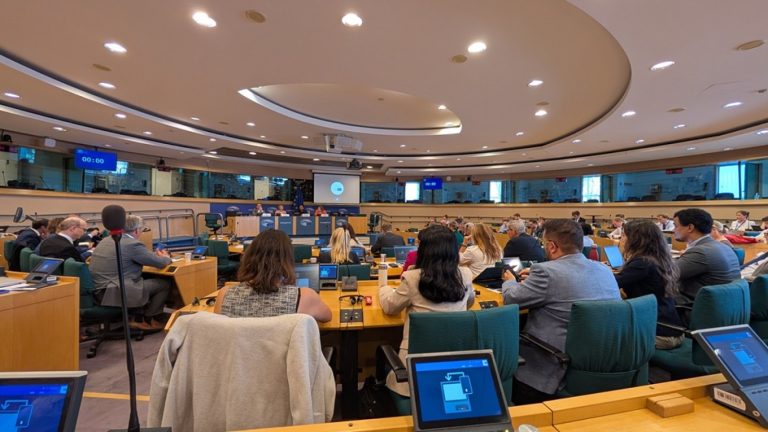
Kazakhstan’s junior exploration sector has the geological foundations and regulatory momentum to become a significant driver of new mineral discoveries, but excessive bureaucracy, inadequate targeted support and a one-size-fits-all regulatory framework continue to constrain smaller companies, according to participants at a roundtable held on the sidelines of the Geoscience and Exploration Central Asia 2026 forum in Astana.
The roundtable — titled “Junior Companies: New Discoveries and the Investment Potential of Central Asia” — brought together investors, junior exploration firms and senior industry experts to assess both the opportunities and the obstacles facing early-stage explorers in Kazakhstan. Presentations were delivered by the chief executives of East Star Resources, QazAurum, Palace Resources, Kogodai and Elementa, as well as the chief geologist of Aurora Minerals Group.
Opening the session, Kazakhstan Mining Chamber president Ruslan Baimishev said that the subsoil use reforms launched in 2018 had created more favourable conditions for new market entrants, and that junior companies — willing to operate at the earliest, riskiest stages of exploration — were uniquely positioned to generate the new discoveries the country and the global market urgently needed. He noted that a global shortage of major new mineral finds was increasingly directing attention toward the junior sector as the primary source of future resource growth.
Kogodai CEO Bolat Kabaziyev offered a frank assessment of the structural challenges. Junior companies, he said, differ fundamentally from large producers: they hold no operating assets, are almost entirely dependent on external financing, and typically spend years moving a prospect from initial identification through risk reduction and resource confirmation before it can attract institutional capital. Yet in Kazakhstan, small explorers are largely subject to the same regulatory requirements as major mining companies, despite operating at a fraction of the scale. He argued that commercial success among junior explorers remains rare precisely because access to financing, data quality and decision-making flexibility — the three critical enablers — remain insufficiently developed.
Participants acknowledged a number of genuine improvements in Kazakhstan’s investment environment: updated legislation, broader access to geological information, simplified licensing procedures and rising investor interest in early-stage exploration. The country’s substantial archive of Soviet-era geological data was highlighted as a strategic asset that, if made more practically accessible, could serve as a foundation for new project generation and foreign investment attraction.
At the same time, the roundtable identified persistent barriers. Lengthy approval and permitting processes, complexity around land use and environmental requirements, and the absence of dedicated support mechanisms for small exploration companies were all cited as structural weaknesses. Participants called for continued legislative refinement, purpose-built support frameworks for junior operators, and a better-calibrated balance between state oversight and the commercial conditions needed to attract risk capital.
The consensus was clear: Kazakhstan’s combination of geological endowment, reform momentum and technical expertise creates genuine conditions for junior sector growth — but realising that potential will require the state to treat small explorers as a distinct category deserving tailored policy rather than a scaled-down version of a major mining company.