Kazakhstan, the Kyrgyz Republic and Uzbekistan together hold some of the world’s most significant reserves of critical raw materials, yet systemic governance failures, outdated infrastructure and weak regulatory frameworks are preventing the region from capitalising on a once-in-a-generation opportunity, according to a new report from the OECD.
Published in March 2026 and funded by the UK Foreign, Commonwealth and Development Office, the report — Advancing Security and Transparency for the Governance of Critical Raw Materials in Central Asia — warns that despite the region’s enormous mineral wealth, investment remains constrained by unreliable geological data, dominant state-owned enterprises and a history of disputes with foreign investors.
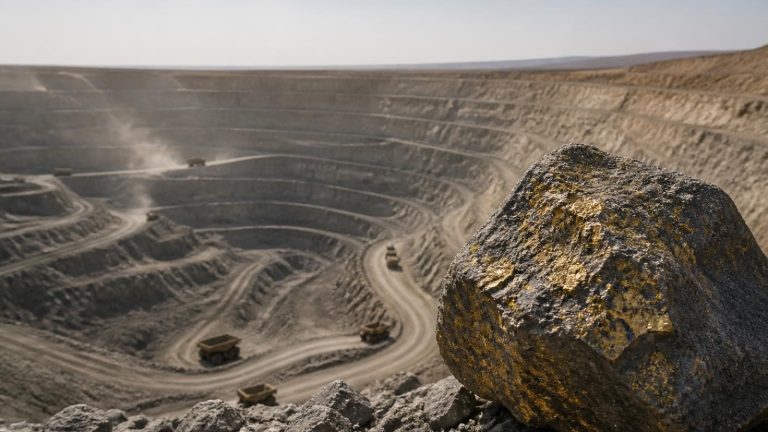
Central Asia holds 39% of global manganese ore reserves, 31% of chromium, 20% of lead, 13% of zinc, and significant shares of titanium, aluminium, copper, cobalt and molybdenum. Kazakhstan alone — already the world’s largest uranium producer, accounting for 40% of global output — can export 21 of the 34 critical raw materials on the EU’s official list. The Kyrgyz Republic holds the world’s third-largest antimony reserves, a resource now in sharp focus following China’s export ban on the mineral. Uzbekistan, meanwhile, ranks eleventh globally for copper reserves and has begun developing lithium and molybdenum production.
On responsible business conduct, the OECD found that awareness of international standards is growing across all three countries, but that implementation remains patchy. Mining sectors in each nation are dominated by a small number of state-owned enterprises, some of which play quasi-regulatory roles — creating conflicts of interest where ministry officials simultaneously hold positions in the companies they are supposed to oversee. Corruption in public procurement and a lack of transparency continue to erode trust between governments, investors and local communities. The report notes that affected populations are frequently excluded from consultations about the risks and impacts of mining operations, with no clear guidelines on compensation or resettlement.
Environmental risk management presents a further challenge. While all three countries have adopted economy-wide strategies to cut greenhouse gas emissions, the OECD found these lack sector-specific mining targets. Water pollution, land degradation and hazardous waste — including the management of legacy Soviet-era tailings storage facilities with radioactive contamination risks — remain inadequately addressed in national frameworks.
On taxation, the report identifies serious vulnerabilities to Base Erosion and Profit Shifting practices, including the under-pricing of mineral exports between related parties, uncommercial intra-group financing arrangements and offshore indirect transfers of mining licences that allow capital gains to escape domestic taxation altogether. While all three governments are gradually aligning their tax frameworks with international standards, legislative loopholes continue to allow legal profit-shifting that undermines public revenues.
The OECD calls on governments across the region to modernise reserves reporting systems, strengthen the separation between state ownership and regulatory functions, introduce mining-specific environmental targets, and close tax loopholes through closer alignment with BEPS standards. With global demand for critical minerals forecast to rise sharply in the coming years, the report frames these reforms not merely as governance improvements, but as the essential foundation for attracting the foreign investment needed to unlock the region’s full economic potential.