Kazakhstan has emerged as the world’s third-largest tungsten producer following the launch of the Bogutinskoye deposit, marking a significant shift in global supply dynamics. The development comes amid a sharp increase in tungsten prices, which surged by 557% by early March 2026 after China imposed export restrictions on the metal in February 2025.
According to recent analysis by Kursiv Research, tungsten concentrates entered Kazakhstan’s export portfolio for the first time in 2025. The country exported 3.7 thousand tonnes of tungsten ore and concentrates, generating $71 million in revenue, with all shipments directed to China. Despite its relatively modest ranking at 71st place in Kazakhstan’s export structure, tungsten has quickly become a strategically important commodity.
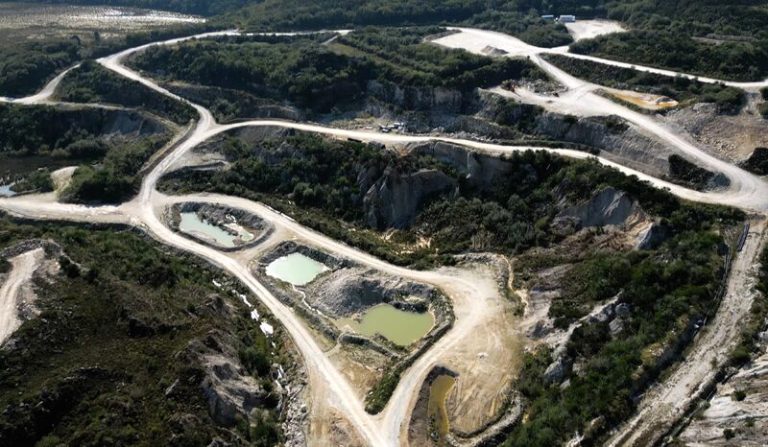
The Bogutinskoye project, operated by Zhetysu Tungsten and backed by Hong Kong-based Jiaxin International Resources Investment, has played a central role in this development. The processing plant produces a 65% concentrate, with total investment commitments reaching $450 million. Plans are also underway to develop downstream processing capacity, including a $100 million project to produce ammonium paratungstate, a higher-value tungsten product.
Data from the US Geological Survey confirms Kazakhstan’s rapid ascent in the sector. In 2025, the country produced approximately 2.4 thousand tonnes of tungsten (in metal equivalent), placing it behind China and Vietnam. The expansion of production capacity and ongoing investment projects are expected to further strengthen Kazakhstan’s position in the global market.
Tungsten’s strategic importance has grown significantly in recent years, particularly in the context of geopolitical tensions. The metal remains on the US list of critical minerals, essential for defence, construction, and high-tech manufacturing. China continues to dominate global supply, accounting for nearly 79% of production in 2025, while also tightening export controls in response to trade measures from the United States.
In response, the US has intensified efforts to diversify supply chains through international partnerships. A key development is the joint venture between Kazakhstan’s Tau-Ken Samruk and US-based Cove Capital to develop the Upper Kairakty and Northern Katpar deposits. The project, with an estimated investment of $1.1 billion, is expected to significantly boost Kazakhstan’s production of ammonium paratungstate and could position the country as the world’s second-largest producer of this material.
The agreement reflects broader geopolitical competition over critical minerals, with both Western and Chinese companies seeking access to Kazakhstan’s resource base. Analysts note that rising prices and supply restrictions have accelerated investment activity and heightened strategic interest in the region.
In parallel, Kazakhstan is strengthening state control over critical mineral resources, with legislative changes expected in 2026 to grant priority extraction rights to the national mining company. Private sector players are also advancing new projects, including the development of the Drozhilovskoye deposit with financing from the US Export-Import Bank.
As global demand for critical minerals continues to rise, Kazakhstan is positioning itself as a key supplier in an increasingly competitive and politically sensitive market.