A major lithium mining project in the Czech Republic’s north-west is drawing increasing local opposition even as it gains strategic support from the European Union as part of its efforts to secure critical mineral supplies for the green transition.
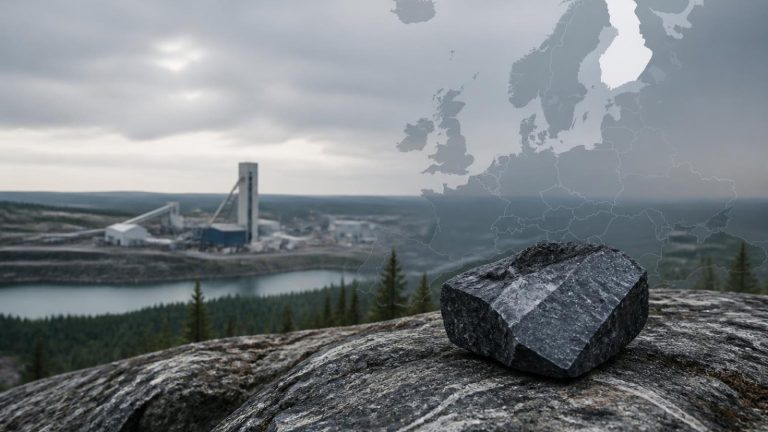
The Cinovec deposit, located near the German border in the Ore Mountains, is considered one of the largest lithium resources in Europe. Developed by Geomet, a company jointly owned by Czech state-controlled energy group CEZ (51%) and European Metals Holdings (49%), the project could become a cornerstone of the EU’s emerging domestic lithium supply chain.
The deposit is estimated to contain up to three percent of global lithium reserves. Current development plans envisage mining roughly 3.2 million tonnes of ore annually, producing about 37,000 tonnes of battery-grade lithium carbonate each year, enough to supply materials for around 1.3 million electric vehicles.
The project has been designated a strategic initiative under the EU’s Critical Raw Materials Act, enabling accelerated permitting procedures and financial support. The development has also received a €36 million grant from the EU’s Just Transition Fund and a €360 million subsidy from the Czech government. Total project investment is estimated at around CZK 42 billion (€1.75 billion), with mining potentially beginning by 2030.
However, residents and local officials in the Usti nad Labem region have raised concerns that the project could reverse years of environmental recovery following the decline of heavy industry and coal mining. The area, which transitioned from large-scale industrial extraction to tourism and spa services, now faces the prospect of renewed mining activity.
Local leaders warn that lithium extraction could bring environmental and social impacts, including noise and air pollution, groundwater contamination and disruption to landscapes and biodiversity. Critics also point out that parts of the proposed mining area lie within protected Natura 2000 zones and the Ore Mountains UNESCO World Heritage site.
Activists and environmental researchers argue that large-scale lithium extraction cannot be considered environmentally neutral, even if linked to renewable technologies and electric vehicle production. Concerns have also been raised about transparency, community consultation and the long-term economic benefits for local residents.
Economic uncertainties further complicate the project’s outlook. Lithium prices have fallen sharply since their peak in 2022, raising questions about the financial viability of large-scale hard-rock lithium mining at Cinovec. Analysts note that the project’s costs may be relatively high due to the ore’s lower lithium concentration, while reliance on public subsidies and volatile global markets adds additional risk.
Despite these challenges, Czech authorities continue to view the project as strategically important for maintaining the country’s role in the European automotive supply chain and supporting the EU’s broader goal of reducing dependence on imported battery materials.