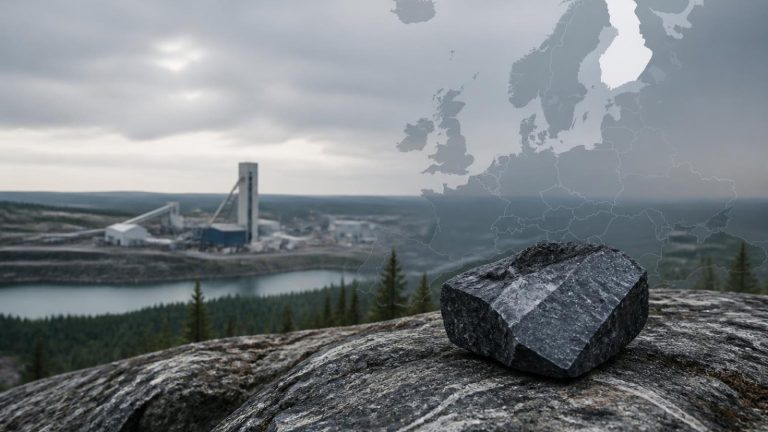
The European Union is channelling significant financial support into LKAB’s Per Geijer rare earth project in northern Sweden as part of its strategy to reduce dependence on China for critical raw materials. However, the same EU legal framework designed to protect the environment and Indigenous rights is emerging as a major obstacle to the project’s progress.
The Per Geijer deposit near Kiruna has been granted Strategic Project status under the EU’s Critical Raw Materials Act (CRMA), making it eligible for EU-backed loans, guarantees and other de-risking instruments. The designation reflects the project’s importance to Europe’s green transition, defence capabilities and electric vehicle supply chains. Under the CRMA, the EU aims to mine at least 10% of its strategic raw materials domestically and process 40% within the bloc by 2030.
To support these targets, Brussels is deploying financing through tools such as InvestEU, the Innovation Fund and European Investment Bank lending, with nearly €3 billion earmarked for mining, processing and recycling projects. Northern Sweden has been identified as a priority region, and Per Geijer is seen as a flagship initiative.
Despite this political and financial backing, the project remains subject to Sweden’s Environmental Code and EU environmental legislation, including the Environmental Impact Assessment Directive and the Habitats and Birds Directives. These rules require extensive assessments of impacts on biodiversity, water resources, emissions and climate, and allow for legal appeals that can delay projects for years. Strategic status does not provide exemptions from these requirements.
Additional complexity arises from Indigenous rights considerations. The Per Geijer deposit overlaps with traditional reindeer-herding land used by the Sami people, triggering legal obligations under Swedish law, EU law and international human rights conventions. Requirements for meaningful consultation and protection of minority rights sit uneasily alongside the CRMA’s push for faster permitting.
Per Geijer is part of a broader LKAB value chain that includes rare earth extraction at Malmberget and processing facilities in Luleå, all of which have also received Strategic Project status. However, the European Commission retains the right to withdraw this status if sustainability criteria are not met or if projects fail to deliver.
The case highlights a structural tension within EU policy. While Brussels is accelerating funding and political support to secure raw material autonomy, its environmental and rights-based legal framework gives courts and civil society strong tools to slow or block projects. The outcome in Kiruna is increasingly seen as a test of whether the EU can reconcile its industrial ambitions with the legal principles at the core of the Green Deal.