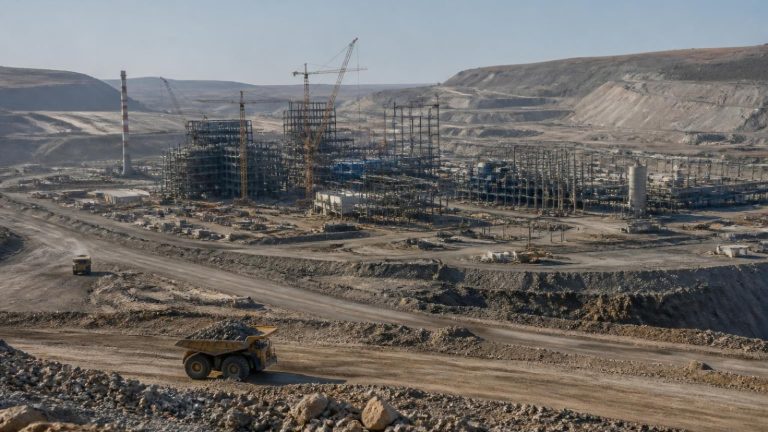
London-listed Savannah Resources has hailed the European Commission’s latest decision reaffirming the Barroso lithium mine in northern Portugal as a strategic project for Europe, despite ongoing opposition from environmental groups and local communities.
The company, which holds the concession for the mine in Covas do Barroso, said the Commission’s rejection of a complaint filed by Associação Unidos em Defesa de Covas do Barroso (UDCB), MiningWatch Portugal and ClientEarth “reinforces the European Commission’s confidence” in the project. The NGOs had asked Brussels to remove the mine from the list of strategic initiatives under the Critical Raw Materials Regulation (CRMA), arguing the project presented significant environmental and safety risks.
In its response, the Commission dismissed the applicants’ arguments as unfounded — a position Savannah highlighted as consistent with several rulings by Portuguese courts in the company’s favour. Savannah described the Barroso operation as “one of the strategic projects for Europe,” stressing its potential role in regional reindustrialisation, the decarbonisation of EU transport, and reducing the bloc’s dependence on external energy and material suppliers.
The company also claimed that opposition groups do not represent the communities living closest to the project, alleging that only one organisation involved has a local presence and accusing the broader movement of being driven by “increasingly radical” activists. Local groups strongly reject this characterisation, noting that community resistance to the mine has been sustained for nearly eight years.
Critics argue the Commission’s decision ignores mounting evidence that Barroso’s mine design carries serious environmental and tailings safety risks. They warn that rural areas and fragile ecosystems are being sacrificed “for short-term profits” and accuse the EU of prioritising strategic supply over local well-being and environmental protection.
The Barroso project received a favourable Environmental Impact Statement (EIS) in 2023. Savannah plans to begin construction in 2026 and start production in 2028, with the mine positioned as a key contributor to Europe’s lithium supply chain under the CRMA.