
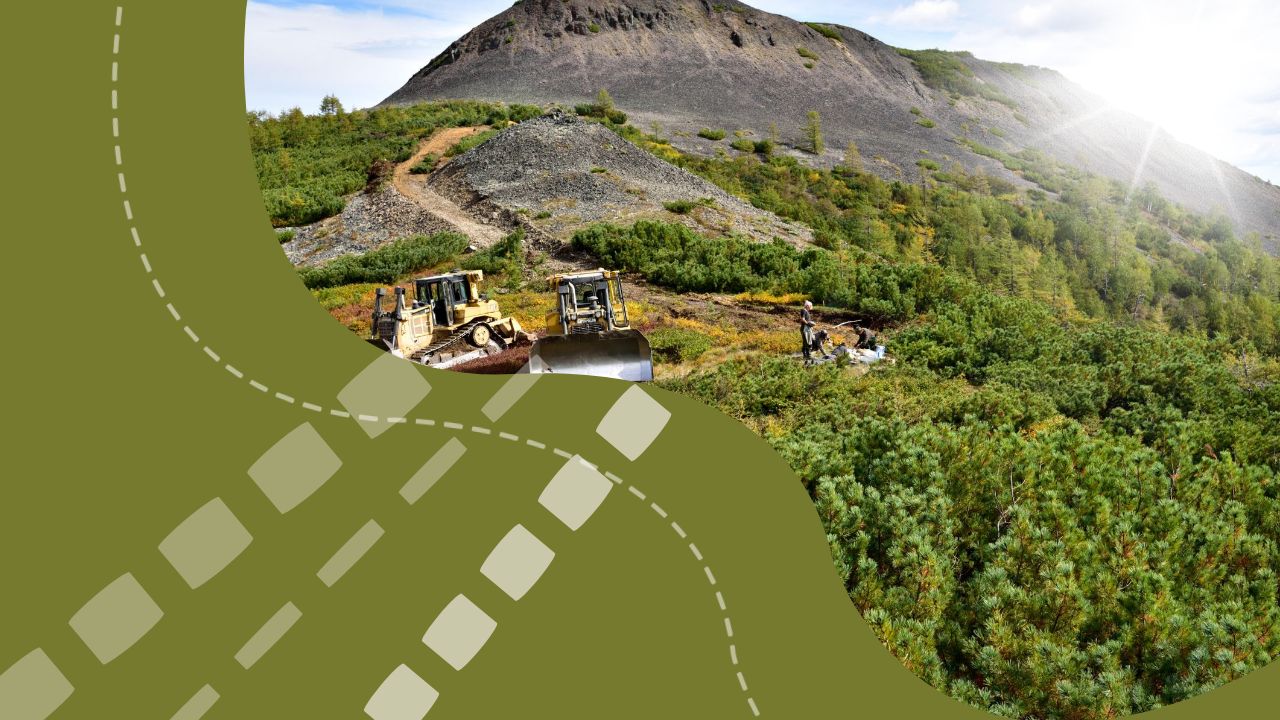
In the gentle hills of Majevica, a low mountain range in northeastern Bosnia and Herzegovina where farmers grow strawberries, keep bees and distil rakija, a battle is unfolding that mirrors conflicts playing out across much of the developing world: the collision between the European Union’s hunger for critical minerals and the communities whose land sits above them.
Since September 2023, when residents learned by chance that Swiss prospecting company Arcore was preparing to drill for lithium on the mountain, a grassroots anti-mining movement has taken root across the region. Local activist Andrijana Pekić and her neighbours in Lopare founded an informal organisation to educate their community about the dangers of lithium extraction, collaborating with established environmental groups including Bijeljina-based Eko Put and Tuzla’s Karton Revolucija. Their core argument is unambiguous: “There is no such thing as clean lithium mining.” Tailings from extraction processes containing sulphuric acid and hazardous chemicals contaminate streams, groundwater and soil; rock dust pollutes the air for miles. Majevica’s waterways feed the Drina and Sava rivers, meaning environmental damage would ripple across a vast surrounding region encompassing Tuzla, Bijeljina, Brčko and Zvornik.
Activists have conducted two petition drives, in 2024 and 2025, calling for a ban on lithium mining and the establishment of a nature reserve across most of the mountain. Both were dismissed by the Republika Srpska parliament. Arcore, meanwhile, has already conducted drill tests on private land — in some cases without the knowledge of landowners — with documented consequences. After the company drilled on the property of Jovan Krsmanović in the village of Vukosavci, both his well and a neighbour’s dried up entirely.
Majevica is far from an isolated case. Lithium, magnesium, copper, nickel, cobalt and other minerals featured on the EU’s 2024 critical raw materials list have been identified across Bosnia and Herzegovina, and international mining companies have been awarded concessions across the country in circumstances activists and legal experts describe as opaque and frequently unlawful. A central grievance concerns a long-standing legal prohibition on the sale or change of use of state-owned property — a restriction rooted in unresolved property succession disputes following Yugoslavia’s dissolution — which both entities have repeatedly violated when doing so serves favoured investors.
The most prominent example is the Vareš municipality in central Bosnia, where a concession was granted to Eastern Mining in 2018 and later acquired and expanded by Adriatic Metals, covering silver, zinc, lead and barite deposits. A significant portion of the land falls on state property. The company has been found guilty of clear-cutting forested land, while mining at the Rupice mine has contaminated drinking water supplies for the downstream town of Kakanj. In July 2024, Bosnia’s Constitutional Court ruled that the Federation’s granting of state-owned land use was unconstitutional — yet excavation was permitted to continue regardless.
Federation Prime Minister Nermin Nikšić has shown little sympathy for conservationists. He dismissed those seeking to protect land around Vareš, suggesting it was irrational to allow “scrubland they call state property to lie useless rather than become a valuable investment.”
The contradiction at the heart of the crisis is captured bluntly by Snežana Jagodić-Vujić of Eko Put: “Our entire country is being attacked. The green transition is clean there, but dirty here.” Campaigners point out that significant lithium deposits exist within the EU itself — in Portugal and Spain — where stricter environmental laws and stronger rule of law have at least slowed the pace of extraction following mass public protests. Bosnia and Herzegovina, riven with corruption and institutional dysfunction dating to the Dayton constitutional settlement, has so far offered mining companies a far more permissive environment.
