
6 SESSION BRIEF
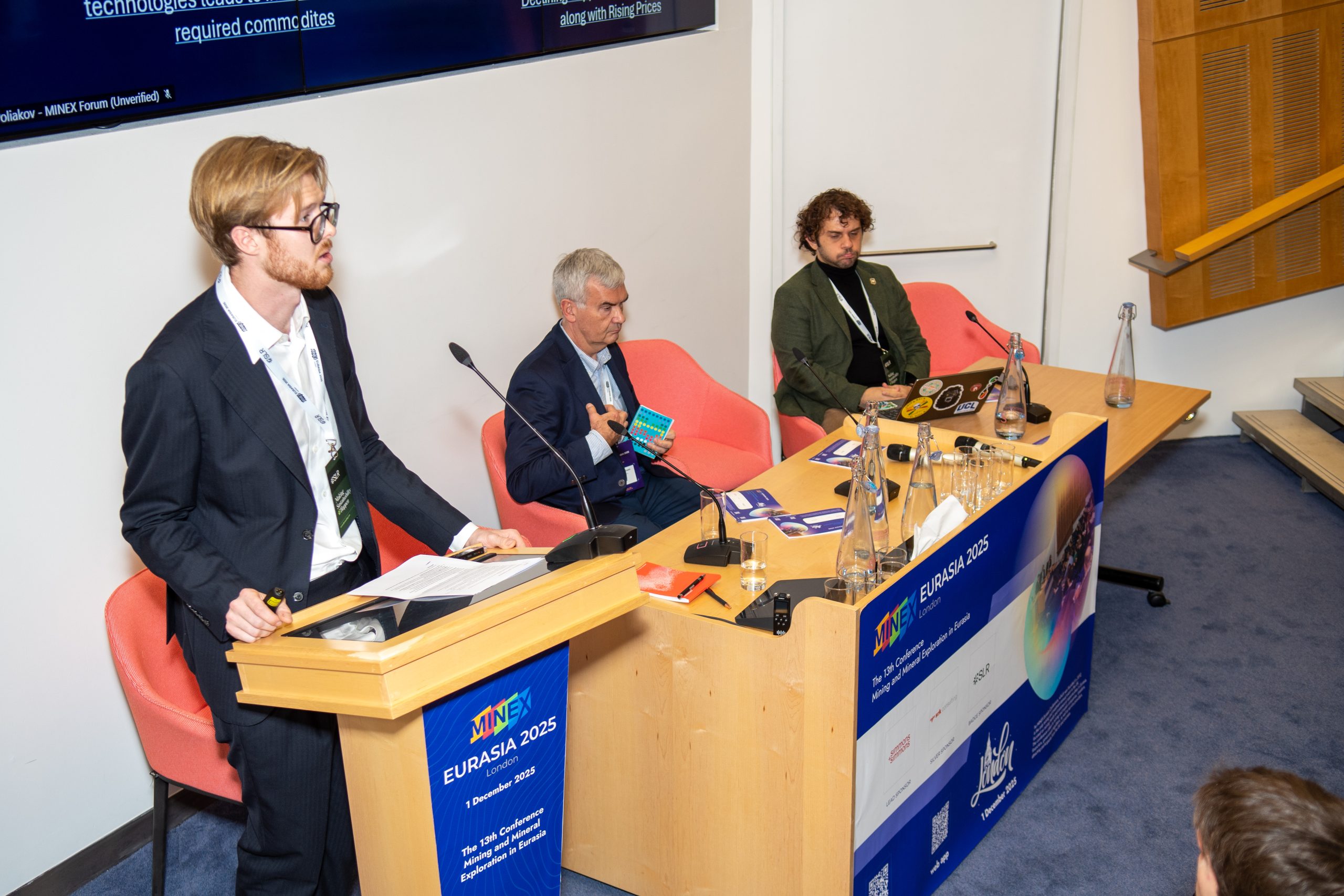
Groundbreaking research from the University of Oxford presented at the MINEX Eurasia conference unveiled a transformative vision for critical mineral supply, proposing that oilfield and geothermal brines – long considered waste products – could become highly profitable sources of elements essential for the global energy transition. The session, titled “Turning Brine into Value: Unlocking Central Asia’s Hidden Critical Minerals,” highlighted proven technologies ready for scale-up, with a particular focus on Central Asia’s immense untapped potential.
Konstantin Nazarov, a DPhil researcher at the University of Oxford and lead presenter, set the stage by emphasizing that traditional hard-rock mining alone may struggle to meet the escalating global demand for critical minerals like lithium, rare earths, bromine, and gallium. “To meet 21st-century needs, we need new resource concepts and new extraction pathways,” Nazarov stated, introducing the Oxford Earth Program, an interdisciplinary initiative focused on rethinking critical mineral sourcing.
The core concept revolves around “saline geofluids” – naturally occurring subsurface brines found in oil fields and geothermal systems. Nazarov detailed how these fluids, currently often disposed of as waste, are chemically enriched in high-value elements. He cited historical examples, like Arkansas becoming a major bromine exporter in the 1950s by extracting from oilfield brines, and modern operations in the Salton Sea (US) and Ohaka (New Zealand) producing critical minerals alongside power generation, often with revenue streams exceeding electricity sales.
“Preliminary estimations derived from open-source data showcase strategic resources of crucial minerals and extremely large revenue rates,” Nazarov explained, projecting an annual metal flux from American geothermal and oilfield brines translating to per year. He positioned Central Asia as uniquely poised to leverage this innovation. “Kazakhstan alone holds over 40,000 wells and an extensive reinjection network… its Paleozoic and Mesozoic basins contain highly saline fluids enriched in bromine, iodine, lithium, strontium, and potentially rare earth metals.” Uzbekistan, Turkmenistan, Kyrgyzstan, and Tajikistan also hold significant potential.
The session further showcased Oxford’s spin-out companies translating this research into real-world applications:
Ascension Earth Resources, represented by Lead GeoAnalyst Michal Camejo, presented novel technologies to harness the unique metal endowment and geothermal energy of volcanic systems. Camejo detailed a “novel geothermal in-situ recovery process” to sustainably extract critical minerals, particularly heavy rare earth elements, from volcanic glass. This method aims to bypass environmentally damaging aspects of conventional mining by injecting proprietary solutions underground and pumping out metal-rich brines for processing, leveraging existing geothermal heat.
Seloxium, with Chief Commercial Officer Richard Dixon, introduced their platform of water-soluble polymers for selective metal recovery from process streams. Dixon highlighted the technology’s speed, scalability, and robustness, capable of capturing metals like palladium, gold (at concentrations as low as ), and rare earths even in the presence of high impurities. Notably, Seloxium’s polymers can selectively extract uranium and thorium from rare earth streams, potentially simplifying processing and regulatory compliance. “We get some additional selectivity from know-how and some modifier additives, and we’re currently developing partnerships to validate this technology,” Dixon remarked, noting their pilot plant is already operating at TRL 8.
However, the path to unlocking this value is not without hurdles. Metehan Ciftci, a Research Associate at the University of Oxford, addressed the legal and societal challenges, drawing lessons from his research on Montserrat in the West Indies. Ciftci highlighted “legal uncertainties” surrounding the definition of a mineral versus waste, ownership disputes (especially in decommissioned oil fields), and the need for “hybrid contractual models” to facilitate collaboration between energy and mining companies. He stressed that “even when the geology is promising, institutions, governance, and public trust… ultimately determine the project success,” underscoring concerns about procurement expertise and community engagement.
Nazarov concluded by reiterating that two critical challenges face this nascent industry: the “industry’s reluctance” from oil and gas companies to consider the mineral endowment of their brines, and the “absence of expertise and frameworks from the policy-making side.” Despite these challenges, the overwhelming message was one of immense opportunity.
“If embraced, Central Asia can position itself not just as a supplier, but as a global leader in the next generation of critical mineral production derived from brines,” Nazarov affirmed, painting a picture of a future where existing infrastructure can drive a low-impact, high-value, and environmentally responsible supply chain for the materials of the next Industrial Revolution.[/ohio_text][/vc_column]
