
4 SESSION BRIEF
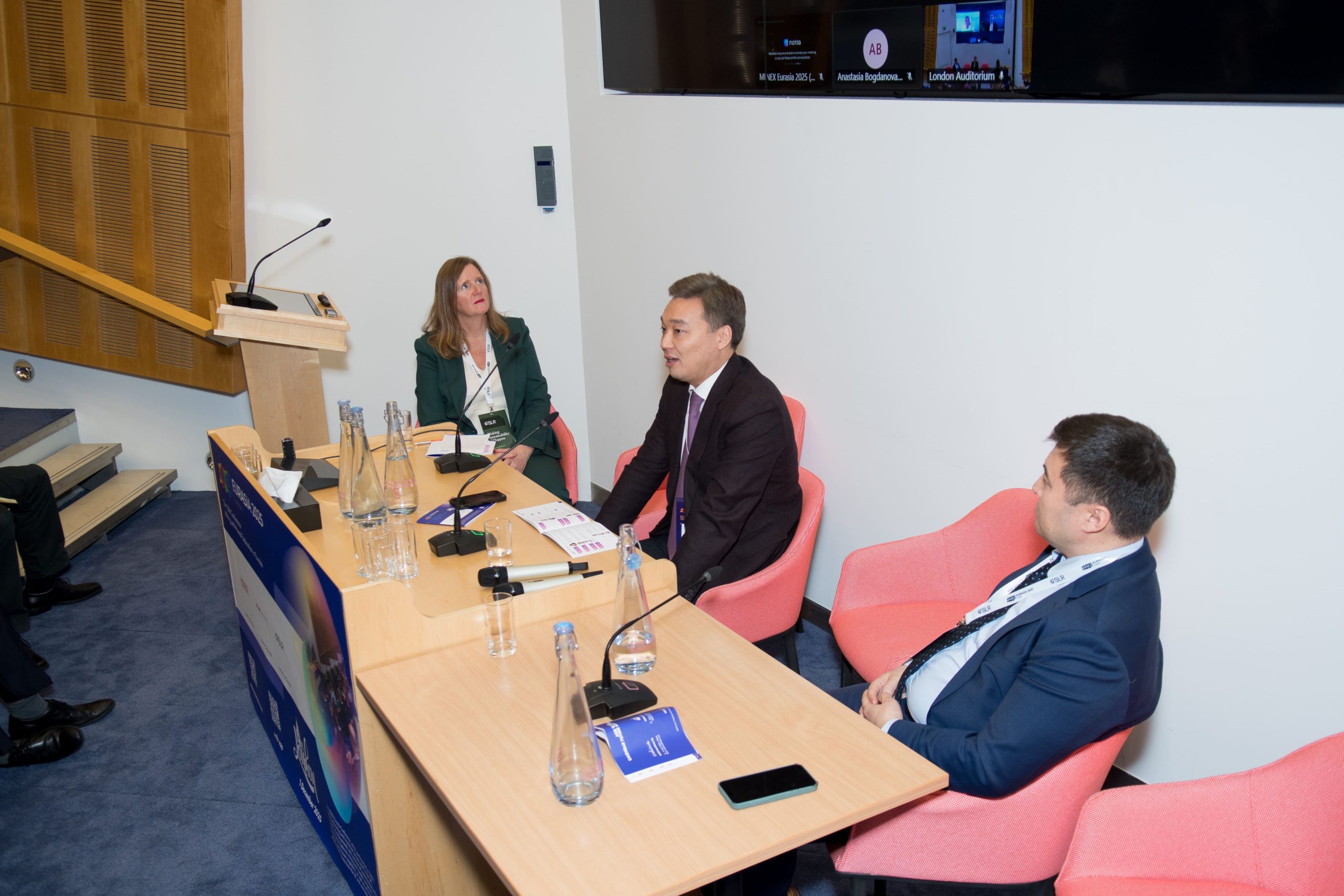
The session, titled “Kazakhstan Mining Outlook 2026: Reform, Resources and the Road to Value Creation,” brought together mining executives, government representatives, and investment professionals to discuss how the Central Asian nation is positioning itself as a vital alternative source for critical minerals amid shifting geopolitical dynamics.
Regulatory Overhaul Creates Investment Momentum
Kazakhstan has embarked on an ambitious restructuring of its mining regulatory framework, with changes that speakers at the London conference described as the most significant in decades. The reforms include opening the entire territory for subsoil use rights, strengthening penalties for illegal mining, and implementing a comprehensive geological mapping program covering hundreds of thousands of square kilometres.
“Kazakhstan has adopted a new tax code which will come into force on 1st January 2026,” explained Maxim Kononov, First Deputy Executive Director of the Association of Mining and Metallurgical Enterprises of Kazakhstan. The changes include a transition to a royalty-based system for greenfield projects, with rates differentiated by processing level-starting at 13% for ore, 10% for concentrates, and 7% for processed metals.
Ruslan Baimishev, President of the Kazakhstan Chamber of Mines, acknowledged both progress and ongoing challenges. “Our main victory was holding off discussions on a bill initiated by Parliament members aimed at reversing the 2018 reform,” he told attendees, referring to efforts that would have returned the sector to Soviet-era regulatory methods. “The project has now been held, and this is a major victory for democratic Parliament.”
However, Baimishev noted concerns about new provisions that could affect investment, including expanded government priority rights and increased thresholds for investment agreements—now raised tenfold to $500 million for processing projects.
Environmental Compliance Becomes Material Cost Factor
Nargiza Ospanova, Environmental Specialist with SRK Consulting (Kazakhstan), delivered a sobering assessment of how environmental regulations are fundamentally altering project economics. Kazakhstan’s 2021 Environmental Code requires companies to transition to Integrated Environmental Permits and implement Best Available Techniques-or face dramatically escalating pollution payments.
“The peak of pollution payments comes during the main production period,” Ospanova warned, showing projections indicating that environmental costs could become one of the most significant operational expenses for mining operations. “Environmental, social and legal aspects have become highly material right now in Kazakhstan—much more than before.”
The presentation highlighted that most pollution payments from mining companies stem from waste disposal, and that companies failing to adopt Best Available Techniques face fees that increase progressively after 2028, with particularly steep escalations for Category 1 facilities-Kazakhstan’s top 50 polluters.
Major Projects Advance with International Backing
Several significant mining developments presented at the conference illustrated Kazakhstan’s growing appeal to international investors:
IG Asia’s Pribrezhniy Copper Project:
Steven McRobbie, VP Projects Development for IG Asia, described the company’s acquisition of the copper porphyry deposit from Rio Tinto and subsequent advancement through preliminary economic assessment. Located 30 kilometres from Lake Balkhash, the project benefits from exceptional infrastructure including direct rail access and proximity to sulfuric acid supply at under $100 per tonne.
“We’re looking at 150 million tons per year material movement in early years,” McRobbie said, describing scenarios ranging from fast-track oxide operations requiring $142 million in capital to combined oxide-sulphide operations with NPVs reaching $2.6 billion. The company has launched a 15,000-meter drilling program and is utilising AI to optimise drill spacing and reduce costs.
Ivanhoe Mines’ Entry:
Robert Barlow, Corporate Development Analyst at Ivanhoe Mines, talked about the company’s joint venture with Past Resources covering over 16,000 square kilometres-now the largest exploration land package in Kazakhstan. “We’ve launched a massive 17,500-kilometer drill program in our first year,” Barlow said, with potential spending of up to $115 million within four years.
Ivanhoe, known for discovering and developing the massive Kamoa-Kakula copper complex in the Democratic Republic of Congo, sees similar potential in Kazakhstan’s sediment-hosted copper systems. “Almost everything that should be discovered at surface has been discovered,” Barlow noted. “The big opportunity lies under heavy cover.”
U.S.-Kazakhstan Tungsten Deal Signals Strategic Realignment
Perhaps the session’s most significant revelation concerned the recently announced joint venture between Cove Capital and Tau-Ken Samruk for Kazakhstan’s Northern Katpar and Upper Kayrakty tungsten projects-a deal facilitated by direct involvement from U.S. President Donald Trump and Kazakhstan’s President Kassym-Jomart Tokayev.
Pini Althaus, Managing Partner of Cove Capital, called it “a generational project” containing over 10% of global tungsten reserves with capacity to produce 15% of annual global supply. “The U.S. has had no tungsten production since 2015,” Althaus explained via video link to the London conference. “Given the wide range of very critical uses that tungsten has in defence applications and industrial applications, this was perhaps the most urgent project the Trump administration has been working on.”
The deal reflects what Althaus described as “unprecedented” U.S. government support for critical mineral projects, with direct financing assistance, offtake agreements, and price floors. “We’re seeing things that neither Democratic or Republican administrations have done in the past 30 or 40 years since China has essentially taken control of the critical minerals global supply chain.”
Daniyar Idrissov, Chief Investments and Strategy Officer for Tau-Ken Samruk, emphasised during the panel discussion that the decision was driven by commercial considerations, particularly the secured offtake contract. “Having the supply is not the most critical thing,” Idrissov explained. “One of the most critical things for tungsten is to have the economics work…. This offtake contract will make the economics of the project work very successfully for both parties.”
Technology and Innovation as Competitive Advantage
Al-Farabi Ydyryshev, Director General of Kazakhstan’s National Center for Technology Foresight, outlined the country’s strategy for overcoming the challenge of generally lower-grade deposits compared to other mining jurisdictions. “One of the highest points in our agenda is to bring best available technology to Kazakhstan—to mine, to initiate, and to process,” he told the MINEX Eurasia audience.
Ydyryshev described his organisation’s role as a “think tank” that navigates the complex world of critical minerals and creates recommendations for both government and industry, bridging solution providers with companies operating in Kazakhstan. The centre is building networks across North America, Europe, Asia, and even neighbouring countries like Uzbekistan to access specialised expertise in processing various metals.
“We’re going to move to midstream and downstream to create maximum added value in Kazakhstan,” Ydyryshev said regarding the tungsten cluster development. “All these critical metals and minerals end up used in the West, in developed countries, in China—and I don’t see any contradiction that we’re going to have the most possible added value chain in Kazakhstan.”
Outlook: Strategic Positioning in a Multipolar World
The session concluded with a sense that Kazakhstan has reached an inflection point. The combination of regulatory reform, world-class mineral endowment, existing infrastructure, and geopolitical shifts favouring supply chain diversification has created what several speakers called a “perfect storm” of opportunity.
“The outlook is only positive,” Idrissov summarised. “Kazakhstan is a very good place. Please come to Kazakhstan and invest. Our job is to attract investors and make the natural resources of Kazakhstan work-first of all for Kazakhstan people, but also as a mutually beneficial partnership for all partners.”
The country’s “multi-vectoral” foreign policy approach—balancing relationships with China, Russia, the United States, and Europe-appears designed to avoid monopolistic control by any single power while maximising investment from all quarters. As Ydyryshev noted, “We have to secure no monopoly in mining and metallurgy in Kazakhstan. This approach would be similar for any metals.”
With major international mining companies now actively exploring, junior companies advancing projects, and strategic partnerships forming at the highest levels of government, Kazakhstan’s mining sector appears poised for substantial growth. Whether the regulatory reforms prove durable and the promised infrastructure materializes will determine if the country can fulfil its ambition to become a global leader in critical mineral supply.
For now, industry participants at the London conference seemed convinced that Kazakhstan represents one of the most significant mining opportunities in the Eurasian region—a jurisdiction where, as one speaker put it, “the economics work very good for very high, capital-intensive projects.”
Shortly after the conference, the Ministry of Industry and Construction of Kazakhstan announced the results of the nationwide geological exploration programme, aiming to expand the area of mapped and studied subsoil from 2.1 million sq. km to 2.2 million sq. km by 2026. According to the Ministry of Industry and Construction, the push is already yielding significant results: exploration work completed in 2024 across 11 sites has led to the identification of promising new deposits of precious, rare and strategic metals. Read more
