Month: February 2024

  • Participation of Aurora Limited in the Kazakhstan Chamber of Mines conference

    Participation of Aurora Limited in the Kazakhstan Chamber of Mines conference

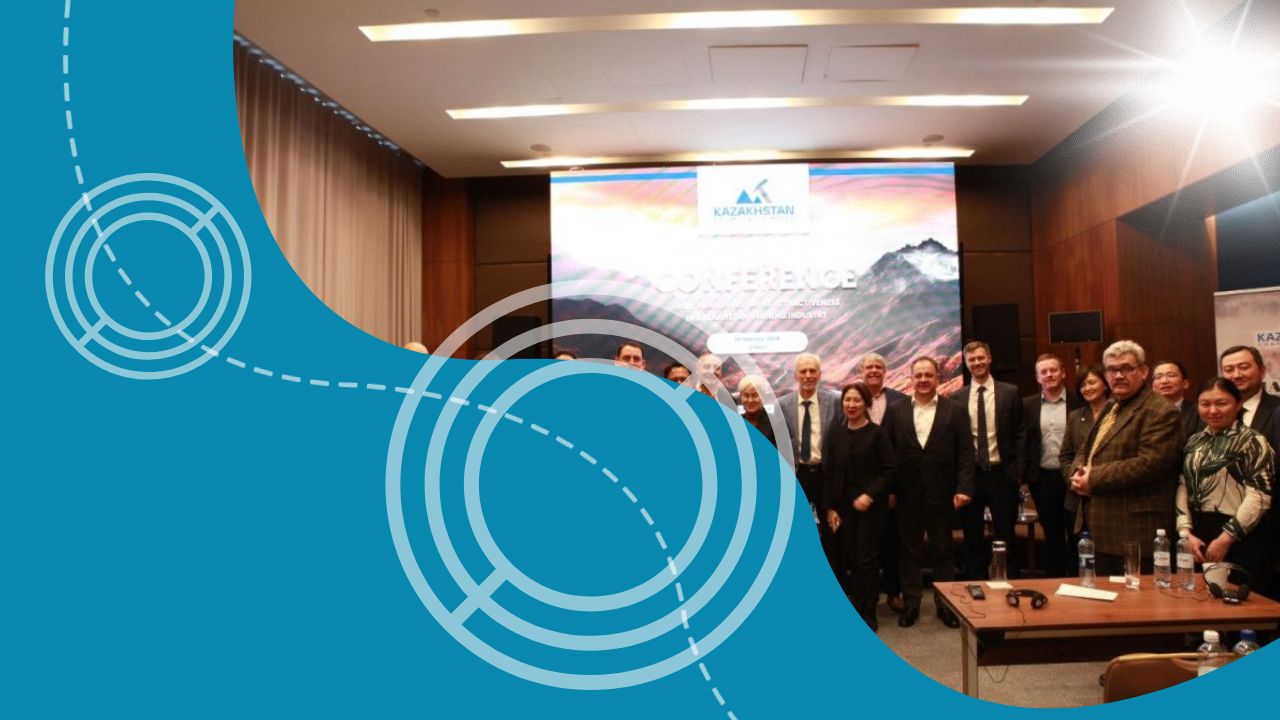
    Aurora Limited, a member of the Kazakhstan Chamber of Mines, actively participated in the conference “Increasing investment attractiveness in Kazakhstan’s mining industry” organized by the Kazakhstan Chamber of Mines. The event brought together leading industry representatives, government officials and diplomatic missions to discuss key aspects of legislation and proposed future policies related to exploration, mining and mineral processing technologies.

    The conference focused on sharing the experiences of key mining companies in dealing with the new Code, as well as discussing recently proposed changes. The conference included a plenary session and two panel sessions with presentations by senior representatives of the industry, government agencies and diplomatic missions.

    The Minister of Industry and Construction of the Republic of Kazakhstan, K.B. Sharlapayev, opened the conference and emphasized the importance of simplifying legislation and procedures to further increase the investment attractiveness of the industry. He also announced a package of upcoming amendments to the Code, which are aimed at improving conditions for investors. The Minister commented, “The package of forthcoming amendments to the Code, including suggestions from stakeholders and the mining industry, includes over 100 changes aimed at improving the conditions for investors. We are committed to further developing and strengthening the mineral resource complex, considering it a cornerstone of Kazakhstan’s economic prosperity.”

    The conference was also attended by the ambassadors of the US, UK and Canada, who support the development, study, cooperation and reform of the new Code. They offered comments and suggestions on maximizing Kazakhstan’s potential to attract investment and reiterated that a stable and transparent judicial and tax regime is necessary to provide certainty to incoming investors and companies. In addition, it was noted that foreign investment should be seen as an engine of economic growth, helping to increase the tax base.

    Mr. Tim Barry, member of the Supervisory Board of Directors of “Kazakhstan Chamber of Mines”, noted the importance of copper exploration in the world and the challenges faced by companies in their development. He emphasized that Kazakhstan has the potential to become an important player in the global copper market, not only by discovering new commercial deposits, but also by creating an enabling environment through government support and policies that encourage discovery. “There are 40 large but undeveloped deposits around the world, with total reserves estimated at about 470 million tons. They could meet global demand were it not for the problems associated with their development. We need to increase copper supply, and Kazakhstan is a very important player in the market in this regard. As an example, the large Aktogay deposit in the East Kazakhstan region, produces more than 200,000 tons of copper per year. But to meet the world’s demand for copper over the next decade and beyond, we need to have several of these large mines being developed every year.”

    The panel sessions focused on the legislative framework affecting investments in subsoil use in Kazakhstan, as well as geological and environmental aspects that influence investment decisions.

    Mr. R.N. Baimishev, President of the “Kazakhstan Chamber of Mines”, speaking at the conference, emphasized that new global investors have arrived: “Today we have several leading global mining companies with market capital measured in billions of dollars investing in mineral exploration in Kazakhstan, such as Rio Tinto, Fortescue, Teck and BHP.” He also noted, “The Chamber’s member companies are conducting exploration works on an area exceeding 25 thousand square kilometers, the volume of investments has exceeded the annual government spending on GIIN and these amounts continue to grow along with the related tax and social payments. In addition, subscription bonuses at the end of 2 auctions exceeded 7.8 million US dollars. Today the specialized ministry is able to solve practically all the issues of investors on the principle of “one window”, because after a long break associated with sectoral divisions and other MPS, it united geologists, subsoil users and industry. That is, by supporting the manufacturing industry at the legislative level it is impossible to destroy the investment climate in geological exploration, it is necessary to minimize the negative consequences, which are even indicated in the draft National Development Plan until 2029. The basis for the changes was the Constitutional Reform held in 2022, which confirmed the right of the people of Kazakhstan to own the subsoil and natural resources of the country. The state realizes this right on behalf of the people. Accordingly, the legal environment will be formed on the basis of this principle”.

    Ms. Bizhanova G.K. Member of the Board, Deputy Chairman of the Board of NPP “Atameken” spoke about the need to develop a Development Strategy of MMC. “Today, the lack of the Industry Strategy creates conditions for frequent changes in legislation, adoption of new regulatory documents, which are not taken into account in the business strategies of subsoil users. The draft National Development Plan of Kazakhstan until 2029 should become the basis of the Strategy. The Agency for Strategic Planning has submitted it for discussion. Our Chamber takes an active part in its finalization”.

    Among the key speakers was Mr. Almas Kushumov, Director of the Department of the Ministry of Industry and Construction of the Republic of Kazakhstan, who drew the attention of participants to the changes to the Code of the Republic of Kazakhstan “On Subsoil and Subsoil Use” announced by the Ministry to improve the investment climate. In his speech Mr. Kushumov also dwelled on the issues of electronic auctions: “In August and December last year, electronic auctions were held for 84 lots for the exploration of solid minerals. Such leading companies as Rio Tinto, Fortescue, Kratos Resources, Cove Capital, Esan Eczacibasi, Kazakhmys Corporation, ERG Exploration, NGK Kazgeologia and others took part in the auction. The subscription bonus of the auction amounted to 3.5 billion tenge”.

    At the end of the meeting, Mr. Alex Walker, CEO of East Star Resources, thanked all participants and noted that while there is still a gap between the intentions of the President and Ministers, as well as the draft changes in the legal framework that need to be constantly considered, Kazakhstan is still an excellent place to conduct research and both companies and the government should continue to work together to find practical solutions in a changing system. The Kazakhstan Chamber of Mines would like to be a source of information and support for all parties in this process.

    The conference attracted more than 160 participants and formed a platform for sharing experiences and discussing strategies for the development of the mining industry. The conference participants confirmed the interest of international investors in Kazakhstan and expressed confidence in its potential to attract investment and further develop the mining industry.
     

  • Lopare municipality demands from Republic of Srpska to reject lithium project

    Lopare municipality demands from Republic of Srpska to reject lithium project

    Head of the Municipality of Lopare, Rado Savić, has taken action against the proposed opening of a lithium mine in Majevica mountain by submitting a petition signed by 3,711 citizens to the National Assembly of the Republic of Srpska. The petition, along with a local declaration, opposes the exploitation of lithium, boron, sodium, strontium, potassium, and associated elements within the municipality’s territory. Mayor Rado Savić emphasized the widespread opposition to the mine among the local population, citing concerns about its potential harm to the environment, rivers, and community well-being, as reported by Nezavisne novine.

    Savić stressed the lack of similar mines in Europe, fueling significant fear among citizens. The petition’s submission follows a similar stance taken by officials in the Brčko District against lithium mining in their area. Investors have shown interest in exploration across various locations, including Bijeljina, Brčko, Lopare, Ugljevik, and Zvornik, all situated along the Drina river opposite Rio Tinto’s controversial Jadar project in Loznica, Serbia.

    In particular, Swiss company Arcore has expressed interest in developing the mine, conducting several years of research with approval from local authorities. The company reported lithium deposits worth approximately USD 10 billion in the municipality of Lopare in October. Mayor Rado Savić is urging the National Assembly to compel the Government of the Republic of Srpska to reject the proposed lithium mine, reflecting the concerns and opposition voiced by the local community.

  • Quest Critical Metals Provides Update on EU HORIZON-Funded EIS Project

    Quest Critical Metals Provides Update on EU HORIZON-Funded EIS Project

    Quest Critical Metals Inc. (formerly Canadian Palladium Resources Inc.) (“Quest Critical Metals” or the “Company”) is delighted to share the latest advancements in the EU HORIZON-funded Exploration Information Systems (EIS) Project. The project, in which the Company participates through its wholly-owned Czech subsidiary, Golden Pet SRO, aims to bolster Europe’s self-sufficiency in critical raw materials (CRM) with a focus on sustainable mineral exploration.

    The EU HORIZON-funded EIS Project, valued at €7.5 million, is dedicated to developing advanced exploration concepts and data tools to facilitate mineral exploration while minimizing its environmental impact. Moreover, the project seeks to raise awareness regarding the significance of critical raw materials and the challenges associated with exploring for them within the EU.

    James Newall, CEO of Quest Critical Metals, expressed his enthusiasm, stating, “We are privileged to have an abundance of geological and geophysical expertise analyzing our Klingenthal/Tisova project, all funded by the EU. Their validation of our geological interpretation is not only reassuring but also invaluable. Furthermore, being selected as a case study for the EIS Awareness Campaign will significantly amplify our project’s exposure.”

    Key Highlights:

    1. EU Funding Boost: Quest Critical Metals has received three tranches of EU grant funding, bolstering its exploration efforts.
    2. Top European Collaboration: The Company has collaborated with leading geologists and geophysicists in Europe, benefiting from their expertise. Notably, Professor Jiri Zacharias of Charles University, Prague, contributed to the understanding of the ore body evolution at Tisova.
    3. Data Contribution: Quest Critical Metals’ data has played a crucial role in creating the Volcanogenic Massive Sulphide (VMS) identifying model.
    4. Tisova Project Advancement: The EIS project is advancing into its testing phase in 2024, with Klingenthal/Tisova identified as the sole test site for planned drilling activities.

    EIS Project Awareness Campaign:

    The EIS Project aims to raise awareness of the importance of Critical Minerals and the challenges associated with their exploration within the EU. Golden Pet, the Company’s wholly-owned subsidiary, serves as a case study for this campaign.

    Objective: Targeting governments, corporations, and stakeholders, the campaign will culminate at the EU Raw Minerals Week in November 2024 in Brussels.

    Engagement: A dedicated workshop at the PDAC 2024 Convention in Toronto, Canada, will be led by EIS Project partners, engaging with leading mineral exploration and mining companies.

    Quest Critical Metals is poised for significant advancements, with its participation in the EIS Project and strategic acquisitions positioning the Company for growth and success in critical minerals exploration.

  • Boston Consulting Group представила итоги аудита Qarmet

    Boston Consulting Group представила итоги аудита Qarmet

    Международная компания Boston Consulting Group, специализирующаяся на управленческом консалтинге, с декабря прошлого года проводила аудит производства угля в Qarmet, сообщает корреспондент центра деловой информации Kapitak.kz со ссылкой на пресс-службу компании.

    «В рамках изучения деятельности Угольного департамента было замечено, что взрывы, пожары и газодинамические явления стали причиной 95% всех трагичных случаев в шахтах с 2021 года. Предложено внедрение комплексной работы по модернизации, которую необходимо начать с установки системы позиционирования на всех объектах. Для управления системами рекомендовано создать центральную диспетчерскую службу, которая позволит повысить эффективность консолидации данных производства и ускорить реагирование на внешние факторы, такие как геоколебания», – сообщили в Qarmet.

    В разделы замечаний вошли также нерациональное инвестирование в ранние годы в приобретение неактуального технологического оборудования, отсутствие единого стандарта условий труда на шахтах и др.

    «По итогам аудита BCG по поручению акционера Qarmet Андрея Лаврентьева создана совместная рабочая группа по определению детального комплексного плана действий модернизации в Угольном департаменте до 2028 года. Цель масштабной кампании – внедрение лучших международных практик для повышения производительности и безопасности труда», – указывается в сообщении.

    Напомним, 28 октября 2023 года на шахте имени Костенко в Карагандинской области, ранее принадлежащей «АрселорМиттал Темиртау», прогремел взрыв. Погибло 46 человек.

    29 октября 2023 года был объявлен Днем общенационального траура. Президент поручил правительству прекратить инвестиционное сотрудничество с компанией «АрселорМиттал Темиртау». 8 декабря 2023 года стало известно о заключении Правительством РК и корпорацией ArcelorMittal сделки о передаче АО «АрселорМиттал Темиртау» Казахстану. Казахстанский государственный фонд прямых инвестиций АО Qazaqstan Investment Corporation приобрел все акции металлургических предприятий ArcelorMittal Temirtau JSC и ArcelorMittal Tubular Products Aktau JSC. Сумма сделки составила 286 млн долларов. Инвестором стал председатель совета директоров АО «Группа компаний Allur» Андрей Лаврентьев. По условиям сделки он должен вложить 3 млрд долларов в модернизацию комбината и шахт.

    Отметим, 17 августа 2023 года на шахте Казахстанская, которая принадлежала «АрселорМиттал Темиртау», произошло воспламенение конвейерной ленты. Пять горняков погибли. 3 ноября 2022 года в Шахтинске на шахте имени Ленина при бурении газодренажных скважин произошел внезапный выброс газа. В шахте находилось 106 работников. Пять человек погибли.


  • Boston Consulting Group presented the results of the Qarmet audit.

    Boston Consulting Group presented the results of the Qarmet audit.

    The international company Boston Consulting Group, specializing in management consulting, has been conducting an audit of coal production at Qarmet since December of last year, reports the correspondent of the business information center Kapitak.kz, citing the company’s press service.

    “During the study of the Coal Department’s activities, it was noted that explosions, fires, and gas dynamic phenomena have been the cause of 95% of all tragic incidents in mines since 2021. It has been proposed to implement comprehensive modernization work, starting with the installation of a positioning system at all facilities. To manage the systems, the establishment of a central dispatch service has been recommended, which will increase the efficiency of production data consolidation and accelerate response to external factors such as geological disturbances,” Qarmet reported.

    The observations section also included irrational investments in the early years for acquiring outdated technological equipment, the absence of a unified standard for working conditions in mines, and others.

    “As a result of the BCG audit commissioned by Qarmet shareholder Andrey Lavrentiev, a joint working group has been established to develop a detailed comprehensive action plan for modernization in the Coal Department until 2028. The goal of the large-scale campaign is to implement the best international practices to improve productivity and work safety,” the message stated.

    Recall that on October 28, 2023, an explosion occurred at the Kostyanko mine in the Karaganda region, formerly owned by ArcelorMittal Temirtau, resulting in the death of 46 people. October 29, 2023, was declared a National Mourning Day. The president instructed the government to cease investment cooperation with ArcelorMittal Temirtau.

    On December 8, 2023, it became known that the Government of the Republic of Kazakhstan and ArcelorMittal Corporation had concluded a deal to transfer ArcelorMittal Temirtau JSC to Kazakhstan. The Kazakh State Direct Investment Fund Qazaqstan Investment Corporation acquired all the shares of the metallurgical enterprises ArcelorMittal Temirtau JSC and ArcelorMittal Tubular Products Aktau JSC. The deal amounted to $286 million. The investor became the Chairman of the Board of Directors of Allur Group of Companies, Andrey Lavrentiev. According to the terms of the deal, he is required to invest $3 billion in the modernization of the plant and mines.

    It is worth noting that on August 17, 2023, a fire occurred on the Kazakhstan mine, which belonged to ArcelorMittal Temirtau, resulting in the death of five miners. On November 3, 2022, in Shakhtinsk, at the Lenin mine, during drilling of gas drainage wells, there was a sudden gas outburst. There were 106 workers in the mine, and five people died.

  • Extraction of raw materials could rise 60% by 2060

    Extraction of raw materials could rise 60% by 2060

    The United Nations’ flagship Global Resources Outlook report is the portrait of a juggernaut. Due to be published later this month by the UN’s International Resource Panel, it highlights how global consumption of raw materials, having increased four-fold since 1970, is set to rise by a further 60% by 2060.

    Already, the technosphere — the totality of human-made products, from airports to Zimmer frames — is heavier than the biosphere. From the 2020s onward, the weight of humanity’s extended body — the concrete shells that keep us sheltered, the metal wings that fly us around — have exceeded that of all life on Earth. Producing this volume of stuff is a major contributor to global heating and ocean acidification, and the rapidly accelerating extinction of plants and animals.

    As the UN report spells out, the extractive activities that lie behind the concrete, metal and other materials we use are disrupting the balance of the planet’s ecosystems. The mining industry requires the annexation of large tracts of land for extraction and transportation; its energy consumption has more than tripled since the 1970s.

    That upward curve is set to continue. The demand for materials is rising, the quality of ores such as copper is declining, and deeper and more remote mines require extra energy for extraction. More seams will be dug and more mountains moved to bring glittering fortunes to some while many regions, above all in developing countries, become sacrifice zones.

    Critical raw materials

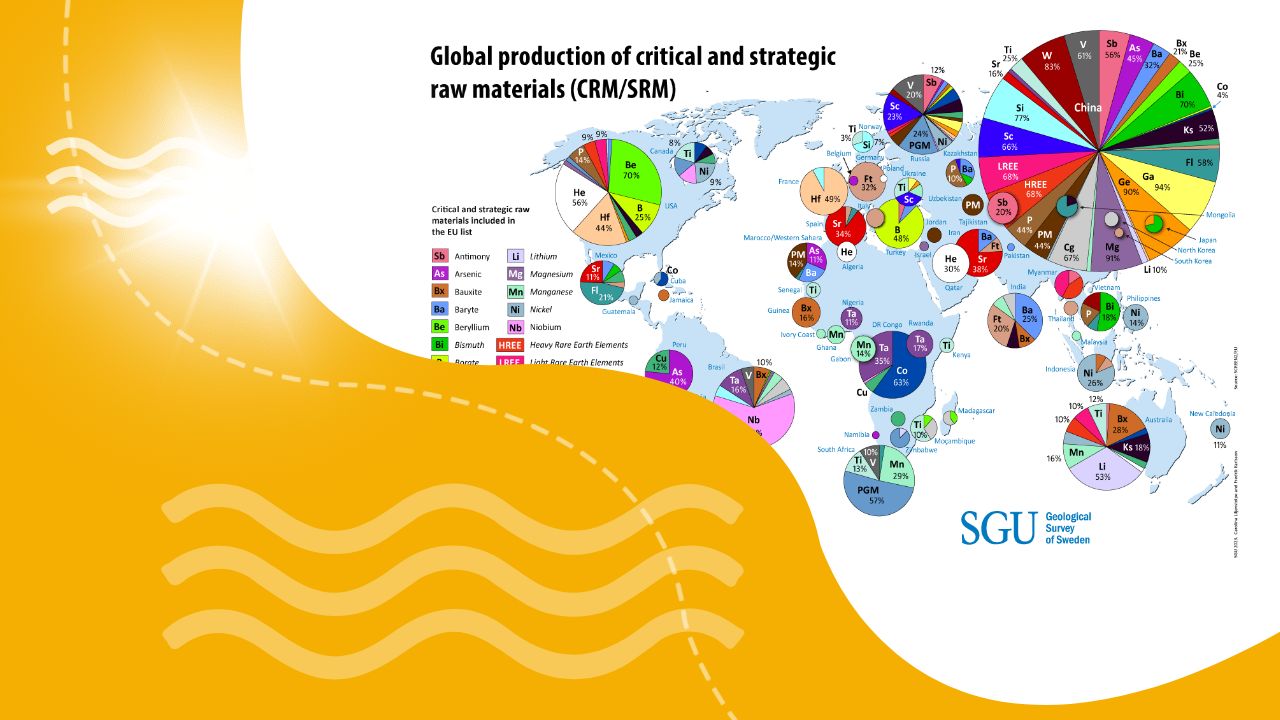
    Attention is increasingly focused on a particular class of material. “Critical” and “strategic” raw materials are those that face supply risk either in their scarcity or their geographical concentration, and which the major powers require for their military sectors and for competitive advantage in tech industries. Right now, the race for critical materials is geopolitical: each major power wants to secure supplies in allied countries.

    Critical raw materials are indispensable to the green transition too. The EU, for example, deems nickel a strategic material in view of its role in batteries.

    A wind turbine can require nine times the mineral inputs of a typical gas-fired power plant, while the average electric vehicle contains between six and ten times those of its conventional counterpart, according to the UN report that is due to be published on February 26.

    None of this means that a green economy would use greater quantities of materials than the current fossil fuel-based one. Energy consumption due to mineral demand for energy transition technologies is dwarfed by that which arises from mineral demand for the rest of the economy.

    Nonetheless, the mineral demand of the energy transition stokes the mining boom in such sectors as copper and lithium.

    Urban mining

    Mining must change in order to reduce its environmental impact. On the supply side, recovering minerals from waste goods can be ramped up, for instance by forcing retailers to offer collections of household electronic waste that can be sent for enhanced recycling.

    There is scope for urban mining: for example, locating copper from inactive underground power cables or recovering elements from construction waste, sewage, incinerator ash and other garbage zones.

    In practice, however, the use of secondary materials relative to newly-extracted ones is declining. The recovery rates of minerals from recycling remain low. Another UN study of 60 metals found the recycling rate for most of them was below one percent.

    The current economic system makes extractive mining cheaper and easier than urban mining. Extractive mining involves the purchase of cheap land, often in developing countries.

    That land gets dug up, pulverised and processed in a simple flow that is amenable to capital-intensive operations. Urban mining by contrast is often labour-intensive and requires a complex and state-enforced regulation of waste streams.

    Urban mining suffers from the refusal of governments to shift taxation from labour to “the use of non-renewable resources”, as Walter Stahel, an originator of the circular economy concept, recommended in 2006. Until robust regulation and taxation is introduced, all forms of circular economy risk unleashing rebound effects.

    So, throwing more materials onto the market lowers prices, which tends to expedite economic growth, raise energy consumption, and proliferate environmental harms. In short, there is nothing intrinsically “green” about urban mining or the circular economy. The progressive potential of all such engineering programmes is governed by the political-economic framework.

  • “Привлекательность инвестиций в горнодобывающую промышленность Казахстана: взгляд изнутри”

    “Привлекательность инвестиций в горнодобывающую промышленность Казахстана: взгляд изнутри”

    Казахстанская палата горнодобывающей промышленности организовала важное событие в столице Казахстана, Астане, 22 февраля 2024 года, собрав лидеров отрасли, представителей правительства и дипломатические миссии для изучения стратегий по улучшению привлекательности инвестиций в развивающемся горнодобывающем секторе Казахстана.

    С ярким призывом к развитию горнодобывающей промышленности Казахстана, прозвучавшим от Президента К. К. Токаева, конференция стала площадкой для обсуждения законодательных рамок, предложений по политике и будущих траекторий, касающихся минерального разведения, горнодобывающих операций и технологии переработки минералов.

    Горнодобывающая промышленность стала одним из ключевых направлений экономической политики Казахстана, привлекая значительное внимание после введения нового “Кодекса Республики Казахстан “О Недрах и Использовании Недр” в 2018 году. Этот кодекс, отличающийся повышенной ясностью и регулятивной эффективностью, заложил основу для восхождения Казахстана в качестве мирового лидера в области добычи минеральных ресурсов — видение, поддержанное Президентом Токаевым и принятое компаниями-участниками Казахстанской палаты горнодобывающей промышленности.

    Конференция, посвященная “Увеличению инвестиционной привлекательности горнодобывающей промышленности Казахстана”, сосредоточилась на обмене опытом и мнениями между ключевыми заинтересованными сторонами, с особым акцентом на разрешении тонкостей Кодекса о Недрах и его предлагаемых поправках, подчеркивая преданность правительства укреплению условий для инвесторов.

    Министр промышленности и строительства Республики Казахстан К. Б. Шарлапаев возглавил конференцию, выступая за упрощение законодательства для усиления привлекательности отрасли. Он представил пакет предстоящих поправок к Кодексу о Недрах, направленных на создание новой эры инвесторских политик, подтвердив, что “комплекс минеральных ресурсов является краеугольным камнем экономического процветания Казахстана”.

    В мероприятии приняли участие заметные представители международных дипломатических миссий, включая послов США, Великобритании и Канады. Их поддержка горнодобывающего сектора Казахстана подчеркнула важность стабильного, прозрачного судебного и налогового режима для привлечения иностранных инвестиций — мнение, подтвержденное отраслевыми деятелями.

    Среди звездных гостей г-н Тим Барри, член Совета директоров Казахстанской палаты горнодобывающей промышленности, подчеркнул ключевую роль разведения меди в удовл

    етворении глобального спроса. Подчеркивая потенциал Казахстана как значимого игрока на мировом рынке меди, Барри подчеркнул необходимость благоприятных правительственных политик для стимулирования вхождения и развития на рынке.

    Панельные сессии касались законодательных рамок, формирующих инвестиционную динамику, а также геологических и экологических аспектов, влияющих на инвестиционные решения. Г-н Баймышев Р.Н., Президент Казахстанской палаты горнодобывающей промышленности, высоко оценил приток глобальных инвесторов, подчеркнув привлекательность Казахстана как ключевого направления для минерального разведения.

    В стремлении наметить стратегический план развития горнодобывающей промышленности г-жа Бижанова Г.К., заместитель председателя правления НЭК “Атамекен”, подчеркнула необходимость разработки стратегии отрасли. Она подчеркнула необходимость согласованности между законодательными мерами и бизнес-стратегиями для содействия устойчивости и роста отрасли.

    Конференция завершилась обобщением от г-на Алмаса Кушумова, директора отдела Министерства промышленности и строительства Республики Казахстан, о предстоящих поправках в Кодекс “О Недрах и Использовании Недр в РК” и положительном приеме проведенных недавно электронных аукционов.

    Прощаясь, генеральный директор компании East Star Resources, Алекс Уокер, подчеркнул продолжающееся сотрудничество между игроками отрасли и правительственными органами в условиях изменяющегося законодательного регулирования. Несмотря на вызовы, Казахстан остается плодородным полем для исследовательских усилий, подкрепленных общей решимостью и сотрудничеством.

    Собрав более 160 участников, конференция подтвердила привлекательность Казахстана в качестве инвестиционного направления, способного поднять горнодобывающую промышленность на новый уровень процветания и устойчивости.

  • “Driving Investment in Kazakhstan’s Mining Industry”: Astana Conference Recap

    “Driving Investment in Kazakhstan’s Mining Industry”: Astana Conference Recap

    The Kazakhstan Chamber of Mines orchestrated a pivotal event in Astana, the capital of Kazakhstan, on February 22nd, 2024, convening industry leaders, government representatives, and diplomatic missions to delve into strategies for enhancing investment attractiveness within Kazakhstan’s burgeoning mining sector.

    With a resounding call for the advancement of Kazakhstan’s mining industry echoing from President K. K. Tokayev, the conference served as a nexus for dialogue on legislative frameworks, policy propositions, and future trajectories pertinent to mineral exploration, mining operations, and mineral processing technology.

    A cornerstone of Kazakhstan’s economic agenda, the mining industry has garnered significant attention following the introduction of the new “On Subsoil and Subsoil Use” Code in 2018. This legislation, marked by enhanced clarity and regulatory efficiency, lays the groundwork for Kazakhstan’s ascent as a global leader in mineral resources extraction—a vision championed by President Tokayev and embraced by member companies of the Kazakhstan Chamber of Mines.

    The conference, themed “Increasing investment attractiveness in Kazakhstan’s mining industry,” centered on the exchange of insights and experiences among key stakeholders, with a particular emphasis on navigating the nuances of the Subsoil Use Code. Deliberations also revolved around proposed amendments to the Code, underscoring the government’s commitment to fortifying conditions for investors.

    Minister of Industry and Construction of the Republic of Kazakhstan, K.B. Sharlapayev, spearheaded the conference, advocating for legislative simplification to bolster industry appeal. He unveiled a forthcoming package of amendments to the Subsoil Code, poised to usher in a new era of investor-friendly policies, affirming, “The mineral resource complex stands as the linchpin of Kazakhstan’s economic prosperity.”

    The event drew notable attendance from international diplomatic missions, including the Ambassadors of the United States, Great Britain, and Canada. Their endorsement of Kazakhstan’s mining sector underscored the imperative of a stable, transparent judicial and tax regime in attracting foreign investments—a sentiment echoed by industry luminaries.

    Among the luminaries, Mr. Tim Barry, Advisory Board Member of the Kazakhstan Chamber of Mines, underscored the pivotal role of copper exploration in meeting global demand. Highlighting Kazakhstan’s potential as a significant player in the global copper market, Barry emphasized the need for conducive governmental policies to facilitate market entry and development.

    Panel sessions delved into legal frameworks shaping investment dynamics and the geological and environmental factors influencing investment decisions. Mr. Baymishev R.N., President of the Kazakhstan Chamber of Mines, lauded the influx of global investors, accentuating Kazakhstan’s appeal as a prime destination for mineral exploration.

    In a bid to chart a strategic roadmap for the mining industry’s future, Mrs. Bizhanova G.K., Deputy Chairman of the Board of NCE “Atameken,” underscored the imperative of industry strategy development. She underscored the need for coherence between legislative measures and business strategies to foster industry resilience and growth.

    The conference concluded with reflections from Mr. Almas Kushumov, Director of the Department of the Ministry of Industry and Construction of the Republic of Kazakhstan, shedding light on forthcoming amendments to the Subsoil Code and the positive reception garnered by recent electronic auctions.

    As participants bid farewell, East Star Resources CEO Alex Walker accentuated the ongoing collaboration between industry players and government entities in navigating the evolving regulatory landscape. Despite challenges, Kazakhstan remains a fertile ground for exploration endeavors, underpinned by shared determination and collaboration.

    With over 160 participants converging at the conference, the resounding sentiment affirmed Kazakhstan’s allure as an investment destination poised to propel the mining industry into a new era of prosperity and sustainability.

  • ArcelorMittal Secures €1.3bn Grants to Decarbonize German Steel Plants

    ArcelorMittal Secures €1.3bn Grants to Decarbonize German Steel Plants

    ArcelorMittal, Europe’s largest steelmaker, has received approval from the European Commission for €1.3 billion in grants to facilitate the decarbonization of two steel plants in Germany through the use of low-carbon hydrogen.

    The grants, sanctioned by the European Commission, are set to bolster ArcelorMittal’s efforts in transitioning its steel plants in Bremen and Eisenhüttenstadt towards greener practices, with plans to utilize renewable hydrogen exclusively. Despite initial operations relying on natural gas, the plants are slated for a shift towards renewable hydrogen, marking a significant step towards sustainable steel production.

  • The UK’s major miners face multiple challenges.

    The UK’s major miners face multiple challenges.

    For the former, adjusted EBITDA fell by 50 per cent year-on-year to $17bn in 2023 while Anglo American saw a net profit fall of 94 per cent.

    Glencore is really struggling to reckon an attempted exit of its legacy coal business, one that delivered $17.9bn EBITDA in 2022 – more than the groups entire return in that metric for 2023.

    The problem across the board for miners, not just Anglo and Glencore, is that this isn’t the good old days.

    It is instead putting down a roadmap towards essential metals for the energy transition; nickel, cobalt and zinc.

    Anglo is also trying to dial in on battery metals but remains heavily tied to another poorly-performing asset class – Platinum Group Metals (PGM), used in the diesel and petrol car industry.

    Alongside a wheezing diamond market, PGMs cost Anglo around $5.5bn in revenue in 2023.

    The problem across the board for miners, not just Anglo and Glencore, is that this isn’t the good old days.

    Miners had rarely been as profitable in recent history as they were in the immediate aftermath of the pandemic, which effectively ignored individual market permutations and sent all commodities skywards.

    Now, mining sub-sectors are off the ride and are starting to reconfigure individual supply-demand dynamics and that is where the underlying issues are coming to the fore.

    The nickel market, for example, has dramatically over-estimated short-term demands resulting in a market flood and pain for those with exposure.

    Exacerbated by a supply monopoly from Indonesia, miners with exposure like Glencore are struggling to sell the metal at a lower market price, and further hampered by dramatic increases in operational costs versus what they were a decade ago.

    The firm has firmly felt the nickel bite, announcing the sell-off of its stake in the Koniambo mine in New Caledonia after a profitless decade.

    The head of French metal mining group Eramet said last week that Indonesia would effectively render “old traditional players structurally non-competitive” for the foreseeable future.

    Nevertheless, the firm’s chief executive Gary Nagle is determined to spin off Glencore’s coal businesses to the U.S in favour of making UK-based operations more green metal focused – an uphill battle for the foreseeable future.

    China is continuing to weigh on miners too as its copper-hungry property business remains subdued despite state efforts to wake it up.

    Firms like Anglo are sitting on ageing assets and analysts know that major projects need to be found pretty quickly to avoid slipping further into the mooted steep production deficits.

    But Anglo faces a challenge not shared as acutely by its competitors like Glencore, Rio Tinto or Vale in that its portfolio is attempting to cater for two inversely expanding ends of the motoring market.

    The costly revenue shortfalls from its PGM group in 2023 are in large part attributable to stalling petrol and diesel vehicle demand. And with battery metal demand bottoming out too, the firm is stuck between a rock and a hard place.

    Glencore and Anglo are not Shell and BP. In market cap terms at $45bn and $23bn, they might look like they hold relatively comparable positions within the London-listed market.

    But miners are far more exposed to market volatility owing to the demand in sectors they feed.

    For now, both Glencore and Anglo can weather instability through manageable debt piles and the resources to try and pivot in whatever way possible to drive profitability.

    But investors should strap in for a bumpy ride.