Website: Kazakhstan.com

  • QARMET employees were paid salaries that ArcelorMittal Temirtau did not pay

    QARMET employees were paid salaries that ArcelorMittal Temirtau did not pay

    Investor Andrey Lavrentiev , who bought the metallurgical company ArcelorMittal Temirtau (now QARMET), has repaid debts to employees and suppliers, Minister of Labor and Social Protection of the Population  Svetlana Zhakupova said at a CCS briefing .

    How much debt did AMT have? Zhakupova reported that about 286 million tenge were allocated for repayment.

    “The new investor assumed obligations for the debts that Arcelor, the former investor, had. And repayment of debts to employees, even to the extent of repayment of debts to suppliers. About 286 million will be used directly to pay off debts,” Zhakupova said.

    The minister added that the employees have already received the money – there are no arrears either in salary or in payments to the Unified Pension Fund.

    Context. In early December, it became known that ArcelorMittal Temirtau faced financial problems due to the blocking of its accounts by court decision. The reason for this was a lawsuit with the contractor Backup Service Resorts LLP (BSR), which provided food and recreation services for AMT workers. 

    The company then stated that, due to the blocking of accounts, they could not transfer pension contributions and contributions to the Compulsory Medical Insurance Fund (CMHI) to all employees for October. Including those injured during the accident at the Kostenko mine. The miners in need of treatment  feared that they might be left without medical care

  • Kazakhstan plans to increase uranium production

    Kazakhstan plans to increase uranium production

    Uranium mining in Kazakhstan is carried out by NAC Kazatomprom, reports the Sputnik Kazakhstan website .

    Over the previous 7 years, the level of uranium production in the country has decreased annually by 20% due to market conditions, however, with an increase in buyers, the need for uranium mining also increases, so the level of production capacity will be increased.

    In particular, an agreement on the supply of finished products was signed with the UAE.

    The company also plans to reduce import dependence by starting the construction of a plant for the production of sulfuric acid, since sulfuric acid is an important component in uranium mining, and the quantity produced in Kazakhstan is not enough.

    In addition, it is planned to build an onshore processing complex in the Turkestan region and refining production of uranium oxide at the Ulba Metallurgical Plant.

    The cost of these projects is 130 billion tenge.

  • Is KarMet coming back?

    Is KarMet coming back?

    The deal for ArcelorMittal Temirtau has been completed. Now the company has come under the jurisdiction of Kazakhstan. This was announced by the Minister of Industry and Construction of the Republic of Kazakhstan Kanat Sharlapaev.

    As Kanat Sharlapaev stated, the decision-making center for the new Kazakh investor should be Kazakhstan.

    These should not be people who do not want to work in Kazakhstan or for whom Kazakhstan is part of their business. This is our position. If the decision-making center for an investor or group of investors is Kazakhstan, this is probably a better choice.Kanat Sharlapaev

    The minister also added that there is potential synergy between the current business of the Allur group and steel production.

    Everyone understands that cars are made of metal. And here, in this regard, to also achieve the production of automotive steel at KarMet (AMT) and integrate this with current businesses – there is normal business logic in this, because this allows us to reduce quite large logistics costs. Deepen the localization of this production. And at the same time, it is clear that this is not some kind of individual decision. A lot of people were involved in it. An entire government commission was involved in selecting investors. And we looked at who could handle it and for whom it really is the main business and somehow allows us to create a synergy effect with their current business.Kanat Sharlapaev

    The new investor of ArcelorMittal Temirtau is Kazakh businessman Andrey Lavrentyev, who is the chairman of the board of directors and shareholder of the Allur Group of Companies. The businessman acts as an independent Kazakh investor. Under the terms of the deal, he must invest three billion dollars in the modernization of the plant and mines, as well as fulfill all obligations regarding employee salaries and social packages.

    Of course, the new owner faces important challenges. First of all, it must create conditions for labor safety and improve the level of well-being of workers. He will also have to actively participate and help develop the local community through social projects.Akim of the Karaganda region Ermaganbet Bulekpayev said while in Temirtau during the presentation of the new investor to the heads of structural divisions of the steel and coal departments

    Meanwhile, the company called ArcelorMittal Temirtau will no longer exist. The company is awaiting rebranding. The new investor said that the company will return its old name – “KarMet”, and Vadim Basin will take the place of the general director. 

    Also, the Kazakh businessman, in addition to acquiring assets, undertakes to invest $3 billion in modernizing production and protecting the environment of the region, of which $1.3 billion will be invested next year.

    Meanwhile, the Prosecutor General’s Office announced a pre-trial investigation into the explosion at the Kostenko mine, which killed 46 people. The pre-trial investigation into this fact is carried out by special prosecutors of the General Prosecutor’s Office with the participation of employees of the Ministry of Internal Affairs, the AIC, the AFM and the Ministry of Emergency Situations.

    “It was established that the explosion initially occurred at the coal mining site of longwall No. 48K3-west from the ignition of a methane-air mixture emanating from the underlying coal seam K2, the source of which was mechanical sparking from the operation of the face scraper conveyor-2.”General Prosecutor’s Office

    The explosion led to a subsequent series of explosions in the mine workings of coal dust, the concentration of which significantly exceeded permissible standards.

    “The investigation established that during the operation of the mine, numerous violations of industrial and fire safety rules, as well as labor protection rules, were committed, directly related to the tragic event. At present, the management and engineering staff of the mine, numbering 7 people, are suspected of failing to ensure safety measures during coal mining.”General Prosecutor’s Office

    The suspects, in accordance with Article 128 of the Code of Criminal Procedure, were placed in the temporary detention center of the DP in the Karaganda region. It is noted that as part of the investigation, a legal assessment will also be given to officials of ArcelorMittal Temirtau JSC and the Department of Industrial Safety of the Ministry of Emergency Situations for the Karaganda region, who did not ensure proper control over the safe operation of the mine.

    The investigation is ongoing and is under special control.
  • A regular meeting of the Coordination Council on coal exchange trading was held

    A regular meeting of the Coordination Council on coal exchange trading was held

    A meeting of the Coordination Council was held at the site of the Ministry of Trade and Integration of the Republic of Kazakhstan.

    During the meeting, business games were held at 3 commodity exchanges (JSC Caspian Commodity Exchange, JSC Commodity Exchange Eurasian Trading System, JSC Commodity Exchange Modern Trading Solutions).

    Business games simulated trading in municipal coal from six sellers (Karazhyra JSC, Maikuben-West LLP, Razrez Kuznetsky LLP, Mining Company SatKomir JSC, Shubarkol Komir JSC and Shubarkol Premium JSC ).

    Regional operators participated in business games on a regional basis, depending on regional needs.

    The meeting was attended by representatives of local executive bodies, government agencies and private businesses (regional operators and coal companies and commodity exchanges).

    Based on the results of the Coordination Council, recommendations were made on establishing the maximum amounts of membership fees and the exchange commission, approving trading instruments for municipal coal for each region, forming the annual coal demand for 2024 broken down by month, etc.

    Let us recall that by Order of the Ministry of Trade and Integration of the Republic of Kazakhstan dated December 6, 2023 No. 420-НК, changes were made to the Rules of exchange trading in the coal section regarding the sale of coal only to regional operators included in the information of the Ministry of Industry and Construction, in the context of each region in order to ensure uniform meet regional needs.

    The rules come into force on December 22, 2023.

    To ensure transparency of pricing in the coal market in order to prevent sharp price increases, sellers will ensure the sale of municipal coal through the commodity exchange in the following order:

    50% of the volume is sold at spot trading;

    50% of the volume is sold subject to monthly payment and delivery for a period of 6 to 12 months.

  • Seequent strengthens its presence in Central Asia and opens a regional hub in Kazakhstan

    Seequent strengthens its presence in Central Asia and opens a regional hub in Kazakhstan

    Alocal team of specialists will work to implement leading exploration software for mining, energy, infrastructure and environmental projects.

    Seequent , Bentley’s subsurface exploration and modeling division, has announced an expansion of its presence in Central Asia. The company opens a regional hub in Kazakhstan, represented by a team of local specialists. Seequent thus confirms its commitment to providing advanced exploration software solutions to the rapidly growing local market and throughout Central Asia.

    News of the regional hub was announced last week at the Seequent event in Almaty, where the company’s partners and clients, as well as leading industry representatives, gathered. Seequent has been supporting the Central Asian business community since 2011. The region’s largest companies are already using Seequent software for subsurface modeling, data analysis, management and collaboration. This allows for a better understanding of the underground component for the mining and energy industries, as well as civil infrastructure and environmental projects.

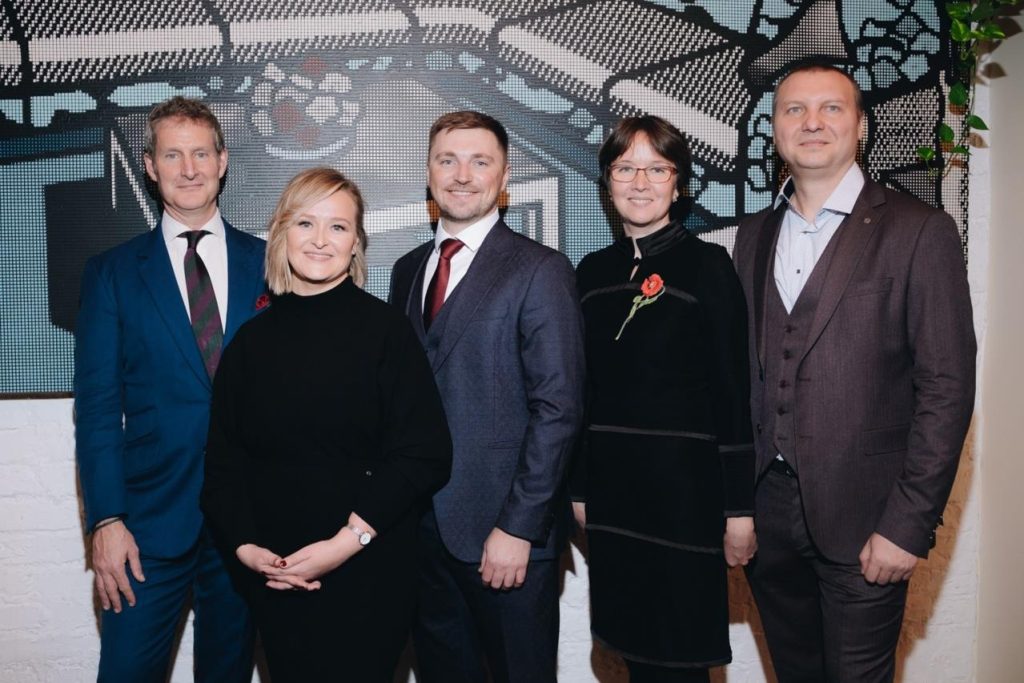
    (From left to right) Colin Hay, Inna Shalovenkova, Alexander Frolov, Head of Client Solutions Group, Lada Khimanych, Commercial Support, and Igor Danilov, Key Account Manager at Seequent. Image courtesy of Seequent.

    Colin Hay, Executive Vice President EMEA, said: “ Expanding Seequent’s presence in Central Asia is an important step in our global strategy. Kazakhstan, located in the heart of the region, was an ideal choice for a regional hub. Kazakhstan’s robust economy, abundant metal reserves, prime location and focus on attracting foreign investment make it stand out as a key market for Seequent solutions.”

    He further added: “ We see growing demand for our products as they fully meet the needs of the local industry, which is looking for digital innovation to improve operational efficiency. We intend to continue to expand our team as we ramp up our operations in Central Asia .”

    Seequent offers software solutions for professionals including geologists, geophysicists, geochemists, geotechnical and geomechanical engineers, hydrogeologists, ecologists, as well as builders, structural designers, quarries and underground mine workers. The company’s products include leading 3D implicit geological modeling solutions Leapfrog and Oasis montaj, which have become the industry standard for working with geophysical data.

    “ Seequent products help make these professionals’ jobs easier, more efficient, and enable them to share data with colleagues anywhere in the world ,” says Hay.


  • Problem point: the export figures of the Armenian mining industry are far from ideal

    Problem point: the export figures of the Armenian mining industry are far from ideal

    The authorities acknowledge the existence of problems associated with exports in the mining industry, which are not always made known in a timely manner. The corresponding statement in a conversation with journalists on December 19 was made by the Deputy Minister of Territorial Administration and Infrastructures of Armenia Hovhannes Harutyunyan.

    He assured that in terms of statistics, the Government is not keeping anything related to the non-functioning of the Sotsky mine secret. “The Teghout mine did not work for about 7-8 months,” Harutyunyan noted.

    He emphasized that Armenia ranks quite high in terms of transparency and accountability in the mining sector. “We are constantly tightening standards,” the official was quoted as saying by Armenian News.

    Meanwhile, the Zangezur Copper-Molybdenum Combine presented another report on sustainable development.

    General Director of ZMMK, Roman Khudoliy, noted in his welcoming speech: “We are confident that the path to mutually beneficial development of all stakeholders and making the maximum contribution to the economic progress of Armenia is the introduction of a responsible approach in all areas of our activities. This year, I am especially proud that we are publishing not only a Sustainability Report, but also conducting the first industry study based on TCDF principles in Armenia. This report includes not only our achievements, but also our omissions, and this is proof of real responsibility. Sustainability is not an end point, but a challenging endeavor and an ongoing journey that we take every day.”

    Deputy of the People’s Assembly of the Republic of Armenia, Chairman of the NA Standing Committee on Economic Affairs Babken Tunyan noted the importance of publishing the Sustainable Development Report, noting that this is a responsible approach to work. “It is gratifying that one of the pioneers of this style of work is ZMMK, which, as the largest mining company, becomes the standard and sets a new bar for the entire mining industry.

  • ArcelorMittal transferred 16 billion tenge to the Kazakhstan Khalkyn fund

    ArcelorMittal transferred 16 billion tenge to the Kazakhstan Khalkyn fund

    The public fund “Kazakhstan Khalkyna” received a charitable contribution in the amount of 16 billion tenge from the ArcelorMittal company, the press service of the fund reports.

    The funds received will be used by the fund to implement charitable projects and programs in the field of education and healthcare that will benefit the population of the Karaganda region.

    At least fifty percent (50%) of the contribution amount will be allocated to projects implemented in Temirtau or significantly related to this city.  

    Charitable programs and projects will be aimed at:

    • improving secondary education institutions and supporting students in higher education through scholarships;
    • improving STEM education in the region;
    • provision of medicines to patients with orphan (rare) diseases;
    • providing healthcare institutions with advanced medical equipment and access to the services of medical experts.  

    In total, since its creation, the fund has received 158.8 billion tenge (as of December 1, 2023) from the largest companies, private charitable foundations and organizations, philanthropists and individuals.

    It is noted that for almost two years of activity, the fund initiated the implementation of charitable projects and programs in the Karaganda region for a total amount of 13.96 billion tenge. These include providing patients with orphan diseases with medications, creating flagship schools, providing educational grants to students from socially vulnerable segments of the population, equipping medical organizations with modern equipment, creating rehabilitation centers, providing innovative prosthetics, equipping special schools, opening children’s gyms in villages and others .

  • Kazatomprom shares fell by 6.64% on the London Stock Exchange

    Kazatomprom shares fell by 6.64% on the London Stock Exchange

    Shares of Kazatomprom fell by 6.64% at the end of trading in London, likely due to a delayed response to the ban on Russian uranium supplies to the United States. Bizmedia.kz reports this .

    In addition, according to market participants, the drop is due to the fact that Kazatomprom was included on December 15 in the Sprott Junior Uranium Miners ETF. Initially, its weight in the index was 10.8%, and in response to increased demand, the company’s shares rose in price.

    However, Sprott Junior Uranium Miners and Nasdaq soon announced that the revision of the index composition was carried out with errors. Details are not specified.

    The Kazakh company has close production ties with Russia. Especially in 2022, when Russian companies received the right to develop the largest uranium deposit in the world in the Turkestan region.

    This happened after the acquisition of shares in the Stepnogorsk Mining and Chemical Combine from Russian billionaire Vasily Anisimov and Kazakh entrepreneur Yakov Klebanov (son of billionaire Alexander Klebanov).

  • Kazakhstan intends to export coal to Indonesia

    Kazakhstan intends to export coal to Indonesia

    The third round of negotiations on concluding a free trade agreement between member states of the Eurasian Economic Union and Indonesia ended in the city of Denpasar (Republic of Indonesia),reported at the Ministry of Trade and Integration of Kazakhstan.

    According to MIT, bilateral trade between Kazakhstan and Indonesia is actively developing, and trade turnover for 10 months of this year amounted to 249 million US dollars, of which Kazakhstan’s exports to Indonesia account for 95.2 million US dollars.

    Currently, we are seeing the emergence of new export items, such as coal, which were not previously supplied from Kazakhstan to Indonesia. In addition, traditionally the main items of Kazakhstan’s exports are ferrochrome, equipment for working with soil, transmission shafts, as well as other instruments and equipment,” said the press service of the Ministry of Trade.

    As part of the third round of negotiations, the parties discussed the provisions of the text of the future agreement, and also continued further work on discussing tariff liberalization with the aim of mutually reducing import customs duties.

    We have managed to make significant progress on all key issues of the future agreement. We are confident that this agreement will ensure a significant increase in mutual trade turnover between our countries, and will also create additional favorable conditions for domestic exporters,” said the MTI, whose experts took part in the negotiations.

    On May 25, President of Kazakhstan Kassym-Jomart Tokayev, during a speech at a meeting of the Supreme Eurasian Economic Councilnoted that it is important to continue a systematic dialogue with integration associations and countries with which cooperation is of economic interest to us.

    The Commission will have to quickly complete work on concluding agreements on a free trade zone with the United Arab Emirates, India, Egypt, Indonesia, and Israel. We should qualitatively strengthen interaction with the SCO, ASEAN, MERCOSUR and other international organizations. I think the interest in cooperation on the part of these organizations is mutual,” said Kassym-Jomart Tokayev.

    Recall that negotiations between the EAEU and Indonesia on concluding a free trade agreementbegan in May 2022.


  • An investment project worth 15.6 billion tenge was implemented by ERG at the Kazakhstan Electrolysis Plant

    An investment project worth 15.6 billion tenge was implemented by ERG at the Kazakhstan Electrolysis Plant

    At Kazakhstan electrolysis plant was put into operation after major repairs anode firing furnace. Major repairs of the furnace became one of the main activities of the investment program for the modernization and technical re-equipment of production. The cost of the project was 15.6 billion tenge.

    Baked anodes play a vital role in aluminum production technology. And the largest anode production equipment at KEP is the anode firing furnace, consisting of 50 chambers and reaching more than 200 meters in length and more than 30 in width. The furnace repair project was developed by the German company Riedhammer, which also installed the equipment during the construction of the anode section. The work itself was carried out under the supervision of foreign specialists by the Kazakh company Stroymontazh.

    Preparing for a major overhaul is a very responsible and lengthy process. To ensure that the work was carried out strictly according to schedule, by the time the furnace was stopped, all the necessary equipment, parts and materials had arrived at the warehouses. The kiln itself was completely stopped in August of this year, and repairs were carried out as soon as possible and completed two weeks ahead of schedule.

    The modernization of the furnace was carried out taking into account the latest achievements of the global anode production industry. 14 thousand tons of refractory lining were dismantled and reinstalled using modern and high-quality materials produced in the Netherlands, India, and Germany. Four exhaust gas collectors were also replaced. The latest generation units are more reliable and can significantly improve the operation of the furnace. It is planned that the repair will allow firing up to 138.4 thousand tons of anodes per year.  And after the implementation of the second stage of modernization – replacement of combustion and furnace equipment – it is planned to increase this figure to 153 thousand tons.

    – This investment project is aimed not just at increasing the productivity of the enterprise, but at solving a whole range of problems, such as increasing the energy efficiency of production and reducing the level of environmental load on the environment. Simultaneously with the furnace repair, we carried out a major overhaul of gas treatment facilities, which will be able to continue to operate with an efficiency of 99.5 percent for the next ten years,” said Serik Shakhazhanov, General Director of ERG in Kazakhstan.

    The Kazakhstan Electrolysis Plant plans to implement a project to increase production capacity by introducing 16 new electrolysers. Its implementation will increase production capacity by 14 thousand tons of primary aluminum per year. And a major overhaul of the roasting furnace will make it possible to supply future capacities with its own anodes.