In the recent article published on Carnegie Endowment for International Peace, Gregory Wischer, the founder and principal of Dei Gratia Minerals (a critical minerals consultancy) issued a warning that the U.S. Military and NATO Face Serious Risks of Mineral Shortages. “Given their limited domestic mineral production, both the United States and Europe depend heavily on mineral imports, including from rival powers like China, which supplies minerals such as graphite, rare earth elements, and other battery minerals, and Russia, which provides aluminium, nickel, and titanium…. The United States and other NATO countries must act now to address these supply chain risks”, argues Mr Wischer.
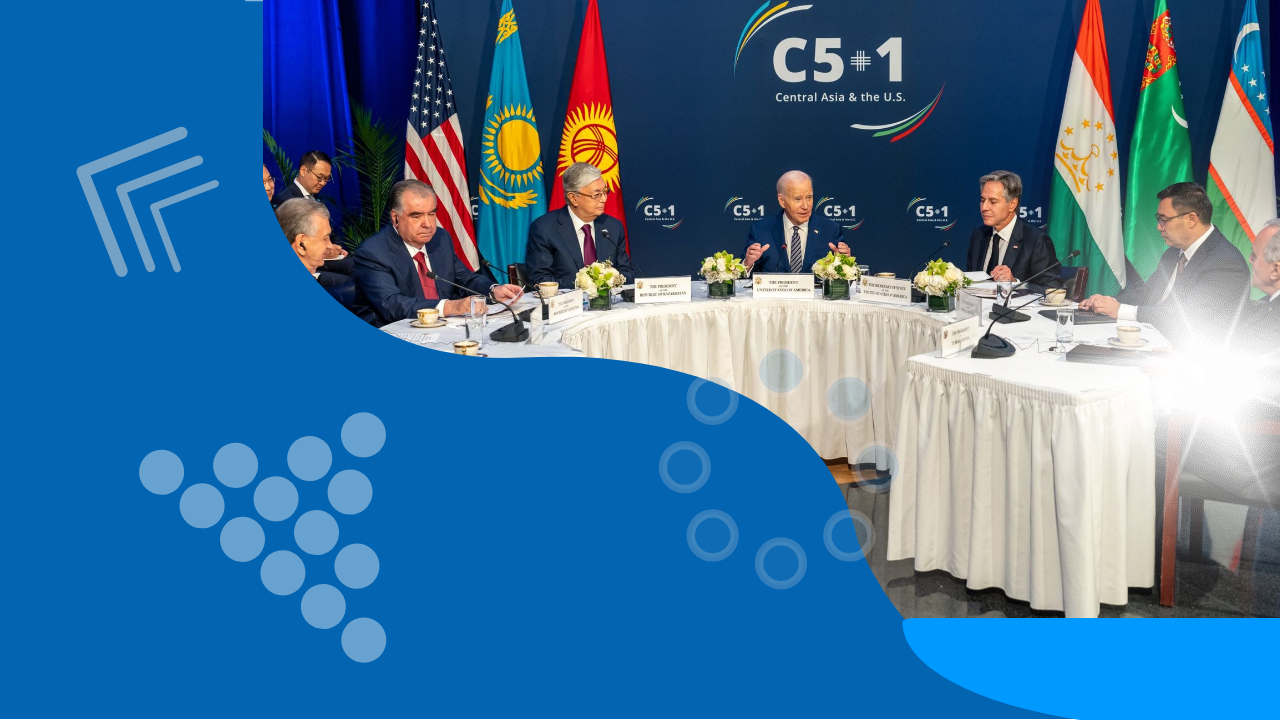
On 21 September 2023, the presidents of the United States, the Republic of Kazakhstan, the Kyrgyz Republic, the Republic of Tajikistan, Turkmenistan, and the Republic of Uzbekistan held the first-ever C5+1 Presidential Summit to discuss opportunities for extending cooperation «to address the region’s complex challenges and emerging threats”.
Following the signed 2023 declaration of the “C5+1 Resilience through Security, Economic, and Energy Partnership”, on 8 February 2024, the U.S. Department of State hosted the inaugural meeting of the C5+1 Critical Minerals Dialogue.
Among the initiatives discussed, the United States emphasised opportunities through the Minerals Security Partnership and Partnership for Global Infrastructure and Investment.
The Critical Minerals webinar held on 27 February 2024 by the U.S. Department of State, invited U.S. ambassadors from Uzbekistan, Kyrgyzstan, and Tajikistan and regional experts to discuss the opportunities in the mining equipment and critical minerals sectors in the region. This event underscored an important step towards strengthening the strategic partnership between the U.S. and Central Asian countries, focusing on the extraction and development of critical minerals essential for modern technologies and clean energy solutions.
The Importance of Central Asia’s Critical Minerals Resources
Critical minerals, including rare earth elements, play a crucial role in various industries such as computing, communications, clean energy, transportation, and healthcare. Central Asia, with its vast reserves of minerals like manganese, chromium, lead, zinc, titanium, aluminium, copper, cobalt, and molybdenum, stands at the forefront of contributing significantly to the global supply chain of these essential resources. The region’s potential in mining these resources not only promises economic growth but also plays a vital role in the global transition to clean energy technologies.
Strengthening US-Central Asia Cooperation
The webinar highlighted the U.S. government’s commitment to enhancing cooperation with Central Asian countries in the critical minerals sector. Notable speakers, including Undersecretary for Economic Growth, Energy and Environment Jose Fernandez and Special Representative for the Office of Commercial and Business Affairs Sarah Morgenthau, emphasised the importance of this partnership. The discussions revolved around increasing critical minerals production, diversifying supply chains, and addressing climate change challenges through sustainable mining practices.
The establishment of the Mineral Security Partnership in June 2022, as mentioned by Undersecretary Fernandez, marks a significant step towards bolstering and diversifying critical mineral supply chains. This partnership aims to foster joint investments and share information about mining opportunities, highlighting the collaborative spirit between the U.S., Central Asian countries, and other MSP partner countries.
Opportunities and Challenges
Central Asia’s rich mineral reserves present vast opportunities for American and international companies. However, challenges such as underdeveloped infrastructure, outdated geological data, and policy inconsistencies need to be addressed to fully harness the region’s mining potential. The U.S. ambassadors to Uzbekistan, Kyrgyzstan, and Tajikistan shared insights into the business environment and mining sectors of their respective countries, shedding light on both the opportunities and obstacles present in the region.
Views from the US Ambassador to Uzbekistan Jonathan Henick
The mining sector in Uzbekistan is undergoing significant changes and is a key area for U.S.-Uzbekistan cooperation. The Uzbek government, under President Mirziyoyev who came to power in 2016, has prioritised economic reform and attracting foreign investment, particularly from Western countries like the United States. The country has seen substantial economic growth and an increase in foreign investor interest as a result of these reforms.
U.S.-Uzbekistan Cooperation
The U.S. is in dialogue with Uzbekistan to develop a memorandum of understanding on critical minerals, indicating a strong interest in bilateral cooperation in the mining sector. The U.S. Geological Survey is also active in Uzbekistan, conducting mineral resource assessments that could reveal new opportunities for U.S. businesses.
Challenges and Considerations for U.S. Companies
U.S. companies looking to invest in Uzbekistan’s mining sector should be prepared for a long-term commitment and focus on building personal relationships, as decision-making is highly centralised. It is also important to be aware of the challenges such as insufficient protection of intellectual property rights, an overregulated banking sector, currency issues, and a judicial system that may favour local partners over foreign ones.
On the Ground Opportunities
Uzbekistan has considerable reserves of copper, gold, silver, iron, steel, uranium, and critical minerals. However, only about 40% of the country has been accurately surveyed, suggesting that there may be significant untapped resources.
The mining sector is currently dominated by state-owned enterprises, but in April 2023 the government has formed a new company, ” Yangi Kon (New Mine)”, to work with international partners to develop lithium and critical mineral deposits.
Political Developments
Since President Mirziyoyev’s rise to power, Uzbekistan has transformed significantly, with the government taking steps to diversify its foreign investment and focus on economic reforms. These political developments provide a context for potential foreign investment, as the government is actively seeking to cultivate more investments and is sending delegations to the United States to meet with companies.
In summary, Uzbekistan’s mining sector presents significant opportunities for U.S. companies, supported by the government’s interest in attracting foreign investment and cooperation. However, companies must navigate challenges related to the business environment and should engage in relationship-building and long-term strategies to succeed.
Views from the U.S. Ambassador to Kyrgyzstan Lesslie Viguerie
Ambassador Viguerie highlighted the opportunities and challenges in the Kyrgyz Republic’s mining sector, emphasising the presence of critical minerals and the need for U.S. investment and expertise. The Kyrgyz Republic possesses significant deposits of antimony, beryllium, tin, uranium, rare earth elements, and gold, with gold being actively mined. However, many of these resources are underexploited due to outdated information, primarily from the Soviet era, and a lack of modern mining operations and support services.
Opportunities for U.S. Companies
There is a demand in Kyrgyzstan for mining support services, including technical expertise, equipment, and solutions for remote operations. The country is also interested in developing value-added processing capabilities, presenting further opportunities for U.S. technology and expertise. Additionally, there is a need for expertise in developing the mining sector sustainably, with a focus on environmental protection, community benefits, and adherence to international safety and quality standards.
Challenges in the Business Environment
The business environment in the Kyrgyz Republic presents several challenges, including a history of nationalisation and license revocations that have affected the country’s reputation among investors. The law mandates that the state must own at least 30% of mining companies. The country’s rugged terrain and high altitude, coupled with inadequate infrastructure, pose additional challenges for mining operations.
U.S. Embassy Support and Bilateral Efforts
The U.S. Embassy is actively working with the Kyrgyz government and through regional platforms to address regulatory and governance concerns in the mining sector. The Ambassador’s upcoming meeting with the Minister of Natural Resources signifies ongoing efforts to discuss critical minerals and improve the investment climate. The embassy encourages U.S. companies to engage with the Kyrgyz government to convey their challenges and explore opportunities, offering support to facilitate these interactions.
In summary, the Kyrgyz Republic’s mining sector offers significant opportunities for U.S. companies, particularly in the exploration and development of critical minerals and the provision of mining support services. However, navigating the challenging business environment requires careful consideration and active engagement with local stakeholders and government authorities. The U.S. Embassy stands ready to support U.S. businesses interested in exploring these opportunities.
Views from Manuel Micaller, Jr., Ambassador of the United States to the Republic of Tajikistan
The U.S. Ambassador to Tajikistan provided an insightful overview of the mining sector in Tajikistan, highlighting both the opportunities and challenges present in the country. Tajikistan, like other Central Asian nations, holds vast reserves of critical minerals essential for global markets, including lithium, antimony, nickel, tungsten, and graphite. These resources are largely untapped and await further discovery and development.
Opportunities in Tajikistan
One of the most significant and enduring mining and refining operations in Tajikistan is the Antimony Production Company.
Despite facing challenges such as taxation issues, labour shortages, and at times an unresponsive government, this operation has managed to remain highly profitable. It is predominantly managed and operated by Tajik nationals and has consistently produced high-quality metals and concentrates for the international market. This success has positioned Tajikistan as the third-largest producer of antimony in the world.
Government Interest
The Tajik government is keen on expanding global partnerships in the mining sector to develop its mineral wealth. It has expressed willingness to offer incentive packages to attract U.S. investment.
Challenges Facing the Mining Sector
Underdeveloped Infrastructure: Tajikistan’s mountainous terrain and underdeveloped transportation networks make mining operations difficult.
Outdated Geological Data: Much of the mining data is outdated, stemming from the Soviet era, and does not focus on the strategic minerals of interest today. The mining surveys and research that are currently being utilized in Tajikistan were primarily conducted during the Soviet era. This data is largely focused on the industrial minerals of that time, such as iron, coal, copper, and to a lesser extent, titanium and molybdenum, rather than the strategic minerals that are of interest today. Recognizing this gap, the Tajik government has sought assistance to update and expand their geological data. Efforts are being evaluated on how best to support and assist in this area, with the aim of benefiting American investors and businesses.
Government Policies: While the government expresses a desire to attract investment, some policies may counteract these efforts. The bureaucracy is small and underfunded, focusing on short-term revenue maximization.
Labour Force Issues: The labour force is largely unskilled or semi-skilled, and skilled workers often seek higher wages abroad.
U.S. Embassy Support and Advocacy
The U.S. Embassy in Dushanbe is actively working with various U.S. government agencies to advocate for an open, stable, transparent, and predictable business environment in Tajikistan. The embassy collaborates with the American Chamber of Commerce in Tajikistan to directly address the concerns of the business community with the Tajik government. Recent engagements, such as a breakfast meeting co-hosted with the Minister of Industry and New Technologies, demonstrate a commitment to an open dialogue with American businesses.
In summary, Tajikistan’s mining sector offers significant opportunities for U.S. companies willing to navigate its challenges. The country’s vast reserves of critical minerals, combined with the government’s interest in attracting foreign investment, present a promising landscape for development. However, overcoming the challenges of outdated infrastructure, geological data, government policies, and labour force issues will be crucial.
Contrasting Approaches to Mining Industry Development in Uzbekistan, Kyrgyzstan & Tajikistan
The keynote speaker of this event, Simon Glancy from Strategic Solutions LLP provided an overview of the mining industry development and strategies in Uzbekistan, Kyrgyzstan, and Tajikistan, with a focus on critical minerals. He outlined the strategic approaches, government policies, and foreign investment dynamics in the mining industries of these Central Asian countries, with a focus on critical minerals like copper, gold, lithium, uranium, antimony, and tungsten.
Uzbekistan Market Overview
Uzbekistan has the largest and most developed mining industry among the three countries. Unlike Kazakhstan, Uzbekistan lacks large-scale private mining companies, with the state firms playing a central role in the industry. The mining sector is predominantly controlled by state-owned entities, with Almalyk Mining and Metallurgical Combine (AGMK) and Navoi Mining and Metallurgical Combinat (NGMK) leading the industry. AGMK is the exclusive producer of copper, while NGMK stands as the primary gold producer in the country. Navoi Uran State Mining Company is developing uranium projects.
Mining is a highly profitable sector in Uzbekistan. In 2022, Navoi reported net profits of $1 billion, and Almalyk reported profits of $528 million. The financial results for the full year of 2023 are pending. Both Almalyk and Navoi have extensive mining operations and are engaged in significant capital investment and organisational transformation projects, which include expanding their processing facilities. This has resulted in substantial procurement budgets, surpassing those of any other mining group within the country.
Almalyk’s 2023 Business Plan revealed plans to allocate $721 million for the import of equipment, machinery, and raw materials, a significant increase from $367 million in 2022. Navoi’s expenditure on consumables and spares in 2022 amounted to $560 million, although the breakdown of imports within this figure is not specified.
Foreign Investment and Projects
As of February 2024, 17 foreign investors are active in Uzbekistan’s mining sector, with investments totalling $3.6 billion. The largest project, Yangi Kon, backed by a consortium of Gulf State investors, represents 44% of all foreign mining FDI in Uzbekistan. Other notable investments include Orano’s $400 million uranium extraction project and various Chinese investments in geological exploration and mining projects.
Uzbekistan Mining Strategy
Uzbekistan’s forthcoming state mining strategy, expected in March 2024, aims to enhance the mining sector further. The Uzbekistan 2030 Strategy outlines several development targets, including attracting an additional $2 billion in foreign mining investment by November 2023 — a goal already surpassed with $3.6 billion achieved by early 2024. Other objectives include completing geological exploration of 60,000 square kilometres, auctioning 500 licenses for new mining projects, and selling at least 300 mining sites in 2024. The strategy also targets significant increases in the production and processing of critical minerals by 2030. EITI, JORC, and ESG standards are being implemented. There are plans to expand the base of rare metals mined and processed, and targets for increases in the production of copper, gold, silver, uranium, and ferrous metals.
Kyrgyzstan Market Overview
Kyrgyzstan boasts significant reserves of copper, antimony, tin, and tungsten, with a strong interest in developing these resources and attracting foreign investment. However, extracting these reserves poses challenges due to the difficult nature of the sites.
Gold mining has traditionally been the primary draw for international mining companies in Kyrgyzstan, with notable foreign players including Eti Bakir Tereksay (Turkey), KAZ Minerals Bozymchak (Kazakhstan), Alliance Altyn/Jerui Gold (Russia), Chaarat Gold (UK), and Altynken (China). By the end of 2023, Chinese companies held approximately 30 mining licenses, with only one pertaining to critical minerals.
The Kumtor Gold Company is a major player in the sector, accounting for 60% of all gold mining activities in Kyrgyzstan in 2022. Following its nationalization in 2022-2023, Kumtor became a wholly owned subsidiary of the state-owned gold company, Kyrgyzaltyn, producing 17.3 tons of gold and generating a net profit of $372 million in 2022, up from $233 million in 2021.
In 2022, two companies, including the Kazakh mining company KazMinerals Bozymchak, dominated copper production, yielding 6,200 tons of copper from its operations in Kyrgyzstan.
Currently, there are no companies engaged in the mining or processing of lithium or antimony in Kyrgyzstan. The country’s main sources of mining equipment, machinery, and technology are believed to be Russia and China, although British firms have also successfully penetrated the market.
There is limited processing capacity and an intention to adopt JORC standards. The largest mining company – Kumtor, was nationalised.
Kyrgyzstan Mining Strategy
Kyrgyzstan’s State Concept for the Development of the Mining Industry from 2023 to 2035 outlines initiatives in geology, mining exploration, processing, environmental protection, subsoil use management, and regulation. The government estimates $500 billion in mineral reserves. The goals include increasing geological exploration, creating national databases, digitising geological data, harmonising methods for classifying reserves, improving production planning, and encouraging import substitution.
Key policies outlined in the Concept include:
- Expanding geological exploration and surveying to identify investable assets, leveraging new technology for efficiency and cost-effectiveness. In 2022, there were 722 active mining licenses, including 202 for gold and 65 for other metals.
- Focusing exploration efforts on minerals that can reduce import dependency, particularly in construction materials, by processing these minerals domestically.
- Enhancing the environmental performance of the mining industry through comprehensive impact studies.
- Improving regulatory oversight of mine closures to ensure proper land reclamation post-mining activities.
- Increasing public accountability in the issuance and cancellation of production and exploration licenses, promoting transparency and community consultation in the licensing process.
Tajikistan Market Overview
According to the latest briefing note from the US Geological Survey on Antimony, Tajikistan was identified as the world’s third-largest producer of this mineral in 2022, with a production of 13,000 tons and holding reserves of 50,000 tons, placing it 10th globally. However, the Tajik government’s own geological surveys suggest much larger reserves, estimating up to 1.5 million tons of antimony in the Zeravshan-Gissar mercury-antimony belt.
Additionally, the Tajik government posits that the country has significant silver reserves, particularly in the Big Konimansur deposit, which is believed to be among the largest silver deposits globally, potentially containing 50,000 tons of metal. This contrasts with the US Geological Survey’s January 2022 briefing note on silver, which did not list Tajikistan among the top 11 countries for silver production or reserves.
In 2023, Tajikistan’s Department of Geology announced the discovery of substantial lithium reserves, classified as Category C2, though specific quantities were not disclosed. The Tajik government also claims that the country holds 10% of the world’s tungsten reserves, but details on this are sparse, and as of now, there are no mining operations for lithium or tungsten in Tajikistan. The government is currently prioritising the development of 28 confirmed gold deposits, seeking foreign investment to bolster national wealth and increase foreign currency reserves.
China is Tajikistan’s leading trading partner and investor and this also applies to the mining industry. As of June 2023, 37 mining companies were operating in Tajikistan, 14 of which were engaged in the exploration and processing of critical minerals. Among these, 11 companies were focused on gold exploration, including joint ventures with Chinese and Canadian investors. The Zarafshon metallurgical plant, a significant investment project launched in July 2023 in partnership with Zijin Mining, is estimated to be worth $119 million. This facility is expected to process 165,000 tons of gold-copper concentrate annually, producing 4,500 tons of grade A copper cathode, along with gold and silver.
Another Chinese company, TVEA Dushanbe, began open-pit gold mining in 2023 in the Ayni District of Sugd Region. The Anzob mining company, owned entirely by US investor Comsup Commodities Inc., is the sole extractor of antimony in Tajikistan, having invested $300 million over 15 years to modernize a Soviet-era ore processing plant.
Key Considerations for Foreign Companies Accessing Critical Minerals in Uzbekistan, Kyrgyzstan and Tajikistan
Each country has set strategic goals for their mining industries, including increasing production, attracting foreign investment, and improving regulatory and environmental oversight. The following considerations are valid for the whole Central Asian region.
Development of Indigenous Value-Added Industries
Foreign entities granted access to critical minerals are likely to be required to contribute to the development of local value-added industries. This would involve processing some of these minerals domestically, which could help reduce import dependency and foster economic growth within the country.
Adherence to International Environmental Standards
A strong commitment to international environmental standards is becoming increasingly important for governments when awarding mining licenses. Companies must demonstrate their dedication to sustainable practices throughout the production and processing stages to be considered for such opportunities.
Support for Large-Scale Geological Exploration
Countries are investing in extensive geological exploration projects to better understand their reserves of critical minerals. This exploration is crucial for attracting the next wave of international investors by showcasing the potential for resource extraction and by using advanced technology to conduct surveys more efficiently and cost-effectively.
These considerations are part of a broader trend where governments are seeking to balance economic development with environmental sustainability and the promotion of local industries. The approach aims to ensure that the exploitation of natural resources translates into long-term benefits for the country, including technological advancement, environmental protection, and the growth of indigenous businesses.