Website: Eurasia.com

  • Chinese Mining Firm Jinxin Secures Kazakhstan Gold Deposit Near Chinese Border After Auction Winner Defaults on Payment

    Chinese Mining Firm Jinxin Secures Kazakhstan Gold Deposit Near Chinese Border After Auction Winner Defaults on Payment

    Chinese company Jinxin Mining has been awarded the rights to develop the Ketmen alluvial gold deposit in Kazakhstan’s Almaty Region, after the original auction winner apparently failed to complete payment — handing the licence to the Chinese firm in circumstances that have drawn public scrutiny.

    The deposit, also known as Predgorny Ketmen, is located close to the Chinese border in the Uygur and Raimbeksky districts of Almaty Region, near the Ketmen and Shalkudysu rivers. Total forecast alluvial gold resources at the site were estimated in 2015 at 7.1 tonnes. According to earlier reporting from 2018, the deposit remained underexplored at that time, with its reserves not fully calculated, a gold-bearing placer extending 15 to 16 kilometres in length, and gold content ranging between 400 and 1,200 milligrams per cubic metre.

    The Ministry of Industry put the deposit up for auction in 2024. According to auction records, the winning bid was submitted by Kazakh firm Korgold at 600 million tenge, with Jinxin Mining placing second at 546 million tenge — just over $1 million. It appears Korgold was subsequently unable to meet its full payment obligation, and the subsoil use rights were transferred to Jinxin Mining, which confirmed its auction commitment. The company received formal notification of its winning status from Kazakhstan’s Ministry of Industry in November 2024.

    Jinxin Mining’s founders are listed as Liu Yanling, Chen Haiyan and the limited liability company Jinxin Mining 1, the beneficial owner of which is Tursunbek Omurzakov, a former member of parliament representing the Communist People’s Party.

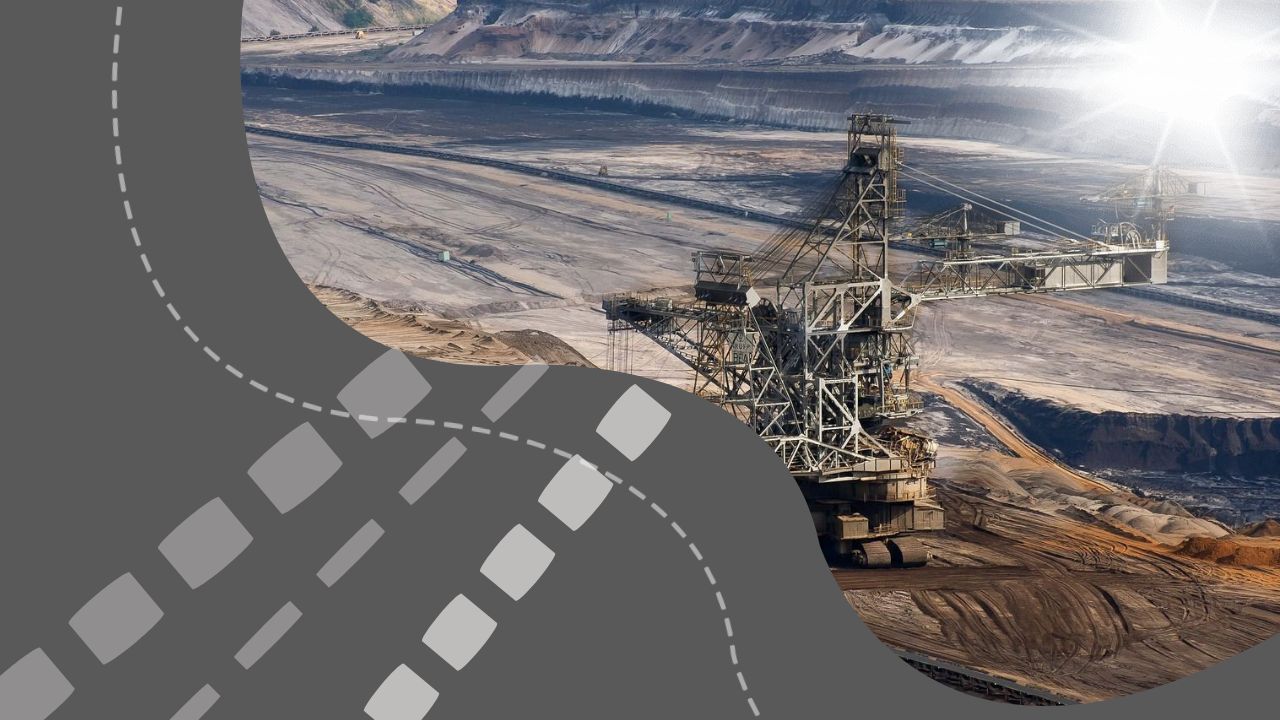
    A publicly released site closure and remediation plan filed by the company provides detailed technical parameters for the operation. Mining will be conducted using open-pit methods within the riverbed and terraces of the Ketmen River, using excavator and bulldozer equipment. The quarry will cover an area of 2.2 hectares, extend approximately 1,100 metres along its axis, and reach a depth of up to 8 metres. The average gold grade at the deposit is stated at 0.27 grams per tonne. The document specifies that no long-term conservation of mining infrastructure is planned; upon completion, all structures will be dismantled and the land progressively rehabilitated, with terrain restoration and biological remediation carried out in stages as individual blocks are worked out.

    The deposit had previously been subject to exploration rights held by Tau Ketmen LLP, a company linked to the state mining holding Tau-Ken Samruk.
  • MinRex and Electrum Shareholders Approve Merger to Create Gold-Copper Explorer Spanning Australia and Serbia

    MinRex and Electrum Shareholders Approve Merger to Create Gold-Copper Explorer Spanning Australia and Serbia

    Australian mining company MinRex Resources has confirmed that shareholders of its Canadian peer Electrum Discovery have overwhelmingly approved a planned merger of the two companies, paving the way for the creation of a combined gold-copper exploration group with assets across Serbia and New South Wales.

    An extraordinary shareholder vote held on 24 March returned 99.99% in favour of the transaction, with completion of the merger anticipated on or around 9 April. Under the agreed terms, Electrum’s security holders will hold a 49% stake in the merged entity, with MinRex shareholders retaining the remaining 51% controlling interest.

    First announced in January, the deal is expected to create a combined group with a market capitalisation of approximately A$28 million ($19.3 million). The merged company will bring together Electrum’s Serbian exploration portfolio with MinRex’s gold and base metals projects in Australia’s Lachlan Fold Belt, which spans approximately 438 square kilometres of tenements.

    Electrum, listed on the Toronto Stock Exchange, holds two projects in Serbia — the gold-silver Novo Tlamino and the copper-gold Timok East — both situated within the Western Tethyan Belt, a well-established and mineralised corridor known for significant gold and copper endowments. MinRex, listed on the Australian Securities Exchange, contributes its Lachlan Fold Belt holdings, a region with a strong track record of gold and base metal discoveries in New South Wales.

  • Czech Cinovec Lithium Project Nears Critical EIA Verdict as European Metals Holdings Targets Mid-2026 Milestone

    Czech Cinovec Lithium Project Nears Critical EIA Verdict as European Metals Holdings Targets Mid-2026 Milestone

    European Metals Holdings is approaching a defining moment for the Cinovec lithium project in the Czech Republic, with a pivotal environmental ruling expected by the end of June that will determine whether the development — increasingly regarded as central to Europe’s battery supply chain ambitions — can unlock its EU funding and advance toward construction.

    The Czech Ministry of Environment is anticipated to deliver its verdict on the project’s Environmental Impact Assessment by 30 June 2026, a decision that carries significant financial consequences. A positive outcome is a mandatory prerequisite for European Metals Holdings to access grants allocated from the EU Just Transition Fund, making the ruling one of the most consequential regulatory moments in the project’s history. The formal review procedure is currently underway and will be followed by a public consultation phase before a final decision is issued.

    Ahead of that deadline, the company’s Annual General Meeting on 19 May 2026 will provide shareholders with an opportunity to hear updates on project progress, vote on the reappointment of board directors and receive further detail on planned lithium carbonate production targets. The project’s feasibility study envisages output of battery-grade lithium material sufficient to meet a substantial share of Europe’s projected demand by 2030, positioning Cinovec as a key node in the regional electric vehicle supply chain.

    The project has already secured meaningful regulatory momentum in recent months. In February 2026, official approval was granted for the regional rezoning of the project area, legally designating zones for mining operations, processing facilities and utility infrastructure corridors — a significant permitting milestone that builds on the formal submission of the comprehensive EIA documentation in December 2025.

    Cinovec’s strategic significance has been formally acknowledged by both the European Union and the Czech government, with the project classified as a priority resource in the context of the continent’s energy transition. Located in the Erzgebirge mountain region on the Czech-German border, it is considered one of the largest hard-rock lithium deposits in Europe and has drawn growing attention as the bloc seeks to reduce dependence on imported battery raw materials, particularly from China.

  • Bosnia’s “Green Transition” Dilemma: International Mining Companies Move In as Communities Fight to Protect Land, Water and Livelihoods

    Bosnia’s “Green Transition” Dilemma: International Mining Companies Move In as Communities Fight to Protect Land, Water and Livelihoods

    In the gentle hills of Majevica, a low mountain range in northeastern Bosnia and Herzegovina where farmers grow strawberries, keep bees and distil rakija, a battle is unfolding that mirrors conflicts playing out across much of the developing world: the collision between the European Union’s hunger for critical minerals and the communities whose land sits above them.

    Since September 2023, when residents learned by chance that Swiss prospecting company Arcore was preparing to drill for lithium on the mountain, a grassroots anti-mining movement has taken root across the region. Local activist Andrijana Pekić and her neighbours in Lopare founded an informal organisation to educate their community about the dangers of lithium extraction, collaborating with established environmental groups including Bijeljina-based Eko Put and Tuzla’s Karton Revolucija. Their core argument is unambiguous: “There is no such thing as clean lithium mining.” Tailings from extraction processes containing sulphuric acid and hazardous chemicals contaminate streams, groundwater and soil; rock dust pollutes the air for miles. Majevica’s waterways feed the Drina and Sava rivers, meaning environmental damage would ripple across a vast surrounding region encompassing Tuzla, Bijeljina, Brčko and Zvornik.

    Activists have conducted two petition drives, in 2024 and 2025, calling for a ban on lithium mining and the establishment of a nature reserve across most of the mountain. Both were dismissed by the Republika Srpska parliament. Arcore, meanwhile, has already conducted drill tests on private land — in some cases without the knowledge of landowners — with documented consequences. After the company drilled on the property of Jovan Krsmanović in the village of Vukosavci, both his well and a neighbour’s dried up entirely.

    Majevica is far from an isolated case. Lithium, magnesium, copper, nickel, cobalt and other minerals featured on the EU’s 2024 critical raw materials list have been identified across Bosnia and Herzegovina, and international mining companies have been awarded concessions across the country in circumstances activists and legal experts describe as opaque and frequently unlawful. A central grievance concerns a long-standing legal prohibition on the sale or change of use of state-owned property — a restriction rooted in unresolved property succession disputes following Yugoslavia’s dissolution — which both entities have repeatedly violated when doing so serves favoured investors.

    The most prominent example is the Vareš municipality in central Bosnia, where a concession was granted to Eastern Mining in 2018 and later acquired and expanded by Adriatic Metals, covering silver, zinc, lead and barite deposits. A significant portion of the land falls on state property. The company has been found guilty of clear-cutting forested land, while mining at the Rupice mine has contaminated drinking water supplies for the downstream town of Kakanj. In July 2024, Bosnia’s Constitutional Court ruled that the Federation’s granting of state-owned land use was unconstitutional — yet excavation was permitted to continue regardless.

    Federation Prime Minister Nermin Nikšić has shown little sympathy for conservationists. He dismissed those seeking to protect land around Vareš, suggesting it was irrational to allow “scrubland they call state property to lie useless rather than become a valuable investment.”

    The contradiction at the heart of the crisis is captured bluntly by Snežana Jagodić-Vujić of Eko Put: “Our entire country is being attacked. The green transition is clean there, but dirty here.” Campaigners point out that significant lithium deposits exist within the EU itself — in Portugal and Spain — where stricter environmental laws and stronger rule of law have at least slowed the pace of extraction following mass public protests. Bosnia and Herzegovina, riven with corruption and institutional dysfunction dating to the Dayton constitutional settlement, has so far offered mining companies a far more permissive environment.

  • Citigroup to Enter London Gold Market With Heathrow Vault Partnership as Bullion Boom Drives Clearing Expansion

    Citigroup to Enter London Gold Market With Heathrow Vault Partnership as Bullion Boom Drives Clearing Expansion

    Citigroup is preparing to join the exclusive club of banks at the centre of the world’s largest gold-trading hub, partnering with secure logistics firm Malca-Amit to use its vault near London’s Heathrow Airport as the bank moves toward becoming a clearing member of the London bullion market.

    The move would see Citigroup become only the fifth clearing member of the London market, joining JPMorgan Chase, ICBC Standard Bank, HSBC and UBS Group — a group whose numbers have dwindled in recent years even as the market’s importance has grown. Clearing members occupy a pivotal role in the London market, settling tens of billions of dollars in transactions every day in a city where more than $1 trillion in gold is held in storage. Vaulting capacity is central to that function, allowing precious metals to physically change hands to settle contracts.

    Malca-Amit’s facility near Heathrow — bullion vaults are typically located close to airports to facilitate the swift movement of metal by air — was described in a 2012 profile as capable of holding more than 300 tonnes of gold and 1,000 tonnes of silver. At current prices, 300 tonnes of gold would be worth approximately $43 billion.

    Citigroup’s approach of contracting with an external custodian mirrors the model used by UBS, which also relies on a third-party vaulting arrangement rather than operating its own facility. By contrast, JPMorgan and HSBC both maintain their own London vaults, while ICBC Standard Bank acquired Barclays’ London facility in 2016. JPMorgan’s vault in the City of London is among the largest gold stores in the world, holding close to 1,000 tonnes on behalf of a single bullion-backed exchange traded fund — a holding worth roughly $136 billion.

    The timing of Citigroup’s expansion into the market reflects a broader surge in investor appetite for gold. Bullion prices have risen approximately 45% over the past year, significantly boosting revenues from vaulting services, which are typically calculated as a percentage of the value of gold stored. Citigroup and JPMorgan declined to comment on the matter. Malca-Amit did not respond to a request for comment.

  • Northern Ireland Awards Seven Mining Licences Despite 99.5% of Public Respondents Opposing Them

    Northern Ireland Awards Seven Mining Licences Despite 99.5% of Public Respondents Opposing Them

    Seven mineral prospecting licences have been granted across Northern Ireland to four mining companies, the Department for the Economy has confirmed, in a decision that has drawn fierce criticism from local communities, environmental groups and elected representatives after more than 2,100 public objections were effectively overridden.

    The licences, which cover exploration for minerals excluding gold and silver across parts of Counties Armagh, Tyrone and Fermanagh, were awarded following a 12-week public consultation that concluded in April. Of the responses received, 99.5% were opposed to the licences being granted. Every affected local council also objected to the proposals.

    Under the terms of the awards, Conroy Gold will be permitted to explore south Armagh in areas near Keady and Newtownhamilton. Dalradian Gold will be able to prospect across portions of County Tyrone including land near Strabane and Plumbridge in the Sperrin Mountains. Karelian Diamond Resources has been granted rights to explore in Colebrook, County Fermanagh, while Flintridge Resources will focus on land near Killeter in County Tyrone. The licences cover prospecting only, though there remains the possibility that exploration could ultimately lead to full-scale mining operations.

    Environmental campaigners condemned the decision as a democratic failure. Save Our Sperrins, which has led opposition to the licences, said communities were “shocked and deeply disappointed,” adding that the decision came despite a recent successful judicial review that had identified failures in the very licensing process now being used. “Once again, the democratic voice of local communities has been sidelined in favour of private mining interests,” the group said, describing the decision as “anti-democratic, environmentally reckless, legally questionable, and socially divisive.”

    Martin Tracey of the Campaign Against Mining highlighted what he described as a significant shift in position by Economy Minister Caoimhe Archibald, who he said had previously called for a moratorium on mining licences and a rigorous review of the system governing their award — a stance apparently at odds with the department’s decision to proceed.

    A Department for the Economy spokesperson defended the process, noting that existing legislation must be complied with and that a comprehensive review of mineral licensing is currently underway. The department also clarified that it holds no role in licensing gold and silver exploration, which falls under the remit of the Crown Estate.

    Local campaigners argue the exploration activities pose risks to the environment, water supplies and tourism-dependent rural communities across the affected areas.

  • Kazakhstan Seizes $1 Million Mining Equipment Shipment Bound for Russia at Ayat Border Checkpoint

    Kazakhstan Seizes $1 Million Mining Equipment Shipment Bound for Russia at Ayat Border Checkpoint

    Kazakh customs authorities have confiscated a shipment of mining equipment weighing eight tonnes and valued at over $1 million that was being illegally exported to Russia through the Ayat border checkpoint, officials have confirmed.

    The exporter did not hold the required licence to export the equipment, prompting authorities to detain the shipment. Following intervention by the prosecutor’s office, the Kostanay Regional Court ruled that the confiscated assets should be transferred to state ownership, formally confirming both the legality of the seizure and the government’s claim to the equipment.

    The incident comes amid heightened scrutiny across Central Asia over the cross-border movement of technical and industrial hardware, particularly equipment that could be subject to international export controls in the context of sanctions against Russia. Analysts say the case underscores a broader tightening of enforcement at Kazakhstan’s border crossings and could have implications for the regional market in crypto mining hardware, a sector that has seen significant activity in Kazakhstan in recent years.

    Authorities are now expected to review export licensing requirements and consider strengthening customs oversight mechanisms to prevent similar violations.

  • First Quantum Sells Turkish Copper-Zinc Mine to Cengiz Holding for $340 Million in Latest Portfolio Restructuring Move

    First Quantum Sells Turkish Copper-Zinc Mine to Cengiz Holding for $340 Million in Latest Portfolio Restructuring Move

    Canadian mining company First Quantum Minerals has agreed to sell its Çayeli copper-zinc mine in Türkiye to Cengiz Insaat, a subsidiary of one of Turkey’s largest industrial conglomerates, for $340 million in cash as the miner continues to streamline its asset portfolio and redirect capital toward its highest-priority operations.

    Under the binding agreement, the sale includes an advance payment of $50 million, with the full transaction expected to close during the second or third quarter of this year. Chief Executive Tristan Pascall described the deal as consistent with the company’s “disciplined approach to portfolio management,” with proceeds intended to support strategic priorities including a potential restart of the Cobre Panama copper operation — one of the world’s largest copper mines, which was shut down in late 2023 following civil unrest in the Central American country.

    Located on the Black Sea coast of northeastern Türkiye, the Çayeli mine has been in continuous operation since 1994, producing copper and zinc concentrates from a volcanic hosted massive sulphide deposit. Its reserve base is currently projected to support operations through to 2036.

    The transaction marks the second asset disposal First Quantum has executed in three months, following the $190 million sale of the past-producing Cobre Las Cruces copper mine in Spain in December.

    For the buyer, the acquisition represents a further aggressive expansion of its mining portfolio. Cengiz Holding last week completed its largest mining deal to date — the $1.5 billion purchase of the Copler gold mine in Türkiye from SSR Mining — making the Çayeli transaction the conglomerate’s second major mining acquisition within days.

    Despite the strategic rationale for the sale, First Quantum’s shares initially rose on the news before reversing course, closing down 1.7% by midday at a market capitalisation of approximately C$27.5 billion ($20.2 billion). UBS analyst Myles Allsop nonetheless upgraded the stock to a Buy rating from Neutral, raising his price target to C$50 from C$38, signalling confidence in the company’s refocused strategy.

  • Kazakhstan Unveils 7.5 Trillion Tenge Energy Plan to Build 7.8 GW of New and Upgraded Power Capacity by 2030

    Kazakhstan Unveils 7.5 Trillion Tenge Energy Plan to Build 7.8 GW of New and Upgraded Power Capacity by 2030

    Kazakhstan has launched a national energy project targeting the construction and modernisation of 7.8 gigawatts of power generation capacity by 2030, as the government moves to address a chronic shortage of baseload electricity infrastructure that has constrained economic growth.

    The initiative, announced by the office of Prime Minister Olzhas Bektenov, will be financed entirely outside the state budget, requiring a minimum of 7.5 trillion tenge in private investment. It represents one of the most ambitious energy infrastructure programmes in the country’s post-independence history.

    At the heart of the plan are several large-scale new power stations. A coal-fired plant with a capacity of 2,640 MW will be built in Ekibastuz — Kazakhstan’s established coal power hub — while facilities of 700 MW and 500 MW are planned for Kurchatov and Zhezkazgan respectively. Advanced coal-fired combined heat and power plants will also be constructed in Kokshetau, Semey and Ust-Kamenogorsk.

    Alongside new builds, eleven existing power stations will be modernised during the same period, including the Aksu State Regional Power Plant, Ekibastuz GRES-2 and the Karaganda energy hub. The upgrades are expected to reduce the average wear rate of core power generation equipment across the sector by 12.6% within five years.

    Environmental standards feature prominently in the design of the new coal capacity. All new facilities will be built exclusively using clean coal technologies, incorporating high-efficiency electrostatic precipitators, catalytic nitrogen oxide reduction systems and wet flue gas desulphurisation equipment — measures the government says will bring emissions in line with international standards.

    The energy programme has been synchronised with upstream coal mining and rail logistics planning. Annual energy coal consumption in Kazakhstan is projected to grow by approximately 20 million tonnes by 2030 to fuel the expanded generation fleet. To meet that demand, the country’s fleet of gondola freight wagons will be expanded by 600 units per day, railway infrastructure will be modernised, and predictable tariff corridors for domestic coal supply will be introduced to provide pricing stability for power producers.

    The government also expects the national project to generate significant knock-on demand across the domestic manufacturing sector, including for locally produced boiler units, power transformers and industrial automation systems — embedding the energy build-out within a broader industrial development strategy.

  • Race to Lock Up Rare Earths Supply Leaves Germany and South Korea Exposed, Warns Arafura CEO

    Race to Lock Up Rare Earths Supply Leaves Germany and South Korea Exposed, Warns Arafura CEO

    Germany and South Korea face a critical vulnerability in their rare earths supply chains as the United States and Japan move rapidly to secure long-term agreements with the world’s limited pool of non-Chinese producers, the chief executive of Australian rare earths developer Arafura has warned.

    The alert comes as China’s export restrictions on key rare earth minerals — imposed last year — continue to reverberate through the automotive and defence industries globally, accelerating a scramble among Western nations to lock up alternative supply. With only two Western producers currently operating at scale — Australia’s Lynas Rare Earths and US-based MP Materials at its Mountain Pass deposit — available supply outside China is extremely constrained.

    The US has already secured Mountain Pass output through a government deal with MP Materials, covering a significant portion of American demand. Lynas this month concluded a long-term supply agreement with Japan Australia Rare Earths running through 2038, alongside a shorter-term deal with the Pentagon. With Lynas’ supply now effectively committed, Arafura CEO Darryl Cuzzubbo said his company had observed a marked increase in urgency from prospective buyers. “The EU and in particular Germany, and Korea are quite exposed — where are they going to get their supply from?” he said.

    Arafura is positioning its Nolans project in Australia’s Northern Territory as one of the few remaining sources of meaningful non-Chinese supply. The project is planned to produce 4,440 metric tons per year of neodymium-praseodymium (NdPr) oxide — a key material used in rare earth permanent magnets for electric vehicles and wind turbines — from the second half of 2029, representing roughly 4% of projected global supply. The company already holds supply agreements with Hyundai Motor, Kia, Siemens Gamesa Renewable Energy and commodity trader Traxys.

    Arafura is now seeking to place a further 1,200 tons of NdPr oxide to bring secured supply to 80% of planned output — a threshold required by project lenders before a final investment decision can be made and construction begins. Cuzzubbo said negotiations were underway with multiple parties, with pricing the determining factor. “We haven’t put all of our eggs into one basket — the one that gets there first on the right sort of pricing regime is the one we’re going to go with,” he said. Arafura is seeking terms in line with those achieved by Lynas, which locked in a price of $110 per kilogram of NdPr oxide in both its recent deals. China-based spot prices currently sit at around $103 per kilogram.

    Beyond direct supply agreements, Arafura expects to participate in Australia’s A$1.2 billion ($836 million) strategic critical minerals reserve, which is due to begin operating in the second half of this year. Cuzzubbo called for the reserve’s floor price mechanism to be anchored to an independent international benchmark — such as that published by Benchmark Minerals Intelligence — rather than to Chinese market prices, which he argued have distorted the global market. “The market is broken — you need to create a functioning market,” he said. “A floor price will take uncertainty out of pricing, which has been very uncertain given China’s control, and that will help bring in investors.”

    He also framed the reserve as a strategic tool for Australian diplomacy. “It is a bit of a bargaining chip that the Australian government can use with its allies,” he said, adding that it could help accelerate project development across the sector.