Website: Eurasia.com

  • Germany’s Dependence on Rare Earths and Critical Metals Threatens Economic Stability

    Germany’s Dependence on Rare Earths and Critical Metals Threatens Economic Stability

    A recent study by IW Consult at the German Economic Institute and Fraunhofer Systems and Innovation Research (ISI) has highlighted Germany’s reliance on imports of rare earths, copper, and lithium and their significance to the economy.

    The study reveals that nearly one-third of the added value in Germany’s manufacturing sector is linked to goods containing copper, while lithium-containing goods contribute to one-tenth, and those containing rare earths make up over a fifth.

    Industries such as automotive and electronics heavily rely on these raw materials, with car manufacturers and suppliers being particularly vulnerable.

    China currently dominates the rare-earth market, with other potential sources like Greenland, Canada, and Sweden remaining underexplored. Despite efforts to diversify supply chains, over 80% of the market is controlled by the top three suppliers.

    A substantial portion of Germany’s imports of these critical materials comes from China, posing a significant risk due to potential trade restrictions and export controls imposed by the Chinese government.

    The study also underscores the importance of Russia and Chile as key suppliers of copper and lithium, respectively, highlighting the diverse range of countries involved in Germany’s supply chain.

    Matthias Wachter from the Federation of German Industries (BDI) warns that dependence on Chinese raw materials surpasses that of Russian gas, emphasizing the vulnerability of supply chains to geopolitical tensions and export regulations.

    Cornelius Bähr of the German Economic Institute (IW Köln) emphasizes the need for diversification, domestic production, and recycling to mitigate supply chain risks and ensure resilience.

    Fritzi Köhler-Geib, chief economist at KfW, stresses the importance of securing the entire supply chain to support Germany’s green and digital transformation, despite initial costs.

    In the face of looming threats to industrial production and climate ambitions, Wachter calls for urgent action to safeguard supply security and prevent potential economic setbacks.

    Bähr warns that failure to address these vulnerabilities could jeopardize Germany’s industrial prowess and hinder progress towards a sustainable future, highlighting the urgent need for strategic planning and investment.

  • Beogradska Elektrana Plans Investment in Geothermal Energy Exploration

    Beogradska Elektrana Plans Investment in Geothermal Energy Exploration

    The public utility company Beogradska Elektrana is now planning to invest in the drilling of a research and exploratory well to evaluate the feasibility of supplying geothermal energy to its geothermal heating plant in Batajnica.

    This decision comes after the presentation of the results of a study done by the Faculty of Mining and Geology that identified three high-potential sites for geothermal heating – Batajnica, Borca, and Dunav. Each of these areas has the potential to support between 5 to 20 MW of heating capacity. The heating plants identified in this study align with the results of a similar study done in 2023, although the more recent study proposes a shorter list of potential sites for development.

    The study was done based on geological data collected through research, analysis of archival materials, and recorded data of operating parameters of the heating plants.

    During the discussion, it was concluded that the exploitation of geothermal energy at the Batajnica heating plant has the potential to substitute more than 90% of the annual amount of fossil fuel-based energy generated in this heating plant. Thus, Vanja Vukic, Director of Beogradska Elektrana, stated that the company now plans to invest in exploratory drilling to confirm the predicted parameters for geothermal heating capacity.

    The plan is for the drilling of the exploration well to start this year, with the aim of utilizing heat from the well for the 2025/2026 heating season.

    Serbia currently has a single operation geothermal heating plant in Bogatic, which started construction in 2018 and became operational a year after.

  • Polymetal завершила продажу российских активов и сосредотачивается на операциях в Казахстане

    Polymetal завершила продажу российских активов и сосредотачивается на операциях в Казахстане

    Polymetal (Polymetal International plc) объявила 11 марта о завершении сделки по продаже своих российских активов. Polymetal, второй по величине производитель золота в Казахстане, сообщила об этом, как сообщает Orda.kz.

    По информации пресс-службы компании, Polymetal заключила сделку по продаже 100% акций АО “Полиметалл” (холдинговой компании российских активов группы) компании АО “Мангазея Плюс”. Этот шаг был направлен на снижение рисков. Главный исполнительный директор Polymetal Виталий Несис заявил, что в мае компания намерена представить новую стратегию и политику распределения капитала.

    “После завершения сделки чистая денежная позиция группы составляет около 130 миллионов долларов”, – говорится в пресс-релизе Polymetal.

    Группа Polymetal является вторым крупнейшим производителем золота в Казахстане, имея два производственных актива в стране: Кызыл (месторождение Бакырчик, Абайская область) и Варваринский хаб (месторождения Варваринское и Комаровское, Костанайская область). Компания также контролирует Иртышский ГМК. Polymetal зарегистрирована в МФЦА с головным офисом в Астане, а её крупнейшим акционером (доля в 23,9%) является компания Maaden International Investment из Омана.

    Акционеры компании утвердили продажу российских активов на собрании 7 марта. Сделка направлена на восстановление акционерной стоимости группы Polymetal за счёт снижения рисков. Продажа российского бизнеса позволит компании сосредоточиться на развитии и исследованиях казахстанских месторождений.

    Polymetal International plc была одной из компаний, которые переехали в Казахстан из России. Было объявлено в мае 2023 года, что группа смещает фокус на развитие своего казахстанского бизнеса и будет зарегистрирована в МФЦА.

  • Polymetal Completes Sale of Russian Assets, Focuses on Kazakhstan Operations

    Polymetal Completes Sale of Russian Assets, Focuses on Kazakhstan Operations

    Polymetal (Polymetal International plc) announced on March 11 the completion of the sale of its Russian assets. Polymetal, the second-largest gold producer in Kazakhstan, disclosed this information, as reported by Orda.kz.

    According to the company’s press service, Polymetal finalized the sale of 100% of the shares of JSC “Polymetal” (the holding company of the group’s Russian assets) to AO “Mangazeya Plus.” This move was aimed at mitigating risks. Vitaly Nesis, CEO of Polymetal, stated that the company intends to present a new strategy and capital allocation policy in May.

    “After the completion of the deal, the group’s net cash position is approximately $130 million,” the Polymetal press release stated.

    Polymetal Group is the second-largest gold producer in Kazakhstan, with two production assets in the country: Kyzyl (Bakyrchik deposit, Abai region) and Varvarinsky Hub (Varvarinsky and Komarovsky deposits, Kostanay region). The company also controls Irtysh GMK. Polymetal is registered with the MFCA with its head office in Astana, and its largest shareholder (23.9% stake) is Maaden International Investment from Oman.

    The company’s shareholders approved the sale of Russian assets at a meeting on March 7. The deal aims to restore the shareholder value of the Polymetal group by reducing risks. Selling the Russian business will enable the company to focus on the development and exploration of Kazakh deposits.

    Polymetal International plc was one of the companies that relocated to Kazakhstan from Russia. It was reported in May 2023 that the group was shifting its focus to the development of its Kazakh business and would be registered with the MFCA.

  • Uzbekistan Explores Collaboration with China for Black Shale Uranium Mining

    Uzbekistan Explores Collaboration with China for Black Shale Uranium Mining

    Uzbekistan is considering collaboration with China Nuclear Uranium Co., as reported by Navoiyuran’s press service, to develop black shale uranium mines. Rustam Ergashev, head of the investment projects department at Navoiyuran, underscores the increasing significance of atomic energy, which currently fulfills 11% of global electricity demand.

    “This figure reaches 70% in France, 50% in Hungary, and 20% in the USA,” notes Ergashev. Nations like China, India, and countries across the Middle East, Africa, and South America are expanding their nuclear power programs in response to this trend.

    For Navoiyuran, a company focused solely on exports, this presents new opportunities for collaboration in the nuclear raw materials market. The visit of a delegation from China Nuclear Uranium Co. (CNUC), a subsidiary of the China National Nuclear Corporation (CNNC), signals a significant step toward enhancing collaboration in this field.

    “China Nuclear Uranium Co. is a prominent player in China’s nuclear energy sector, involved in uranium exploration, mining, and processing,” explains Ergashev. The company operates uranium mines domestically and engages in joint ventures in countries like Namibia and Kazakhstan.

    During the visit led by Yang Runsheng, the company’s chief engineer, experts from China Nuclear Uranium Co. explored black shale uranium mining fields in Uzbekistan, visiting the “Ma’danli” and “Koscheka” fields to study mining operations and technological samples for uranium and rare element extraction from ore compositions.

    The meeting between Chinese experts and Navoiyuran’s General Director, J. Fayzullaev, focused on developing technologies for black shale uranium mining and exploring prospects for future cooperation. Collaboration between Uzbekistan and China holds promise for advancing the nuclear energy sector in both countries.

    In July 2023, President Shavkat Mirziyoyev endorsed initiatives to boost uranium mining and processing in Uzbekistan, aiming to double production by 2030. In November 2023, Navoiyuran entered a strategic cooperation memorandum with China National Nuclear Corporation (CNNC) in the uranium sector.

    Since 2016, Uzbekistan has consistently held the position of the fifth-largest uranium producer worldwide, with uranium reserves exceeding 100,000 tons. The Navoi Mining and Metallurgical Combine (NMMC), Uzbekistan’s primary uranium mining company, predominantly exports uranium products, constituting 99.5% of its export portfolio.

    French President Macron’s visit to Uzbekistan in November 2023 signals France’s strategic interest in Central Asia and Europe, aiming to diversify energy sources and reduce dependence on China for critical minerals.

  • Улытау планирует открыть комплекс по добыче драгоценных металлов и полиметаллов

    Улытау планирует открыть комплекс по добыче драгоценных металлов и полиметаллов

    Власти региона Улытау раскрыли планы по созданию комплекса по добыче драгоценных металлов и полиметаллов. По предоставленной информации, проект, запланированный к запуску в 2026 году, нацелен на производство 0,72 тонны сплава Доре, 10,8 тысяч тонн свинцового концентрата и 4,3 тысячи тонн цинкового концентрата. Государственное учреждение сообщило, что разработаны проекты определения водоохранных зон и полос вдоль реки на территории планируемого участка для добычи, а также планы горных работ. Оцениваемая стоимость открытия комплекса составляет 3,57 миллиарда тенге, и в настоящее время ведутся работы по получению лицензии на добычу. После запуска объекта предполагается обеспечить работой 140 человек.

  • Ulytau Region Plans to Open Precious Metals and Polymetallic Complex

    Ulytau Region Plans to Open Precious Metals and Polymetallic Complex

    Plans to establish a complex for precious metals and polymetals in the Ulytau region have been revealed by regional authorities. The project, expected to launch in 2026, aims to produce 0.72 tons of Dore alloy, 10.8 thousand tons of lead concentrate, and 4.3 thousand tons of zinc concentrate, according to information provided by the authorities. Projects defining water protection zones and strips along the river within the planned mining area, as well as mining work plans, have been developed, as stated by the government agency. The estimated cost of opening the complex is 3.57 billion tenge, with efforts underway to obtain a mining license. Once operational, the facility aims to employ 140 people.

  • Centerra Gold Acquires Thompson Creek Metals Company

    Centerra Gold Acquires Thompson Creek Metals Company

    Toronto-based gold mining company Centerra Gold Inc. has completed the acquisition of Thompson Creek Metals Company Inc., which operates the Mount Milligan Mine near Fort St. James and the Endako Mine near Fraser Lake. According to a news release on July 5, Centerra will acquire all issued and outstanding common shares of Thompson Creek. At Mount Milligan, plans include the addition of secondary crushing by the end of 2016 to increase the process rate to over 62,500 tonnes per day and an expansion of the flotation circuit to enhance gold and copper recoveries. However, the Endako Mine will remain on care and maintenance. Alongside Mount Milligan, Centerra’s portfolio encompasses assets such as the Kumtor Mine in the Kyrgyz Republic and the Boroo Mine in Mongolia. The company also holds the Oksut Gold project in Turkey and is a joint venture partner in the Trans-Canada Project in Ontario.

  • Rio Tinto Secures Power Supply Agreement for Oyu Tolgoi Mine

    Rio Tinto Secures Power Supply Agreement for Oyu Tolgoi Mine

    Rio Tinto Ltd announced on Monday its agreement with Mongolia to provide power to its Oyu Tolgoi copper-gold mine using a state-owned coal-fired power plant at Tavan Tolgoi. With the Mongolian government holding a 34% stake and Rio’s Turquoise Hill Resources with a 66% stake, the collaboration involves amending the current power supply agreement by March 2021, with construction of the coal-fired power plant slated to begin by July 2021. The plant, intended to support Oyu Tolgoi’s power needs, is anticipated to be operational within the next four years. Until then, power supply to the mine and underground project will continue as per the existing terms.

  • MINEX Forum takeaways from PDAC 2024

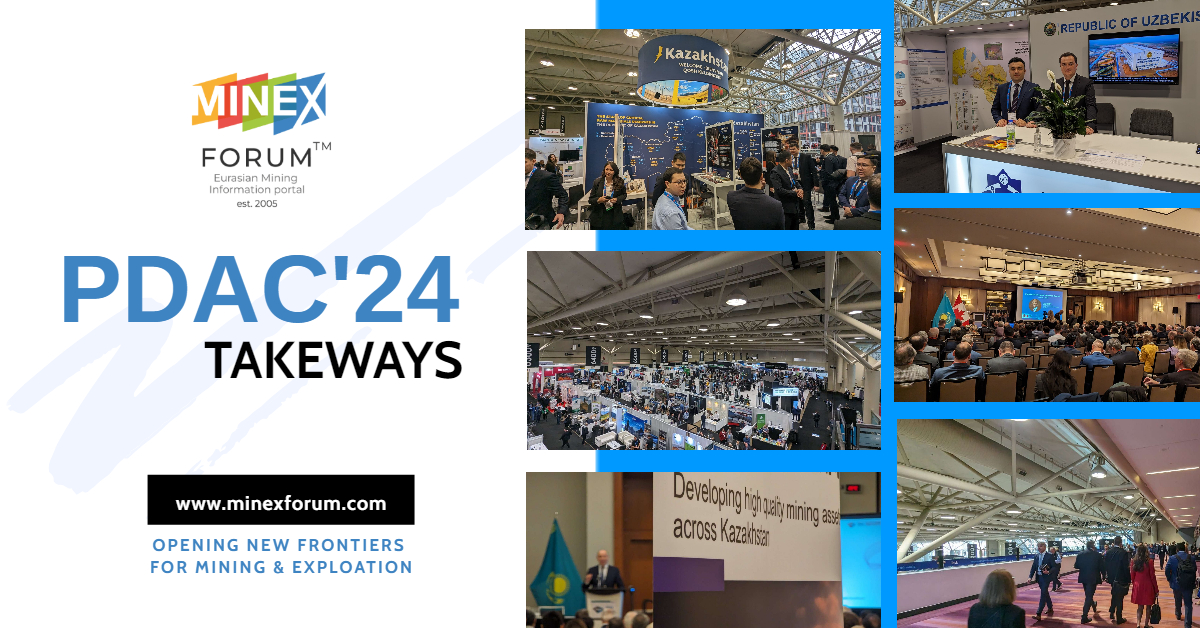
    MINEX Forum takeaways from PDAC 2024

    Rock-bottom reached… ?

    The market has taken a dive, but at least we’re rock-solid on where we stand… at rock bottom! Valuations are squashed, raising capital is like squeezing blood from a stone, and life is throwing lemons like a pro juggler. But remember, out of the depths of despair springs opportunity. As they say, “When you’re at rock-bottom, there’s only one way to go… up!”

    Not all commodities are equal

    Gold is stealing the show this year, jumping $150/oz and bringing PDAC back to life. Uranium was last year’s news, and now gold is strutting its stuff. But not all commodities are created equal. While uranium is riding high on a wave of funding, lithium, cobalt, and nickel CEOs are trying to dodge the fallout from oversupply and low demand. In defiance of the lithium doom and gloom mining giant Rio Tinto “would love” to produce lithium in Canada, given the right project. The company’s CEO Jakob Stausholm believes lithium is more likely to dominate the battery market in the future than other metals such as nickel and cobalt.

    ESG: Show Me, Don’t Tell Me

    ESG talk was noticeably muted this year. Less talk, more rock! The market has no time for glossy photo ops. ESG should be in your DNA, not just on your magazine covers. Show us the real stuff: the dirt, the rocks, the hard facts. We’ll take geology over glamour any day!

    AI vs Humans in mining and geology

    Humans 1, AI 0. For now…. So far, humans are still beating AI in the real discovery game. However, AI is creeping in, promising to make us faster, smarter…and maybe replace a few of us. Yikes.

    Mongolia and Kazakhstan were the belles of the PDAC ball

    Between the two of them, Central Asia is suddenly looking a lot more interesting.


    Mongolia on the rise

    The enthusiasm for Mongolia’s mining sector was palpable at PDAC 2024, with expectations of significant growth in production and exploration. Mongolia’s Harvard-educated Mining Vice Minister Dr. Uyanga Bold drew crowds worthy of a rock star at the “Mongolia Day”. This event, organised by the Ministry of Mining and Heavy Industry of Mongolia and the Mongolian National Mining, aimed to showcase the country’s mining sector and investment opportunities. Notably, Mongolia’s lithium brine exploration was highlighted, with Lithium ION Energy Ltd. presenting its flagship Baavhai Uul lithium brine project, marking significant progress in Mongolia’s lithium industry. Will Mongolia be able to maintain its leading position in the mining investment world after the 20 June parliamentary elections? It remains to be seen.

    Kazakhstan continues to draw attention

    Kazakhstan has been prominently represented at PDAC through various avenues such as the National Pavilion, Canada-Kazakhstan Business Council, and the “Kazakhstan Day” organised by Aurora Ltd. The new face of Kazakhstan’s Mining Industry, Minister Kanat Sharapaev impressed investors and international institutions alike. Key topics of discussion included Kazakhstan’s ongoing reforms in subsoil management, aimed at improving efficiency, environmental sustainability, and investment attractiveness in the mining sector. Kazakhstan is increasingly becoming an attractive destination for major mining companies, with many considering establishing a local presence or forming partnerships to compete for licenses and projects. Minister Sharlapaev emphasised the Government’s role in creating a business-friendly environment for investors, highlighting Kazakhstan’s strategic position in the global minerals market and its potential for joint ventures and investment opportunities. Minister Sharapaev’s strategic outreach, the country’s natural resource potential and plans for AI-driven exploration, present attractive opportunities for mining companies. The event also saw the signing of numerous MoUs and partnerships with organisations such as the National Geological Survey of Kazakhstan (NGS), Koan Analytics, Eramet, and others.


    If you have not signed this already, book your place at MINEX Kazakhstan Mining and Mineral Exploration we are organising in Astana on 17-18 April https://2024.minexkazakhstan.com/

    Debutants at PDAC


    Debutants at PDAC


    Estonia

    Estonia just levelled up in the global mineral game by joining the Minerals Security Partnership (MSP) contributing to improved international cooperation on securing critical raw materials supply. Invest Estonia, together with the Estonian Ministry of Climate and the Estonian Embassy in Canada, hosted a breakfast with Estonian mining experts from government, academia, and industry representatives. The panel was led by Kalev Ruberg, a futurist visionary known for his transformational technology expertise in business and government. The event featured a network of Estonian companies such as Zeroterrain, Limestone, BiotaTec, TalTech University, Trisector, Eesti Energia, and NPM Silmet (Neo Performance Materials). Topics covered included rare earth elements competence and supply chain in Europe, the NPM Silmet rare earth separation facility, and Neo Performance Materials’ permanent magnet factory. Estonia’s potential critical minerals resources and plans related to the EU critical minerals strategy were also discussed, focusing on phosphorite, metals, and reuse of oil shale ash and semi-coke through partnership and innovation, showcasing Estonia’s mining innovation at its best!

    Uzbekistan

    Uzbekistan made its PDAC debut with the Ministry of Mining organising a national pavilion and Navoi Gold presenting its investment projects. The objectives of the Ministry were to showcase Uzbekistan’s openness and plans to the global community. According to Behzod Mamatov, Head of the Ministry’s Department, over ten foreign investors are involved in Uzbekistan’s mining sector at the moment. The Government is currently developing a legislative framework to attract junior companies, which, in turn, should help in attracting major investors. This includes a new approach to exploration, primarily funded by investors with minimal state involvement. Uzbekistan’s 2030 Development Strategy sets clear goals for the mining sector: to increase gold production by 1.5 times, copper by 3.5 times, silver by 3 times, and uranium by 3.5 times. These targets are expected to be met through both domestic funding and international investment. The total investment projects in the modernization of Uzbekistan’s mining industry amount to a staggering 23 billion US dollars. Navoi Gold is one of the two state-owned mining companies contributing 8% to Uzbekistan’s GDP. With an annual production of over 3 million ounces of gold and a 684 USD cost per ounce production cost, Navoi Gold is the world’s 4th largest gold mining company. However, the company has no plans to slow down and is aiming to increase its production and resource base further. The company has a robust exploration program in place, with a budget of over $100 million for the year, to identify new targets and deepen their understanding of its flagship mine. The company is also committed to ESG principles and is taking steps to reduce its water consumption by 20% by 2030. Additionally, Navoi Gold is transitioning to renewable energy sources and plans to introduce over 500 megawatts of solar power by 2030.

    Save the data and money. Register for the MINEX Central Asia Forum in Bishkek

    Mark the date in your calendar. On 18-20 June 2024 in Bishkek, Republic of Kyrgyzstan, the MINEX Forum is re-launching its Central Asia Nomad event. Early bird registration is open at https://2024.minexasia.com/