Region: Greece

  • Eldorado Gold Achieves First Ore Crushing Milestone at Skouries Project

    Eldorado Gold Achieves First Ore Crushing Milestone at Skouries Project

    Eldorado Gold Corporation has announced a significant milestone at its Skouries copper-gold project located in Northern Greece, with the first ore successfully processed through the newly commissioned crushing circuit. This development marks the transition of the project into the commissioning phase, which is a crucial step towards full production. The company is targeting the production of copper-gold concentrate in the third quarter of 2026, with plans for commercial production to commence in the fourth quarter of the same year, contingent on the completion of final site energization and commissioning activities.

    The successful crushing of the first ore is a testament to the effective operation of the front-end processing systems at Skouries. The company has reported that commissioning activities are progressing across various operational areas, including crushing, grinding, flotation, and concentrate handling. Eldorado Gold has also taken proactive measures to ensure that commissioning readiness is maintained, including the addition of supplemental generators to provide interim power while awaiting final site energization from the Greek power authority.

    With an ore stockpile of approximately 3.9 million tonnes, the open pit mining operations at Skouries are running ahead of schedule, allowing for a steady ramp-up of the processing plant. This stockpile is expected to support the commissioning and first year of production, reducing risks associated with the initial operational phase. Eldorado Gold’s CEO, George Burns, expressed confidence in the project’s progress, highlighting the team’s commitment to completing the remaining steps safely and methodically as they work towards the first concentrate production.


  • Eldorado Gold Uncovers Multiple High-Grade Zones and Eyes Expansion at Key Assets

    Eldorado Gold Uncovers Multiple High-Grade Zones and Eyes Expansion at Key Assets

    Eldorado Gold Corporation has reported a series of significant high-grade discoveries across its exploration portfolio, reinforcing the potential for mine life extensions and future production growth in Canada and Greece. The company also confirmed it has launched studies to assess a possible expansion of processing capacity at its Lamaque Complex in Quebec.

    At Lamaque, recent drilling identified four new high-grade zones around the Ormaque deposit and the historic Lamaque Mine. These include the newly defined Ormaque South-East zone, extensions to the west of Ormaque, the Garnet Zone north of the deposit, and additional mineralization at Lamaque South. The results confirm the presence of multiple stacked and laterally continuous vein systems located close to existing infrastructure, strengthening the case for low-risk, capital-efficient growth. On the back of these results, Eldorado has begun studies to increase throughput at the Sigma mill from around 2,500 tonnes per day toward its fully permitted capacity of 5,000 tonnes per day.

    In Greece, exploration at the Olympias mine outlined a new North West zone with high gold, silver, lead and zinc grades located within 200 metres of current underground workings. Drilling at the West Flats area also intercepted thick massive sulphide mineralization beyond the existing resource, pointing to further expansion potential. In parallel, Eldorado confirmed the discovery of a gold-copper skarn system along the Stratoni Fault, near historic mining operations, adding a new target style to the Kassandra district.

    The company said these discoveries highlight strong upside across its portfolio and support continued investment in exploration. Eldorado plans a substantially expanded drilling programme in 2026 across Quebec, Greece and Turkiye, with total exploration spending expected to rise to between $75 million and $85 million as it targets both resource growth near existing mines and earlier-stage discovery opportunities.

  • Tahltan Nation Backs IBA for Skeena’s Eskay Creek Gold-Silver Project

    Tahltan Nation Backs IBA for Skeena’s Eskay Creek Gold-Silver Project

    The Tahltan Nation has voted in favor of the Impact Benefit Agreement linked to the development and future operation of Skeena Resources’ Eskay Creek gold and silver project in British Columbia. Support for the agreement was confirmed following a referendum held among Tahltan Nation members.

    Skeena, which is dual-listed and owns the Eskay Creek project outright, said the IBA sets out a comprehensive framework for shared benefits between the company and the Tahltan Nation. These include employment and business opportunities for Tahltan members and enterprises, training and education programs aimed at building long-term capacity, funding for a facility to support Tahltan elders, and meaningful financial participation in the project.

    The company noted that a decision by the Tahltan central government board on whether to formally grant consent for the Eskay Creek project is expected to be considered in January 2026.

    Skeena executive chairperson Walter Coles said the ratification of the agreement reflects extensive collaboration and trust between the parties, adding that the IBA establishes new industry benchmarks for First Nation involvement in environmental protection and benefit-sharing. Senior vice president of external affairs Justin Himmelright подчеркнул, что соглашение рассматривается как основа долгосрочного и содержательного партнерства, подчеркнув значительную роль Tahltan Nation в формировании экологических, культурных и экономических приоритетов проекта.

    According to Skeena, the agreement formalizes years of cooperation and is intended to ensure that Tahltan values are embedded throughout the life of the Eskay Creek project.

  • Greece Shuts Last Peloponnese Coal Units, Unveils Renewable Energy and Tech Projects in Megalopolis

    Greece Shuts Last Peloponnese Coal Units, Unveils Renewable Energy and Tech Projects in Megalopolis

    For the first time in decades, no coal smoke is rising from the Peloponnese, as Greece has retired its last two coal-fired power units in the region. Public Power Corporation (PPC) confirmed that Megalopolis-3 and Megalopolis-4, with a combined capacity of 500 MW, have been permanently shut down. The closures mark a milestone in the country’s coal phase-out, which is set to be completed next year.

    Under PPC’s plan, all coal plants in Greece have now ceased operations except for Ptolemaida 5, a 660 MW unit in Western Macedonia that began operating in 2024. Two additional units in Western Macedonia remain on reserve to safeguard the national power supply.

    PPC is preparing to transform the former Megalopolis thermal power station into a hub for new industries, while rehabilitation work is already underway at the local lignite mine. The company’s €490 MW renewable cluster in the area includes two photovoltaic farms of 125 MW each, alongside a planned 181 MW pumped storage hydropower facility on the former mine site.

    Megalopolis is also set to host new industrial and technology projects under Greece’s Just Transition Development Program. Planned investments include a battery factory by Enercells and two 5 MW data centers by Eunice and Kiefer. These projects have been approved by the Ministry of Economy and Finance and will seek financing from the EU’s Just Transition Fund.

    PPC CEO George Stassis has stressed the importance of data centers for former coal regions, noting that existing land and grid infrastructure make them ideal sites for such ventures. While PPC is developing a 300 MW data center in Western Macedonia, no equivalent project has yet been announced for Megalopolis.

  • Eldorado Gold’s Skouries Project in Greece Hits 70% Completion, First Output Due in 2026

    Eldorado Gold’s Skouries Project in Greece Hits 70% Completion, First Output Due in 2026

    Canadian miner Eldorado Gold has announced that its flagship Skouries copper-gold project in northern Greece is now 70% complete, with first production anticipated in early 2026 and commercial operations slated for mid-year. The project, part of the Kassandra Mines Complex, boasts proven and probable reserves of 3.7 million ounces of gold and 1.7 billion pounds of copper, with a projected 20-year mine life.

    Skouries is expected to deliver around 140,000 ounces of gold and 67 million pounds of copper annually. Once operational, it will significantly alter Eldorado’s production profile by adding copper revenues and reducing cash costs.

    Construction at the site had previously been suspended between 2017 and 2021 due to permitting delays and local resistance. A revised agreement with the Greek government in 2021 allowed Eldorado to resume development in late 2022.

    “We continued to make steady progress, supported by a skilled team on site performing at or slightly above our productivity assumptions,” said CEO George Burns. “We are focused on delivering first production of copper-gold concentrate in Q1 2026.”

    Eldorado raised the project’s capital cost to $1.06 billion earlier this year—$143 million higher than previously forecast—citing a tight labour market in Greece and the need for quicker procurement of large-scale mining equipment. An additional $154 million in operational capital will be needed before commercial output begins.

    In Q2 2025 alone, the company invested $117 million in construction and $27.1 million in operational activities. Cumulative capital spending had reached $705.7 million by the end of June, with another $400–450 million expected for project capital and $80–100 million for pre-production operations through 2025.

    The mine will use a hybrid of open-pit and underground mining methods, and Eldorado sees the project as a “key inflection point” in its long-term strategy.

  • Islands Decarbonization Fund Launched in Greece with €1.6 Billion Financing

    Islands Decarbonization Fund Launched in Greece with €1.6 Billion Financing

    The Islands Decarbonization Fund was officially launched on the island of Naxos, supported by the European Investment Bank (EIB), the Greek government, and the European Commission. This initiative, described as a smaller-scale version of the European Union’s Recovery and Resilience Facility (RRF) by Deputy Minister of Environment and Energy Alexandra Sdoukou, is focused on advancing green development across Greek islands.

    The fund, with contributions from EIB and public resources, is expected to total €1.6 billion, with an aim to mobilize investments of €3 billion to €5 billion. The government plans to fund its share by gradually selling 25 million carbon allowances (EUAs) under the European Union Emission Trading System (EU ETS).

    During the launch ceremony, Prime Minister Kyriakos Mitsotakis emphasized the initiative’s dual benefits, stating, “We are making lives better through this initiative. At the same time, we improve our economy and strengthen our energy security.”

    Key projects include:

    • €550 million for interconnecting the Dodecanese islands and islands in the northern Aegean Sea to the mainland grid, as part of a €2 billion project by the Independent Power Transmission Operator (IPTO).
    • €135 million for renewable energy self-consumption projects, including battery systems for households, businesses, municipalities, and farmers.
    • €140 million for solar and wind farms with battery systems in connected islands, offering grants covering 40% of costs.
    • €210 million for hybrid renewable energy plants with batteries on non-interconnected islands such as Rhodes, Kos, and Lesbos, covering 42% of costs.

    These initiatives aim to replace diesel power generators, meeting 30% to 40% of electricity needs with renewable energy. Additionally, €260 million is allocated for an offshore wind farm, €100 million for water supply and pumped-storage hydropower plants, €30 million for a car charging network, and €100 million for providing green electricity to ships in harbors.

    The projects are projected to reduce CO2 emissions by one million tonnes annually and save consumers €3.8 billion in energy costs over 25 years. Minister of Environment and Energy Thodoros Skylakakis noted the initiative’s impact on tourism, stating, “This effort will send a green message with great importance when it comes to our tourism as well.”

  • Rockfire Resources Unveils Rare Metal Deposits in Greece, Signaling Potential Shift in Global Supply Chains

    Rockfire Resources Unveils Rare Metal Deposits in Greece, Signaling Potential Shift in Global Supply Chains

    Rockfire Resources, an exploration company, gained attention last summer after confirming deposits of scarce metals, germanium, and gallium, in Greece. Located in Molaoi, Peloponnese, drilling by the London-listed company revealed high-grade germanium and elevated gallium, significantly enhancing the value of its Molaoi project. Presenting to officials from the Greek Energy Ministry, Rockfire Resources outlined plans for further exploratory drilling and a viability study on the newfound resource, scheduled to begin post-summer. Notably, silver is also present in the Molaoi asset. Germanium and gallium, critical minerals on US and EU lists due to their geological rarity, have gained global significance, especially after recent export restrictions imposed by China. David Price, CEO of Rockfire Resources, expressed satisfaction at the findings, particularly highlighting the robust germanium results and the unexpected presence of gallium, which is expected to bolster the project’s economic prospects. Germanium, priced at $2,856.30 per kg, demonstrated grades ranging between 9.0 and 40.0 grams per ton (g/t), with individual assays peaking at 73.8 g/t. Gallium, currently trading at $765.30 per kg, exhibited grades between 9.7 and 19.0 g/t, with the highest assay recorded at 33.3 g/t. These metals are crucial in modern technology, finding applications in electronics, solar cells, semiconductors, and military equipment, making the discovery in Greece highly significant. With the global supply chain for germanium and gallium vulnerable to disruption, particularly due to their scarcity, the find in Greece presents a significant development. The European Union is actively seeking alternatives to Chinese supply, urging aluminum and zinc companies to explore gallium production. Mytilineos Energy & Metals, a Greek aluminum producer, has been approached for potential gallium production at its Agios Nikolaos refinery, aiming to reduce reliance on Chinese sources. Overall, the confirmation of germanium and gallium deposits in Greece marks a milestone in the country’s mineral exploration landscape, potentially impacting global supply chains and economic dynamics.

  • Eldorado Gold has increased the capital expenditure estimate of the Skouries gold project in Greece

    Eldorado Gold has increased the capital expenditure estimate of the Skouries gold project in Greece

    The company advanced to full construction last year following the closing of a €680-million project financing facility with two Greek banks. In addition, Eldorado completed a C$81.5-million strategic investment with the European Bank for Reconstruction and Development.

    After finalising key contracts last year, the capital cost estimate remained in line with the December 2021 feasibility study estimate.  However, more recent and pending contracts incorporate labour rates and labour hours that are higher than the feasibility study estimate, resulting in the capex rising from the initial $845-million.

    Further, the time it took to negotiate key contracts has had a “modest” impact on the production schedule, the company reports. Skouries is now expected to deliver its first copper/gold concentrate in the third quarter of next year, rather than the previously guided mid-2025.

    As such, Eldorado now expects to produce between 50 000 oz and 60 000 oz from Skouries in 2025, compared with the previously guided 80 000 oz to 90 000 oz range.

    Copper production from the new Greek mine is expected to be between 15-million and 20-million pounds in 2025.

    A steep ramp-up curve is expected over that second half of 2025 and remains on track for commercial production at the end of 2025.

    “We look forward to bringing online this world class copper/gold asset that will deliver an additional 40% of high-quality gold production growth for our company by 2027,” said CEO George Burns.

    In 2023, Eldorado produced 485 139 oz of gold from a portfolio of four operating mines. The company delivered a 7% production growth and lowered all-in sustaining costs by 4% to $1 229/oz.

    “We achieved this in a challenging inflationary environment and successfully delivered key initiatives across our operations. Kisladag successfully commissioned the new agglomeration drum and North Heap Leach Pad; Olympias started up its ventilation system and bulk emulsion explosives; and Lamaque converted a portion of the Ormaque inferred resources into indicated in preparation for an initial reserve later in 2024. By completing these critical activities we have set up our operations for success to deliver consistent, sustainable results through continued execution,” said Burns.

  • Dismay after EU rejects ‘Green Pool’ for industrial energy users in Greece

    Dismay after EU rejects ‘Green Pool’ for industrial energy users in Greece

    The Green Pool scheme was initially floated by the Greek government in July 2022 as part of moves to lower the cost of electricity, which went through the roof last year after Russia invaded Ukraine.

    It was designed to help large industrial consumers of electricity like aluminium, steel, glass, or cement, to jointly sign up to corporate power purchasing agreements (PPAs) for renewable electricity, under the supervision of a public body acting as a single buyer and seller for participating companies.

    The scheme was aimed at mitigating the costs of re-shaping industrial production to match the variable nature of renewable electricity generation coming from wind and solar power installations – so-called firming or shaping costs.

    These costs were identified by the European Commission as a key obstacle preventing industrial consumers of electricity from signing up to Renewable Energy Power Purchase Agreements (PPAs), which Brussels is now promoting as part of its proposed electricity market reform.

    However, the scheme was turned down on Friday (6 October) by the European Commission’s competition directorate, according to Mytilineos, the Greek aluminium and energy company.

    The main reason put forward by the Commission, according to the Greek company, is that renewable PPAs could not be regarded as “decarbonisation” activities from electro-intensive industries because they are not part of so-called scope 1 emissions – those that producers are directly responsible for.

    The underlying rationale communicated to the Greek authorities, they added, was that the Commission does not want energy-intensive industries to benefit from subsidised electricity prices.

    The World Bank has identified aluminium as a “high-impact” and “cross-cutting” metal for green energy technologies ranging from electric vehicles to solar photovoltaics and geothermal.

    But in Europe, the industry has declined steadily over the years with production dropping from over 4.5 million metric tons 15 years ago to 2.7 million currently.

    Contacted by Euractiv, the European Commission did not return emails and phone calls asking for comment. The Greek permanent representation in Brussels also declined comment.

    Metal industry dismayed

    On the industry side, trade association Eurometaux reacted with dismay.

    “We’re surprised and disappointed that the European Commission rejected Greece’s ‘Green Pool’ proposal,” said Guy Thiran, the director general of Eurometaux, which represents non-ferrous metals producers and recyclers.

    For Thiran, the Greek scheme “ticked all the boxes” in terms of decarbonisation, competitiveness, and renewables deployment. “It was a crucial model that would also help the metal and power sector’s wider decarbonisation in other EU member states,” he said in emailed comments to Euractiv.

    According to him, the scheme would have been instrumental in keeping aluminium manufacturing within the EU’s border at a time when bauxite, alumina and aluminium were added to the EU’s list of critical raw materials.

    “Electricity-intensive metals producers are still on their knees from the energy crisis” caused by the war in Ukraine, Thiran said. “If Europe is serious about keeping its strategic metals production ‘Made in Europe’, we urgently need real solutions like the Green Pool,” he added.

    Paul Voss, director general of European Aluminium, a trade association, was equally upset.

    “We are deeply troubled and genuinely shocked by the rejection of this innovative initiative,” Voss told Euractiv in emailed comments.

    “Not only does this decision dangerously undermine the case for investment in solar and wind in Greece, it sends a clear message that energy-intensive industry, even when it’s powered by renewables, simply isn’t wanted in Europe anymore”.

    According to Mytilineos, the Green Pool would have led directly to 4 GW of new wind and solar investments in Greece while securing affordable electricity prices for energy-intensive industries.

    Moreover, the scheme could have easily been replicated in other countries, which is why it was supported by other EU trade associations like BusinessEurope and WindEurope.

    For the aluminium industry, the frustration is made even greater by all the recent EU talk about “strategic autonomy” in the raw materials and energy sector.

    In December last year, EU Commission President Ursula von der Leyen promised a “new assertive industrial policy” with streamlined EU state aid rules in response to the US massive green subsidy programme, the Inflation Reduction Act.

    Last month, the Commission chief announced that the European Green Deal was entering a new phase focused on industrial policy, starting with the launch of a series of Clean Transition Dialogues with individual sectors of industry.

    “The future of our cleantech industry has to be made in Europe,” von der Leyen declared in her annual state of the Union speech to the European Parliament.

    However, the Commission’s decision on the Green Pool scheme appears to contradict those declarations, according to European Aluminium.

    “How can we possibly reconcile this approach with all the recent discussion about strategic autonomy and sustainable industry?” Voss asked. “Outsourcing heavy industry to other, more carbon-intensive regions might look like an easy way to save energy and reduce emissions in Europe, but its ultimate impact will be to fatally compromise our economy, our security and our environment.”

    “This cannot be the way forward,” he added.
  • Achieving Success Amidst Challenges – Eldorado Gold Corp’s Q2 2023 Results

    Achieving Success Amidst Challenges – Eldorado Gold Corp’s Q2 2023 Results

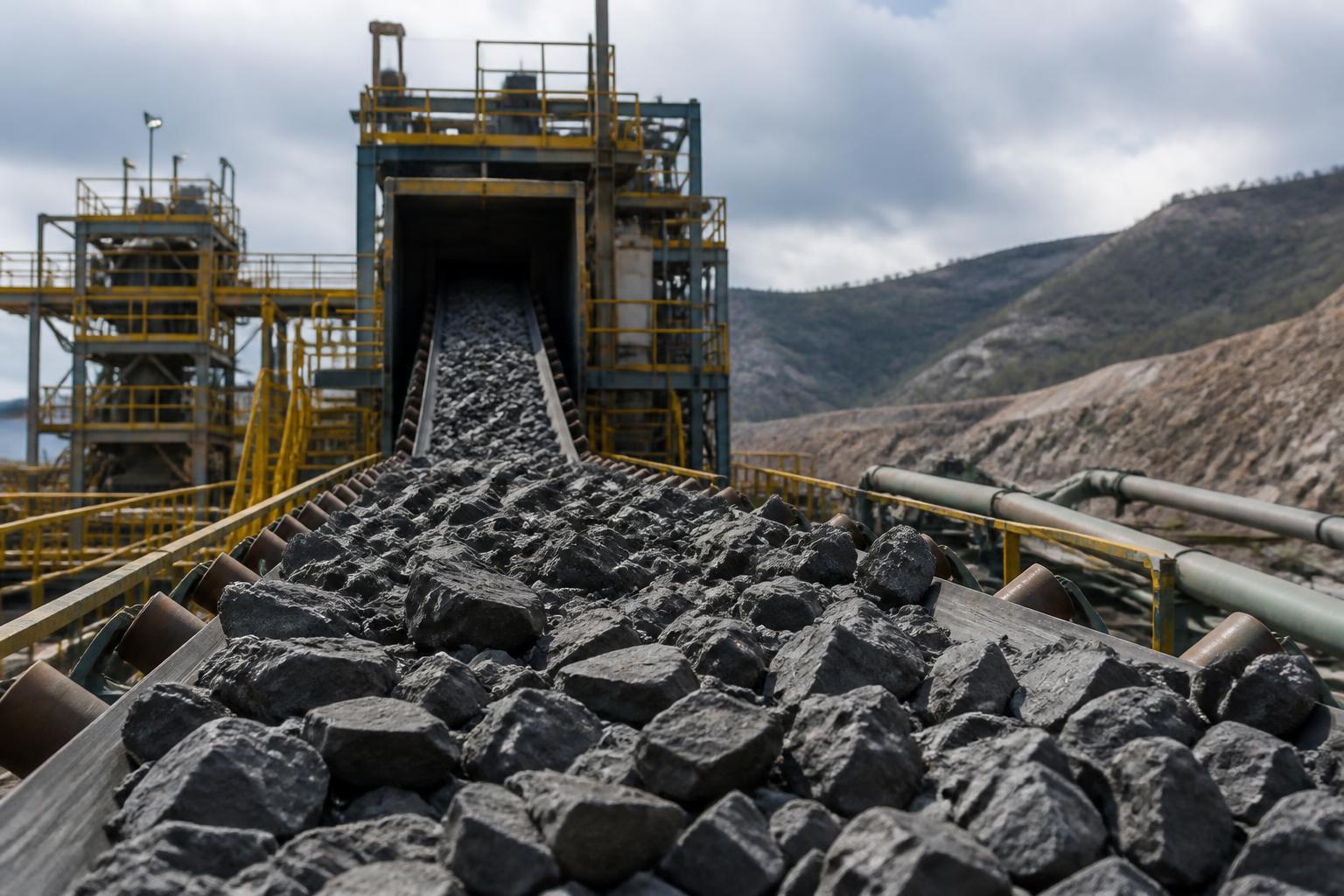
    This comprehensive report delves into the company’s performance during this quarter, analyzing key metrics such as gold production, sales, revenue, net earnings, and the notable progress made in the Skouries project. Despite encountering a 4% decline in gold production, the company managed to offset this setback with a remarkable 2% increase in sales. This, coupled with an impressive 8% surge in revenue, led to net earnings of $1.5 million. Let’s dive into the details of Eldorado Gold Corp’s Q2 2023 results and explore the factors that contributed to its success amidst the challenges.

    Gold Production: Insights and Analysis

    Eldorado Gold Corp’s gold production in Q2 2023 experienced a slight downturn, dropping by 4% compared to the previous quarter. Although this may seem concerning at first glance, a closer examination reveals essential insights into the contributing factors. Weather conditions, logistical issues, or fluctuations in ore grades could have played a role in this temporary dip. Nevertheless, it’s vital to highlight the company’s ability to maintain overall production efficiency despite encountering these challenges. A well-managed production process and the dedication of skilled personnel undoubtedly mitigated the impact of these hurdles, ensuring a strong foundation for future growth.

    Sales Growth: Leveraging Opportunities

    While gold production faced a minor setback, Eldorado Gold Corp impressively managed to boost its sales by 2% in Q2 2023. This increase in sales indicates the company’s effective utilization of marketing strategies and market insights to capitalize on opportunities. By understanding customer demands and market trends, the company adeptly positioned its products and services, resulting in an enhanced market presence. Furthermore, a customer-centric approach and strong sales team performance might have played pivotal roles in driving this growth, enabling the company to secure its market position even amidst a challenging production phase.

    Revenue Surge: Navigating Market Forces

    Eldorado Gold Corp’s revenue witnessed a noteworthy 8% surge in Q2 2023, showcasing the company’s resilience and adaptability in navigating market forces. Despite facing challenges in gold production, the company strategically managed its resources and optimized its operational efficiency. Additionally, fluctuations in the global gold market were skillfully addressed by leveraging hedging strategies and long-term contracts. This allowed Eldorado Gold Corp to stabilize its revenue streams and fostered investor confidence in the company’s ability to manage market uncertainties effectively.

    Net Earnings and Financial Stability

    Amidst fluctuations in gold production and the market, Eldorado Gold Corp demonstrated its financial strength by achieving net earnings of $1.5 million in Q2 2023. These positive earnings are indicative of the company’s prudent financial management and its ability to generate profits even in challenging times. The net earnings figure serves as a testament to the company’s dedication to maximizing shareholder value while maintaining a robust financial position.

    Progress in Skouries Project: A Vision Unfolds

    In addition to its Q2 2023 financial performance, Eldorado Gold Corp made significant progress in its ambitious Skouries project. The Skouries project represents a substantial long-term investment for the company and is expected to contribute significantly to its future growth and success. The project’s advancement signifies Eldorado Gold Corp’s commitment to expanding its operations and developing sustainable mining practices. As the project takes shape, it opens up new opportunities for the company and reinforces its position as a key player in the gold mining industry.